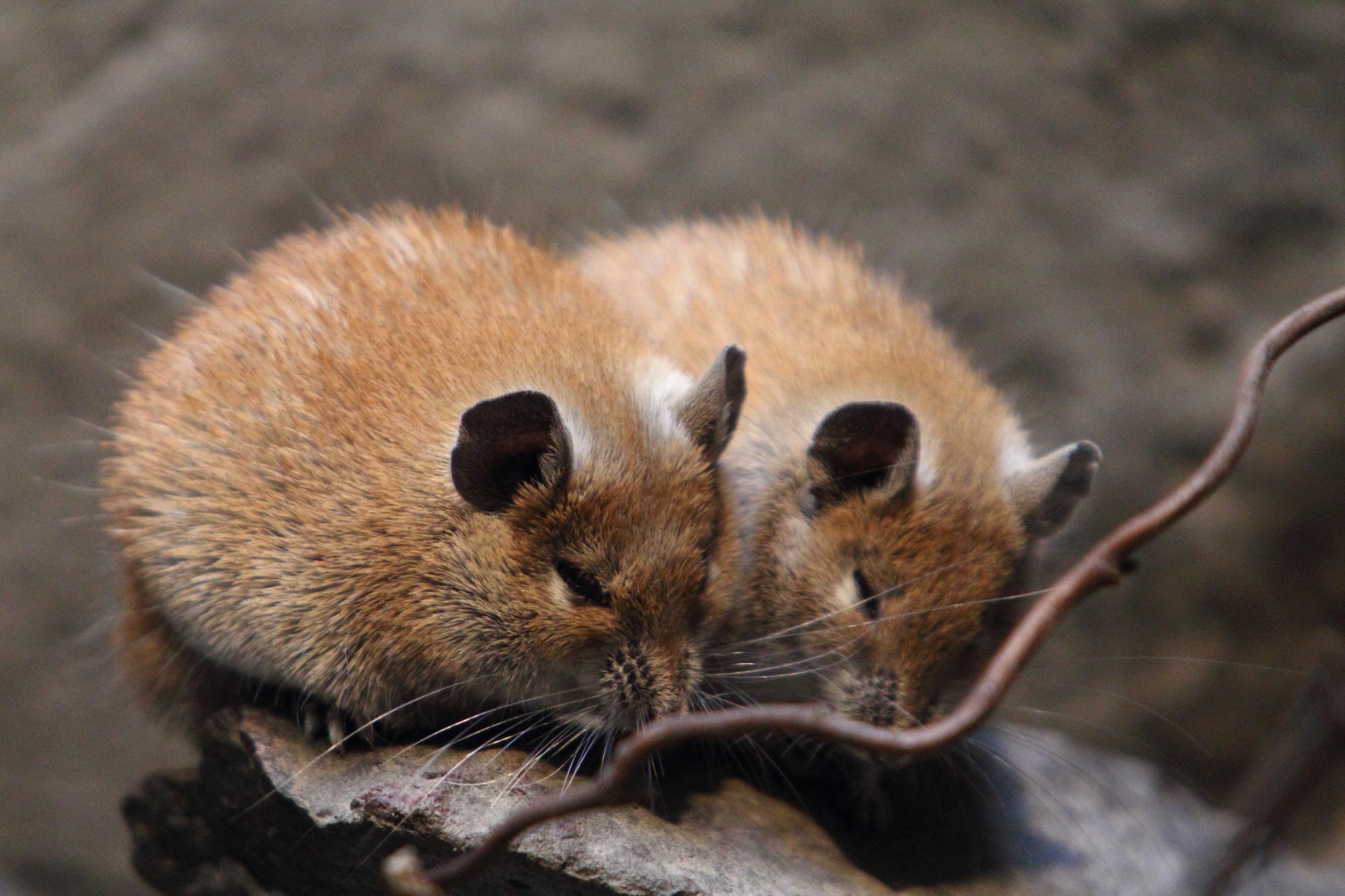
Summary of This Extraordinary Desert Mouse Defies Aging – and It Could Change Human Longevity:
The golden spiny mouse, native to the Middle East, has gained attention in aging research due to its unusually long lifespan (up to five years) and impressive health maintenance throughout aging. While most mice live around nine months, these mice exhibit significantly less decline in physical abilities, cognitive function, and immune response as they get older. Researchers at Yale University have identified biological mechanisms that contribute to this resilience, including enhanced healing abilities and a well-preserved thymus, which is crucial for immune function.
The golden spiny mouse’s ability to manage chronic inflammation and its unique metabolic pathways are thought to play vital roles in its healthy aging. The protein clusterin was found to help reduce inflammation and improve aging markers in standard lab mice, suggesting it might be key to the mouse’s resistance to age-related decline.
Additionally, adaptations such as day-time activity, toxin tolerance, and advanced offspring development may enhance survival, allowing these traits to be favored by natural selection. Findings from this research could lead to new strategies for promoting healthy aging in humans.
*****
Summary Bullet Points
- The golden spiny mouse can live for up to five years, significantly longer than typical wild mice.
- Its remarkable resilience against aging is characterized by maintained physical abilities, cognitive function, and immune health.
- Key biological mechanisms, including ongoing regenerative capabilities and a functioning thymus, contribute to its longevity.
- The presence of the protein clusterin plays a crucial role in reducing inflammation and supporting healthy aging.
- Insights from this unique species may inform new approaches to human longevity and healthier aging.
This Extraordinary Desert Mouse Defies Aging – And It Could Change Human Longevity
Aging. It’s a word that evokes so many feelings. Fear, acceptance, curiosity. For most of us, aging feels like the inevitable ticking of a clock, a slow march toward the decline of our physical, cognitive, and emotional well-being. And yet, as every scientist will tell you, nature has a way of throwing curveballs that can challenge our deepest assumptions. Enter the golden spiny mouse, a remarkable little creature from the rocky deserts of the Middle East that doesn’t just defy our expectations of aging; it may well hold the keys to unlocking healthier, more productive lives for humans.
Imagine this: while the average mouse lives around nine months, the golden spiny mouse—delicately adorned with its golden spines—can express life longevity up to five years, with an unknown maximum lifespan. How does it manage to thrive for so long without exhibiting the wear and tear commonly associated with advanced age? As intriguing as this question may be, it isn’t merely academic. The insights gained from studying these resilient rodents could improve how we approach aging itself.
Understanding Aging: A Complex Puzzle
At its core, aging is a highly nuanced biological process, often viewed as an unchangeable fate. However, some species defy this notion entirely. What exactly separates those that age gracefully from those that encounter rapid decline? Understanding this distinction may unlock some of the most profound mysteries of life. Researchers at the Yale School of Medicine recently set out to investigate the exceptional characteristics of the golden spiny mouse.
In a study published in Science Advances, a team led by Vishwa Deep Dixit discovered biological mechanisms that allow this unique mouse to maintain its health and vitality as it ages. The implications of this research could shape future treatments aimed at encouraging healthier aging in humans.
The Fascinating Biology Behind Longevity
Dixit and his collaborators examined several biological traits that set the golden spiny mouse apart. These specific characteristics may illuminate the secrets of its remarkable resilience against age-related decline.
-
Regenerative Abilities: The golden spiny mouse has long been known for its unique capacity to heal skin injuries without scarring. What researchers found, however, is even more profound: this regenerative ability remains intact even as the mouse ages. Imagine retaining the ability to bounce back from injuries throughout your life; this characteristic is not just unusual; it’s transformative.
-
Longevity of the Thymus: The thymus gland plays a critical role in immune function, producing essential white blood cells. In most vertebrates, including humans, this gland deteriorates with age. Remarkably, in older golden spiny mice, the thymus remains intact and functions effectively. This may provide them with a robust immune system well into their golden years, allowing them to fight off diseases and infections more effectively.
- Cognitive Resilience: Most aging animals experience cognitive decline, particularly in memory and learning. However, older golden spiny mice show little to no loss of cognitive abilities. This ability to maintain sharpness of mind may hold essential insights for enhancing human brain health as we age.
A Key Player: Clusterin
As they dug deeper, researchers identified a fascinating protein called clusterin, which is closely associated with lower levels of inflammation in the golden spiny mouse. Inflammation is a silent affliction that often escalates with age—a phenomenon known as "inflammaging." To combat this, the golden spiny mouse uses clusterin to help clear out misfolded proteins in the body, thus minimizing potential damage.
When clusterin was administered to lab mice, those treated animals exhibited healthier aging traits similar to those observed in golden spiny mice. They displayed less decline in movement and a healthier set of organs, showing promise as a potential therapeutic avenue for promoting healthier aging.
Evolutionary Advantages and Survival Strategies
Wild animals, like the golden spiny mouse, do not merely die of old age. Predators, food scarcity, and diseases often take their toll long before the effects of aging can be observed. Surprisingly, the golden spiny mouse has evolved several traits that not only enhance its chances of longevity but also allow it to thrive in a perilous environment.
This mouse is primarily diurnal, which affords it the advantage of foraging in the daytime while avoiding common nocturnal predators. Additionally, it can endure long periods without food by lowering its metabolic rate, thus conserving energy while remaining active.
Their social structure adds another layer of survival; multiple females often collaborate in raising their young. Such cooperative breeding gives the offspring a better chance of survival, ultimately allowing healthy aging traits to be passed down through generations.
Bridging the Gap: From Mice to Humans
The research so far leads to a tantalizing question: could there be analogous pathways in humans that have simply become dormant? If so, interventions targeting these pathways could potentially promote healthier aging in people. It is a hypothesis that researchers find appealing and promising.
The possibilities are expansive. With emerging therapies centered around proteins like clusterin, we could see development in how we treat age-related diseases or perhaps even slow down the aging process itself. The golden spiny mouse thus acts as a living laboratory, guiding our understanding of resilience, longevity, and ultimately, human health.
Much More Than Curiosity
Interestingly, this isn’t just a scientific dalliance; the lessons we draw from the golden spiny mouse extend beyond academia. Life gives us challenges that adapt us, whether they are physical, mental, or emotional. This mouse embodies resilience—not only surviving against the odds but thriving.
So, what can we learn from its journey? That aging doesn’t have to mean decline. Like the golden spiny mouse, we can strive to maintain vitality, resilience, and strength as we journey through life.
Fostering habits that promote a healthier existence—proper nutrition, physical exercise, mental engagement—can simulate the longevity traits observed in these remarkable creatures. While we may not have scaly quills to help us in our trials, we can redefine what aging looks like, inspired by an agile little rodent.
Conclusion
In a world often preoccupied with the negatives surrounding aging, the golden spiny mouse provides a glimmer of hope and inspiration. Its ability to defy aging and live a long, healthy life invites us to view aging through a different lens. We can become architects of our longevity, drawing lessons from nature that encourage resilience and promote robust living.
As we continue to peel back the layers of this aging mystery, every study and every observation stand not just as a testament to the wonders of biology but as a clarion call for how we might live our lives. Who knows? Perhaps the path to healthier aging—and a richer life—might just start with a tiny, golden creature scurrying through the deserts of the Middle East.