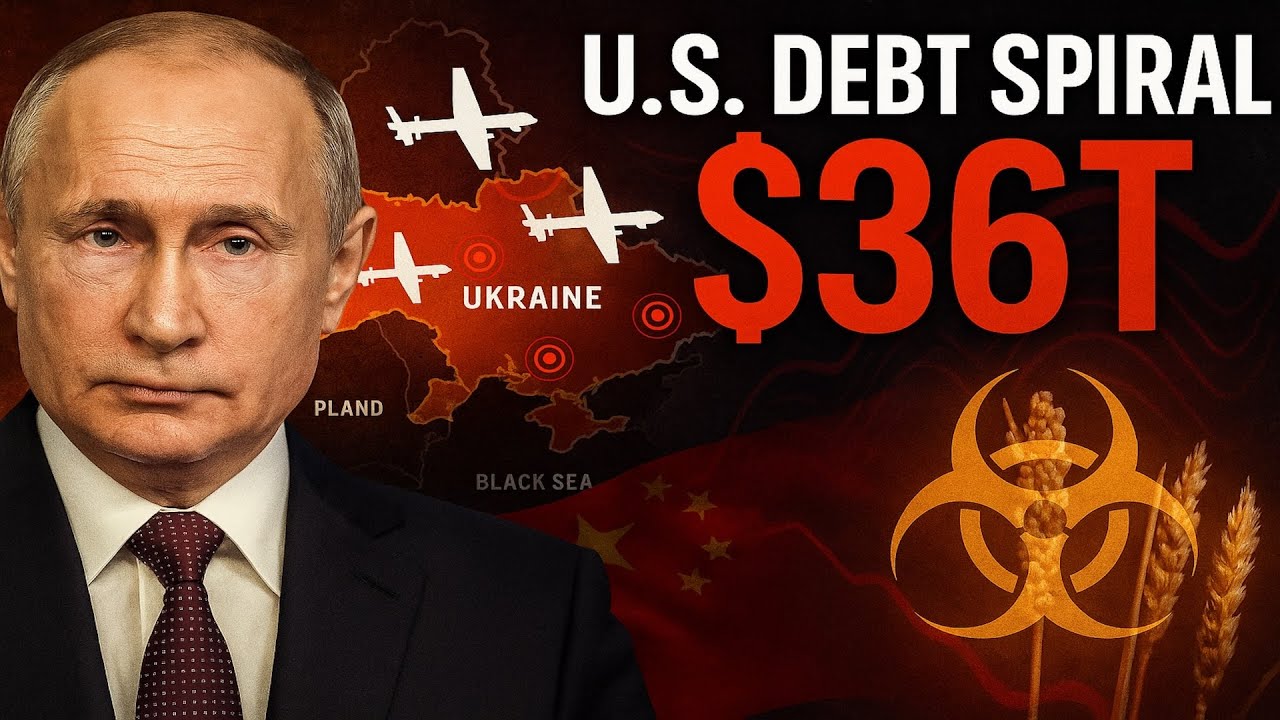
- The geopolitical dynamics involving Russia’s threats and the global impact.
- Economic insights into US debt and related misconceptions.
- Analysis of China’s strategic global influence and subtle tactics.
- Connections between geopolitical events and global nutrition.
- Exploration of metabolic health, insulin sensitivity, and global nutrition trends.
The current geopolitical landscape is a complex web of relationships influenced by power, economic interests, and strategic positioning. One of the most pressing issues today includes Russia’s assertive threats. These actions have far-reaching impacts, from influencing energy markets to triggering discussions around national security. Russia’s geopolitical maneuvers aim to assert dominance, affecting global stability and economic policies.
On another front, the economic discourse surrounding US debt has sparked significant debate and misunderstanding. Many perceive the US debt as a ticking time bomb, yet nuanced insights reveal a more intricate picture. Various economic theories and fiscal policies challenge conventional views, providing a broader understanding of national debt and its implications.
China’s global influence is characterized not by overt actions but by subtle strategies. This quiet form of power is reflected in their economic investments, technological advancements, and diplomatic efforts. China’s position as a global leader is slowly but surely cemented through methods that often go unnoticed by the global populace.
While these geopolitical developments unfold, they exert an influence on global nutrition and metabolic health trends. The links between such global events and what appears on our plates might not be immediately clear, yet they have profound implications. Supply chain disruptions, trade policies, and international relations shape dietary practices worldwide, affecting both accessibility and quality of nutrition.
In turn, these factors play a significant role in metabolic health. A nuanced understanding of insulin sensitivity and metabolic diseases reveals how interconnected our world truly is. Dietary patterns influenced by geopolitical dynamics have direct implications on public health, particularly in the context of increasing metabolic disorders.
Understanding Russia’s current geopolitical motives requires examining its energy policies and military strategies. These actions are not isolated. They have an immediate effect on global energy prices, which can lead to economic shifts in various countries. For instance, increased fuel costs can alter agricultural production and transportation, affecting food prices globally. This chain reaction impacts dietary habits and nutrition availability, often beyond national borders.
The discourse surrounding US debt often misses critical aspects of fiscal policy and economic practices. It is essential to recognize that national debt, while seemingly daunting, can function as a strategic tool when managed appropriately. Economic theories suggest that debt used for infrastructure, healthcare, and education can foster long-term growth. However, misconceptions persist, mainly due to incomplete narratives that focus solely on absolute numbers without context.
These economic policies and their perceptions influence how budgets are allocated. Budgetary constraints can lead to cuts in essential public services, including those related to food security and nutrition programs. The ripple effect of these decisions can lead to disparities in accessibility to healthy and nutritious food options, further exacerbating issues related to metabolic health.
China’s strategic approach involves significantly increasing its influence through the Belt and Road Initiative and technology investments. This global strategy not only enhances China’s trade capabilities but also extends its cultural and political influence. Such global projects impact international trade routes and commodity costs. The shift in trade dynamics can influence global food markets and the availability of diverse nutrition options, affecting global dietary patterns.
These geopolitical strategies and economic policies are intertwined with public health, particularly concerning metabolic diseases. The increasing prevalence of these conditions highlights the urgency to understand the impact of insulin sensitivity and dietary patterns. Insulin resistance is linked to numerous health issues, including type 2 diabetes and cardiovascular diseases, which are exacerbated by poor dietary habits often influenced by economic and geopolitical factors.
Analyzing dietary patterns reveals that economic conditions, often shaped by geopolitical events, directly affect access to nutritious food. For instance, during economic downturns or when trade restrictions impact food imports, populations may rely more heavily on calorie-dense but nutrient-poor options due to affordability issues, leading to increased metabolic disease risk.
Furthermore, advances in understanding insulin sensitivity provide insights into managing and preventing metabolic disorders. Current research highlights the importance of a balanced diet rich in whole foods, fibers, and essential nutrients. However, the availability of these foods remains connected to broader global events, such as trade policies and agricultural productivity influenced by geopolitical dynamics.
In summary, the interconnected nature of global political actions, economic policies, and public health highlights a pivotal area for understanding how our world functions. From Russia’s geopolitical influence and the misconceptions surrounding US debt to China’s quiet global strategies, each plays a role in shaping global health outcomes. As we navigate these complexities, recognizing the interconnectedness of geopolitical strategies, economic policies, and nutritional health is crucial for addressing the challenges of metabolic diseases in a global context.
*****
Source Description
ButcherBox: New users that sign up for ButcherBox will receive their choice between steak tips, salmon, or chicken breast in every box for a year + $20 off their first box at https://butcherbox.com/impact
Monarch Money: Use code THEORY at https://monarchmoney.com for 50% off your first year!
Do you need my help?
STARTING a business: join me here inside ZERO TO FOUNDER (https://tombilyeu.com/zero-to-founder)
SCALING a business: click here to see if you qualify (https://tombilyeu.com/scale)
Get the exact systems, mindset shifts, and principles that built a $1B brand delivered straight to your inbox every week. Subscribe for free (https://tombilyeu.com)
Check out our Video game – Project Kyzen: (https://projectkyzen.io/)
Catch Me Streaming on Twitch – (https://twitch.tv/tombilyeu)
Link to IT discord: https://discord.gg/TZKJ2etPbT
Tom’s Favorite Things List: https://amzn.to/41Ftt7e
Welcome to The Tom Bilyeu Show! In this episode, I sit down with my co-host Drew to tackle some of the most urgent and complex issues facing our world today. We kick things off with the explosive news of Ukraine’s successful drone strike deep inside Russian territory—a move that Russia is calling its own “Pearl Harbor”—and unpack what that really means for global stability and the escalating rhetoric surrounding nuclear threats.
From there, we don’t pull any punches as we dig into America’s controversial “big beautiful bill.” I break down why inflation and deficit spending isn’t just political theater but the backbone (and Achilles’ heel) of our entire economic system, and why both sides of the aisle seem trapped by its logic.
But we don’t stop with geopolitics and economics. Drew and I analyze everything from alleged Chinese bioterror plots on U.S. soil to the ethics of wartime escalation, how tech giants like Meta and Microsoft are playing the long game by locking down access to nuclear power, and even ask the big philosophical questions around morality, politics, and the way social media spins the narrative.
If you’ve ever wanted to understand how power, strategy, and human psychology intersect on the world’s biggest stages—or if you’re just looking to make sense of the madness behind modern headlines—you’re going to want to strap in for this conversation.
Let’s get into it!
00:00 INTRO
01:26 UKRAINE STRIKES, RUSSIA TO RETALIATE
17:06 SPENDING BILL
A DISGUSTING
ABOMINATION
33:50 COLORADO
MOLOTOV’S
46:00 CHINESE COUPLE SMUGGLE DEADLY FUNGUS
51:29 META BUYS ITS OWN NUCLEAR PLANT
56:20 CORY BOOKER HITS THE NAZI SALUTE
59:48 HIGHLIGHTS FROM THE LIVE
Ukraine drone attack, Russian Pearl Harbor, Russia-Ukraine war escalation, Dmitri Medvedev, Putin territorial ambitions, NATO expansion, nuclear doctrine Russia, Europe support Ukraine, US involvement Ukraine, Trump NATO stance, Operation Spiderweb Ukraine, AI in warfare Ukraine, peace talks Ukraine Russia, US federal deficit, congressional spending bill, inflation and debt, Federal Reserve, central banking, entitlement cuts, government spending, Medicaid and SNAP cuts, defense spending, climate change/energy, Meta nuclear power deal, Microsoft energy investments, Tesla solar power, China power production, biosecurity/bioterrorism China, Fusarium fungus smuggling, Israel-Palestine conflict, Cory Booker Nazi salute.