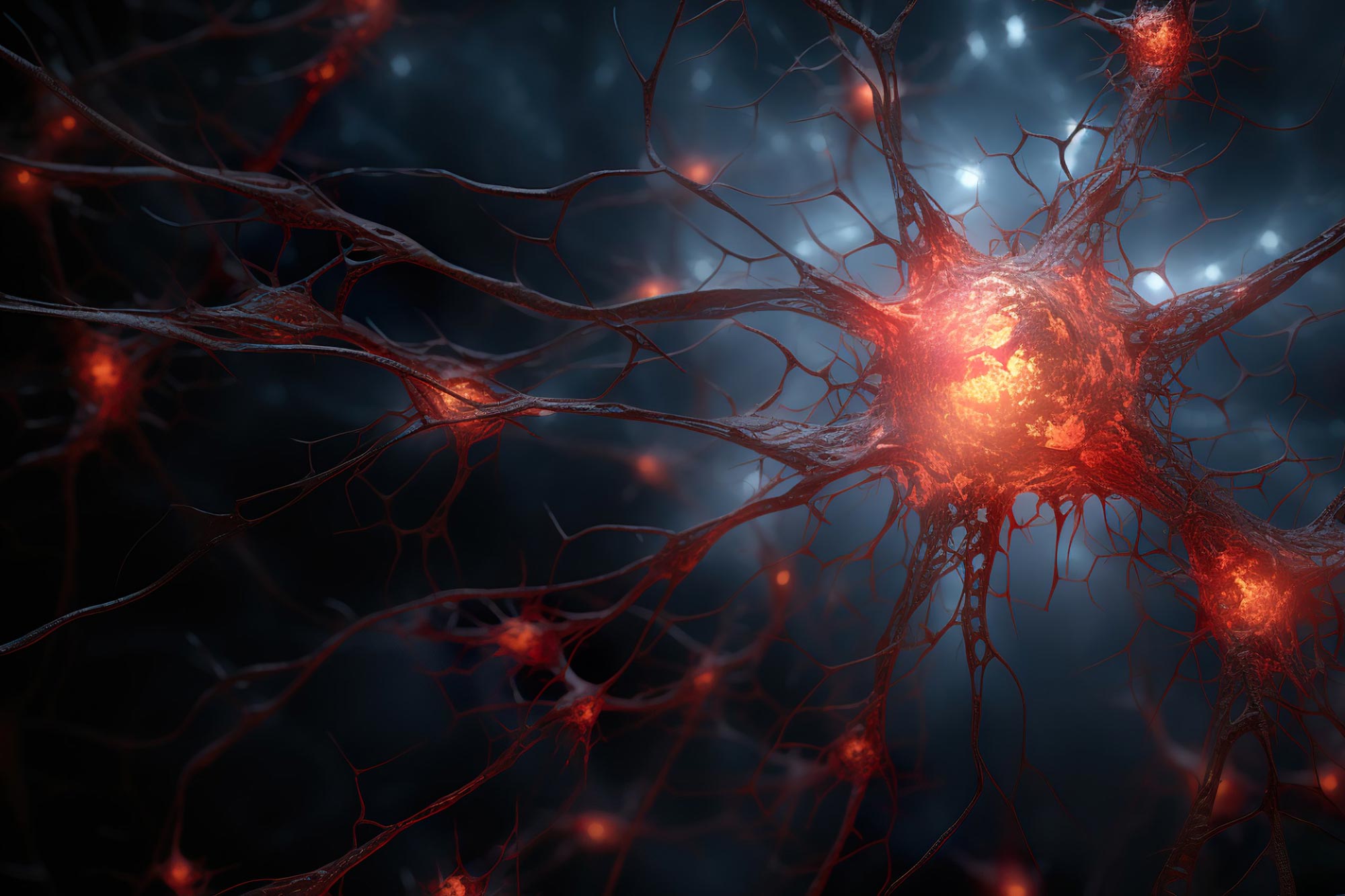
Summary of Scientists Discover the Brain Protein That Helps Alzheimer’s Spread Through the Brain:
Researchers have discovered that a brain protein called Arc may facilitate the spread of toxic Tau proteins associated with Alzheimer’s disease between neurons. This process allows harmful Tau to transfer from diseased to healthy brain cells, exacerbating the disease’s progression. In experiments with mice, those with Arc showed significant Tau transmission, while those without it did not.
Arc typically functions as a messenger in the brain, packaging Tau in extracellular vesicles that travel between cells. While blocking Arc might seem like a straightforward approach to slow the disease, it could inadvertently trap toxic Tau in neurons, leading to faster cell death. Instead, targeting the vesicles carrying toxic Tau before they reach healthy cells may offer a more effective treatment strategy.
This research suggests potential new avenues for Alzheimer’s treatments aimed at preventing the spread of Tau, thereby preserving cognitive function. However, further studies are needed to confirm these findings in humans. The study was published in Cell and is supported by various institutions and funding from notable research organizations.
*****
Key Points:
- Discovery of Arc Protein: Researchers identified a brain protein called Arc that facilitates the spread of toxic Tau proteins related to Alzheimer’s disease.
- Mechanism of Tau Transmission: Arc helps transport Tau from diseased neurons to healthy ones, allowing the disease to spread.
- Potential Therapeutic Targets: Future treatments may focus on intercepting or blocking the transmission mechanism of Tau before it infects healthy neurons.
- Dual Role of Arc: While Arc aids in spreading toxic Tau, it also helps relieve pressure on damaged neurons by facilitating Tau release.
- Research Implications: This breakthrough offers potential new pathways for developing therapies aimed at slowing the progression of Alzheimer’s.
Unraveling the Mysteries of Alzheimer’s: The Role of the Arc Protein in Tau Transmission
Alzheimer’s disease looms like a shadow over countless lives, an insidious thief of memories and cognitive abilities. As researchers dive deeper into the complexities of the brain, recent discoveries shine a light on the mechanisms that drive this dreadful condition. One fascinating advancement centers around a brain protein known as Arc, which plays a pivotal role in spreading toxic Tau proteins throughout the brain. This insight not only deepens our understanding but also opens doors to potential therapeutic strategies that could alter the course of Alzheimer’s disease.
The Role of Tau in Alzheimer’s Disease
Understanding the nature of Alzheimer’s requires an exploration of its hallmark features: the presence of toxic proteins, particularly Tau and amyloid-beta. In healthy brains, Tau helps stabilize microtubules, crucial structures that transport nutrients and information within neurons. However, in Alzheimer’s, Tau proteins begin to misfold and aggregate into tangles, disrupting neuronal function and eventually leading to cell death.
Recent studies have demonstrated that Tau, particularly in its toxic form, does not merely accumulate within a single neuron; it has the uncanny ability to propagate through healthy neurons, spreading its destructive influence like wildfire. This transmission process contributes to the progressive nature of Alzheimer’s, making it essential for researchers to dissect the mechanisms enabling this protein’s movement.
Enter Arc: The Delivery System
Amid these scientific explorations, researchers have identified Arc as a key player in the spread of Tau. In their studies, they found that Arc acts as a carrier, ferrying toxic Tau from diseased neurons to healthy ones. Think of Arc as a delivery vehicle that ensures Tau’s harmful effects reach new locations, exacerbating the disease’s progression.
Under normal circumstances, Arc facilitates communication between neurons, packaging information within extracellular vesicles (EVs) which serve as communication channels. These vesicles transport beneficial signals between cells, helping maintain healthy brain function. However, the surprising twist lies in Tau’s ability to hitch a ride on Arc. By commandeering this delivery vehicle, Tau effectively spreads its toxicity from one neuron to another.
Mitali Tyagi, lead researcher on this groundbreaking study, likened the process to “glue monsters” that can break down into smaller, infectious particles. Once these smaller fragments interact with healthy Tau, the pathology is set into motion, prompting a cascade of neuronal damage.
Findings from the Laboratory
The findings emerged from a study using a mouse model of Alzheimer’s, where scientists manipulated the presence of Arc. They observed that in mice without Arc, the transfer of toxic Tau was severely diminished. The conclusion was clear: Arc is instrumental in the intercellular transmission of Tau. Mice that retained Arc showed a more rapid progression of the disease, emphasizing Arc’s dual role as both a facilitator of Tau spread and a potential guardian of damaged neurons.
However, this relationship can be paradoxical. While Arc’s ability to release Tau provides some relief to damaged neurons by preventing toxicity buildup, it simultaneously paves the way for the disease to infect adjacent healthy neurons. This delicate balance poses significant challenges for future treatment strategies.
Rethinking Treatment Approaches
The initial reaction might be to consider blocking Arc entirely to hinder the spread of Tau. Yet, the research highlights a more nuanced approach; completely inhibiting Arc could trap toxic Tau within damaged neurons, causing more harm than good. Instead of merely repairing the damage, a more effective strategy would focus on intercepting Tau-containing EVs before they can transfer their toxic cargo to healthy cells.
This revelation opens up exciting avenues for drug development. Future therapies might seek to target those EVs mid-flight, acting as guardians to protect neuronal health. Imagine a world where scientists can intervene in the internal battles of the brain, halting the encroachment of Alzheimer’s before it takes root.
Implications for Human Health
As promising as these findings may be, the majority of research has thus far been conducted in rodent models. Evidence of similar mechanisms in humans remains incomplete. However, scientists noted the presence of EVs containing both Arc and Tau in human brain tissue, suggesting parallel processes could occur in our own brains.
Of course, the transition from mice to humans is significant. Jason Shepherd, a senior author of the study, cautions that much work remains before we can claim to have developed effective treatments. Although researchers are enthusiastic about the potential to halt disease progression, we are still navigating the complex interplay of biological factors inherent in human brains.
Cultivating Hope and Resilience
Amid the scientific uncertainty lies a flicker of hope. Each discovery contributes a piece to the intricate puzzle of Alzheimer’s. As researchers work tirelessly to understand the underlying mechanisms of this disease, their efforts highlight the incredible resilience of the human spirit.
Advancements might not arrive overnight, but every step forward is a testament to our commitment to improving lives. If you or someone you love has been shaped by the challenges of dementia, consider every bit of research a step toward a brighter horizon. As scientists decode the language of our minds, they inspire us to envision a future where cognitive decline could be halted and even reversed.
Final Reflections
The interconnectedness of neurons, the complexity of protein dynamics, and the potential for groundbreaking therapy encapsulate a thrilling narrative about Alzheimer’s disease. Understanding the pivotal role of Arc in the transmission of toxic Tau not only provides insight into neurodegeneration but also fosters a spirit of perseverance in the face of adversity.
Let us take these discoveries to heart, motivating ourselves to foster resilience, embrace ongoing scientific inquiry, and advocate for those affected by Alzheimer’s and similar afflictions. As the journey continues, it carries with it the promise of knowledge, healing, and, ultimately, hope. The exploration continues, and with every revelation, we move closer to unraveling the mysteries of the brain.
