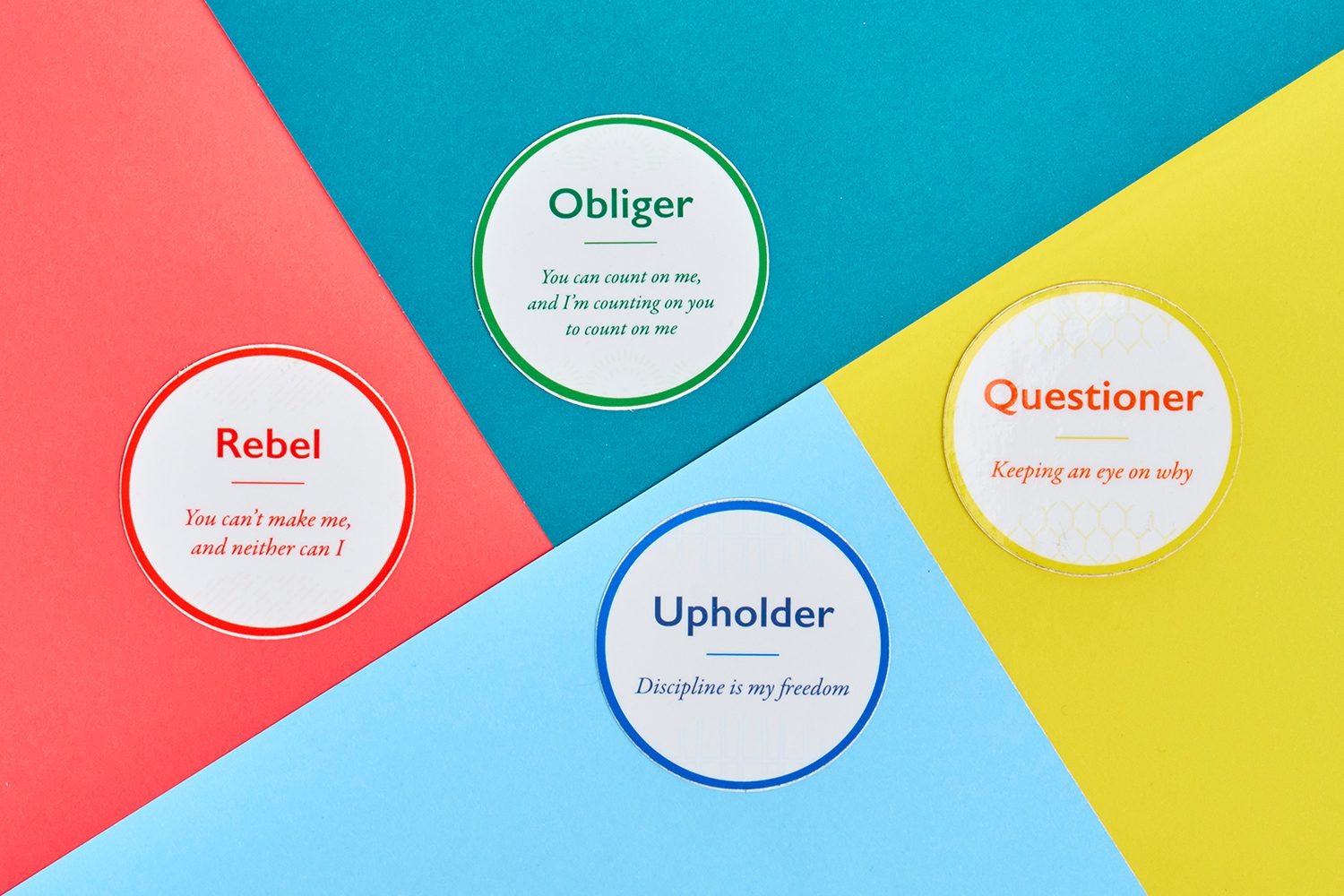
Summary of Did the Four Tendencies Quiz Help You Decide If You’re Upholder, Questioner, Obliger, Rebel?:
The content discusses the concept of being a mix of two "Tendencies," which categorize people’s responses to expectations. The author, drawing from personal observations, suggests that individuals often identify as mixed types but, upon reflection, typically belong firmly to one category—Obligers, Questioners, Upholders, or Rebels.
- Obligers tend to meet external expectations but may rebel against them occasionally.
- Questioners critically evaluate expectations, which can lead them to act like Rebels when they challenge rules.
- Upholders meet both external and internal expectations consistently, while Obligers struggle with self-imposed expectations.
The article asserts that behaviors alone can’t identify a person’s Tendency; understanding their reasoning is essential. Additionally, personality traits can influence how Tendencies manifest. While Tendencies are seen as hardwired, individuals can learn to manage their responses over time, enhancing self-awareness and adjusting behaviors for better outcomes. The overarching theme emphasizes the importance of recognizing and accepting one’s innate tendencies for personal growth.
*****
Summary Bullet Points:
- The Four Tendencies Framework classifies individuals as Upholders, Questioners, Obligers, or Rebels based on how they respond to expectations.
- Many people identify as a mix of two Tendencies, but each generally falls firmly into one category.
- Various personal experiences shape how people perceive their Tendencies, making self-assessment nuanced.
- Understanding one’s Tendency can spark significant personal growth and development.
- While fundamentally hardwired, Tendencies can be slightly adjusted through self-awareness and experience.
Did the Four Tendencies Quiz Help You Decide If You’re an Upholder, Questioner, Obliger, or Rebel?
The journey of self-discovery often begins with understanding our behaviors, motivations, and how we react to external and internal expectations. Have you ever pondered why you fulfill commitments — or shy away from them? Enter the Four Tendencies framework, developed by author Gretchen Rubin, which divides individuals into four distinct categories: Upholders, Questioners, Obligers, and Rebels. This powerful tool not only provides insights into our motivations but can also guide us toward personal growth and fulfillment.
The Essence of the Four Tendencies
At its core, the Four Tendencies framework is about how we respond to expectations. They can be outer expectations, like deadlines or social obligations, and inner expectations, such as personal goals and values. Here’s a brief overview of each Tendency:
-
Upholders tend to meet both outer and inner expectations. They thrive on structure and are often seen as reliable and disciplined.
-
Questioners question everything, seeking justification before complying with expectations. They will meet an expectation if it makes sense to them.
-
Obligers meet outer expectations but struggle with inner ones. They often find themselves prioritizing others’ demands over their own.
- Rebels resist both types of expectations. They cherish their autonomy and dislike being told what to do.
This categorization is not merely a theoretical exercise; it can have real-world implications in career paths, relationships, and personal satisfaction.
Can You Be a Mix of Two Tendencies?
Many individuals assert that they embody two Tendencies. While this sentiment may feel accurate, it often overlooks the nuance of our individual motivations. With genuine curiosity, we can explore why this self-assessment tends to skew toward a perceived duality.
The Obliger/Rebel Conundrum
Have you ever found yourself being the quintessential “yes person” at work yet snapping at the smallest of personal demands? This behavior isn’t uncommon among Obligers who experience “Obliger-rebellion.” This phenomenon often arises when the pressure from fulfilling obligations becomes overwhelming. Obligers feel the weight of external expectations so acutely that, at some point, they may assert their independence by refusing to comply with requests they might typically agree to.
Take the story of an Obliger who finally said no to a volunteer commitment that had begun to drain them. Their act of defiance was not a rejection of responsibility but rather a necessary assertion of self-care. Such moments often catch Obligers by surprise. They find joy in fulfilling responsibilities, but when that joy turns into resentment, they may act out in unexpected ways.
Questioner Spectrum: Upholder or Rebel?
Questioners are a fascinating group, as they possess an innate need to question authority and expectations. However, like a well-balanced scale, some Questioners lean toward Upholder tendencies, while others drift into Rebel territory. A logical Questioner might easily uphold expectations if they align with their values. Conversely, those who become too critical may find themselves resisting any form of compliance, feeling like they are perpetually at war with the world around them.
A perfect illustration is the story of a thoughtful Questioner whose natural inclination to seek clarification and data led them to eventually accept a role that required conformity to an established process. The other Questioner, however, couldn’t digest the “why” behind the rules, leading them to reject any form of authority.
The Upholder/Obliger Dichotomy
Both Upholders and Obligers share an intrinsic motivation to meet expectations. However, the distinction lies in their relationship with inner expectations. Upholders effortlessly resonate with self-imposed standards, completing tasks irrespective of external pressures. On the contrary, Obligers prioritize fulfilling others’ expectations, and they struggle to honor their own goals, often feeling guilty for focusing inward.
For example, an Upholder might feel the obligation to train for a marathon simply because it’s a personal goal they’ve set. An Obliger, on the other hand, might sign up for a marathon because a friend encouraged them to do so — leading to a sense of obligation rather than personal desire.
External Behaviors vs. Inner Motivations
It’s vital to remember that we cannot discern someone’s Tendency solely based on their behavior. A person might appear to be a Rebel because they refuse to follow directions, but it’s essential to explore their reasoning. For instance, one so-called Rebel might resist a company’s procedure because they believe it’s ineffective, not because they inherently desire to rebel against authority.
Another individual might seem like a Questioner, yet their thirst for justification stems from a desire for adherence rather than skepticism. This complexity necessitates self-reflection. Reflecting on why we act the way we do unveils the underlying motivations, transforming our understanding and enhancing personal development.
Growth and Change: Can You Shift Your Tendency?
While your specific Tendency is a part of your intrinsic makeup, that doesn’t mean you’re stuck there forever. One could argue that life experiences and maturity allow for some flexibility. An Upholder can learn to stop unquestioningly meeting expectations, becoming more discerning about which expectations to honor. Similarly, Obligers can develop strategies for self-accountability, transforming the way they relate to their commitments.
For Rebels, recognizing the consequences of actions offers them new dimensions. They might choose to take a class to meet personal or professional expectations, not because they have to, but because they genuinely want to expand their skill set.
Questioners might seek to balance their need for justification with acceptance. While it’s okay to question, it’s also important to recognize when to “go with the flow,” particularly in social situations that may not warrant the mental gymnastics of querying every detail.
Navigating Life with Your Tendency
Once you discover your Tendency, embrace it! Self-awareness fosters a profound understanding of how to maximize your strengths. For instance, an Upholder can relish the freedom that self-imposed commitments bring. A Questioner can dive deep into a passion project with unyielding curiosity, transforming their need for clarity into a creative venture.
Obligers may find fulfillment by learning how to prioritize their needs without sacrificing their commitment to others. Meanwhile, Rebels can lead innovation within their workplaces by implementing change that aligns with their vision.
A Call to Consideration and Connection
Bear in mind that while understanding these Tendencies can guide personal and professional paths, interactions with others can change the game. Humans are innately social, and how we understand each other can amplify our experiences.
When you communicate with others, extend the invitation to embrace their Tendency. If you’re an Upholder, remember that not everyone thrives under structure — some may resist. If you’re an Obliger, be mindful of others’ boundaries. Questioners, strive to articulate the "why" behind your thoughts, while Rebels should encourage open dialogue rather than dismissal.
Conclusion
Recognizing which of the Four Tendencies resonates most with you can transform your life. Whether you’re an Upholder, Questioner, Obliger, or Rebel, this understanding is a treasure trove of insight. It allows you to forge a path toward fulfillment, either by honing your existing strengths or overcoming limitations.
While some may feel like a blend of Tendencies, it’s essential to explore the depth of your experiences rather than letting surface perceptions cloud your understanding. Engaging with the nuances of your motivations will ultimately lead to a more enriching journey — not just for yourself, but for everyone around you.
Embrace your Tendency, learn its intricacies, and let it guide you toward understanding yourself and your relationships better. In this dance of self-discovery, you might unlock potential you never thought possible — and that is the most thrilling adventure of all.