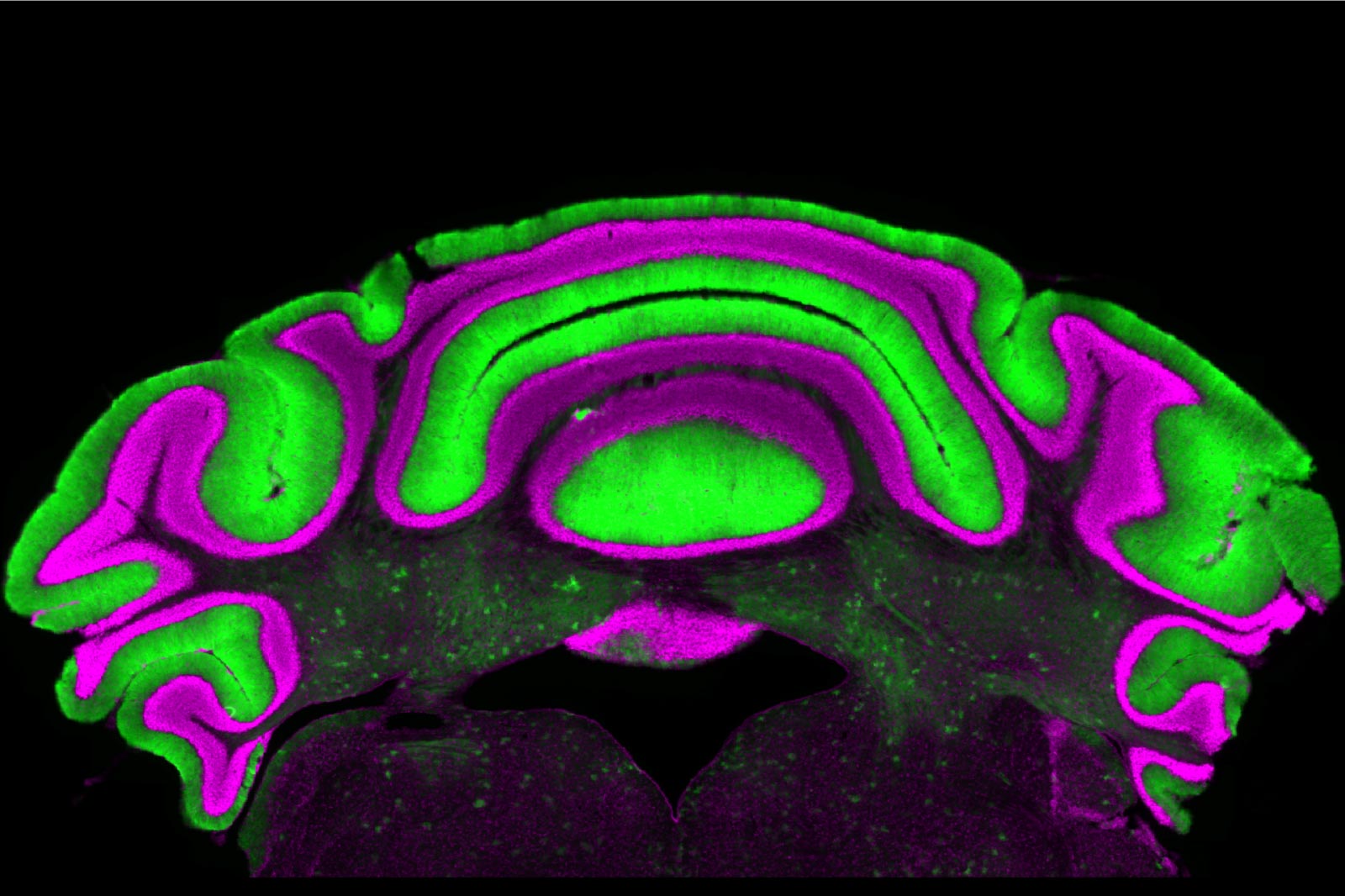
Summary of Rethinking Movement Disorders: Scientists Uncover a Surprising Disconnect Deep Inside the Brain:
A study from Virginia Tech’s Fralin Biomedical Research Institute, led by Meike van der Heijden, has challenged established assumptions about brain activity in chronic movement disorders, specifically dystonia, ataxia, and tremor. Researchers found that measuring the activity of Purkinje cells in the cerebellum does not accurately reflect the activity of deeper cerebellar nuclei cells, countering the long-held belief that these two types of neurons are closely linked. This discovery suggests that understanding the behavior of deep nuclei cells is crucial for studying and treating cerebellar disorders. The findings emphasize the need for careful experimentation and caution against relying solely on indirect measures for treatment strategies.
*****
Summary Bullet Points
- Recent research from Virginia Tech challenges the longstanding assumption that Purkinje cell activity in the cerebellum reliably indicates the activity of deep cerebellar nuclei cells in movement disorders.
- This study has crucial implications for understanding and treating conditions like dystonia, ataxia, and tremor.
- The researchers found no significant correlation between the activities of these two cell types, suggesting a more nuanced view of cerebellar function in disease states.
- The findings encourage a shift in focus toward deep cerebellar nuclei cells when studying these movement disorders for a more accurate understanding.
- The study serves as a reminder to treat assumptions critically and to conduct thorough experiments to test hypotheses.
Rethinking Our Approach to Movement Disorders
In a world where innovation drives progress, it’s all too easy to fall into established patterns of thinking. Consider the recent breakthrough in understanding movement disorders such as dystonia, ataxia, and tremor—conditions that frequently obstruct daily life with involuntary movements and discomfort. A ground-breaking study at Virginia Tech’s Fralin Biomedical Research Institute has thrown a curveball at our comprehension of how the brain coordinates movement. This new perspective not only challenges long-accepted norms but also opens up exciting pathways for research and treatment.
Imagine the cerebellum, often dubbed the brain’s "little brain," playing a vital role in the choreography of our physical existence. It’s responsible for fine-tuning our movements, ensuring that we can walk, run, and move through life fluidly. Within this intricate setup are two crucial players: the Purkinje cells and the deep cerebellar nuclei cells. For years, scientists assumed that monitoring the activity of Purkinje cells could reliably reveal how the deeper cerebellar structures were functioning. But what if this assumption was misleading?
The Connective Tissue: Purkinje and Deep Nuclei Cells
Traditionally, researchers believed that Purkinje cells, located in the cerebellum’s outer layer, effectively regulated the activity of deep cerebellar nuclei cells. These deep nuclei cells lie beneath the surface and were considered less accessible for research. So, naturally, scientists turned to Purkinje cells as a convenient proxy to gauge the health and functionality of deeper structures. Yet, this new study led by Meike van der Heijden has challenged this notion, suggesting a complex disconnect between the activities of these two neuronal groups.
What Van der Heijden and her team discovered is nothing short of fascinating. When they analyzed extensive data from pre-clinical models of cerebellar disease, they found that the expected relationship between Purkinje cell activity and deep nuclei cell activity was notably absent. Despite being anatomically linked, the activities of these two cell types did not correlate as previously assumed. The results indicate that the dance between these neurons may not be as synchronized as once thought.
Implications for Research and Treatment
Why does this matter? Understanding this disconnect can fundamentally alter how we approach research into movement disorders. If higher activity in the Purkinje cells does not reliably translate to lower activity in the deep nuclei, we may need to reevaluate the entire framework of treatments being developed. Current methodologies often hinge on the assumption that tweaking one will affect the other, a notion that can lead to misleading conclusions.
In essence, the study calls for a more holistic examination of brain activity in movement disorders. "If you want to know how the cerebellum is behaving in a disease state," Van der Heijden cautions, "you have to look at the deep nuclei neurons, not just the Purkinje cells." This shift in focus may lead to better therapeutic strategies and eventually more effective treatments.
The Challenges of Assumptions
In life, assumptions can be a double-edged sword. They can speed up decision-making but can also blind us to alternative paths and solutions. The insights from this research serve as a striking reminder of the need for vigilance against complacency. This concept extends beyond neuroscience into everyday life—a perfect illustration of why we must continually question what we think we know.
Just as scientists must base their treatment strategies on tested hypotheses rather than longstanding beliefs, you can apply the same thinking to your own life. Whether you’re an aspiring entrepreneur, a student, or anyone navigating the complexities of modern life, challenging assumptions can lead to transformative change.
The Power of Critical Thinking
Engaging with critical thinking can illuminate new paths. In the study of deep cerebellar nuclei versus Purkinje cells, the insight gained shows how layered our understanding of brain function truly is. It encourages introspection on how you perceive obstacles in your life.
Are you making decisions based on ingrained beliefs that may not hold true? The effort to question and deeply analyze your situations can yield better outcomes. For example, when tackling a new project, consider the variables involved instead of relying on past experiences alone. By broadening your perspective, you may uncover innovative solutions that had previously gone unnoticed.
Future Directions: A New Wave of Research
With this groundbreaking study setting the stage, the next wave of research offers intriguing possibilities. By focusing on deep nuclei cells, scientists may unearth valuable insights wearing away the cobwebs of outdated beliefs surrounding movement disorders. This flaunts the heart of human inquiry: the relentless pursuit of knowledge.
In terms of practical application, these findings can steer the direction for novel therapeutic interventions. As researchers delve deeper into the complexities of cerebellar function, they may find that directly targeting the deep nuclei could yield more substantial benefits than merely adjusting Purkinje cell activity. Consequently, developing targeted therapeutics could optimize treatment for conditions like dystonia, ataxia, and tremor, bringing relief to many who suffer from these debilitating movement disorders.
A Call to Action: Be Inquisitive
The takeaway here is simple, yet immensely powerful—remain inquisitive. Whether in a scientific context or in your day-to-day life, challenge the status quo. By fostering an environment where questions are welcomed, you can uncover layers of understanding that lead to growth.
What areas in your life have you accepted as unchangeable? How can you shift your perspective to unveil fresh possibilities? Knowledge is like a web; the more threads you weave together through questioning and exploring, the richer your understanding becomes.
Conclusion: Charting the Course Ahead
As we turn the page on outdated methods in neuroscience, we are reminded of the beauty of adaptability and evolution in understanding. The research conducted by Van der Heijden’s team serves as both a guiding light and a cautionary reminder that our assumptions can mislead. The cerebellum is far more intricate than a simple cause-and-effect relationship.
Similarly, the complexity of your life can expand or contract based on how you choose to perceive it. Armed with this new insight into cerebellar function, scientists stand on the brink of potentially revolutionizing treatment for several movement disorders.
In essence, let the unraveling of these neural pathways inspire you. Keep questioning. Stay curious. As you navigate the complexities of your own challenges, remember that a mindset geared towards inquiry can forge invaluable connections—igniting paths previously obscured by assumptions and paving the way for personal and professional growth.
Now that you are armed with newfound understanding, how will you channel this motivation to explore the uncharted territories of your own life? The journey is just beginning. Are you ready to step forward?