Summary of Researchers Solve the Mystery Behind a Billion-Dollar Dental Implant Disease:
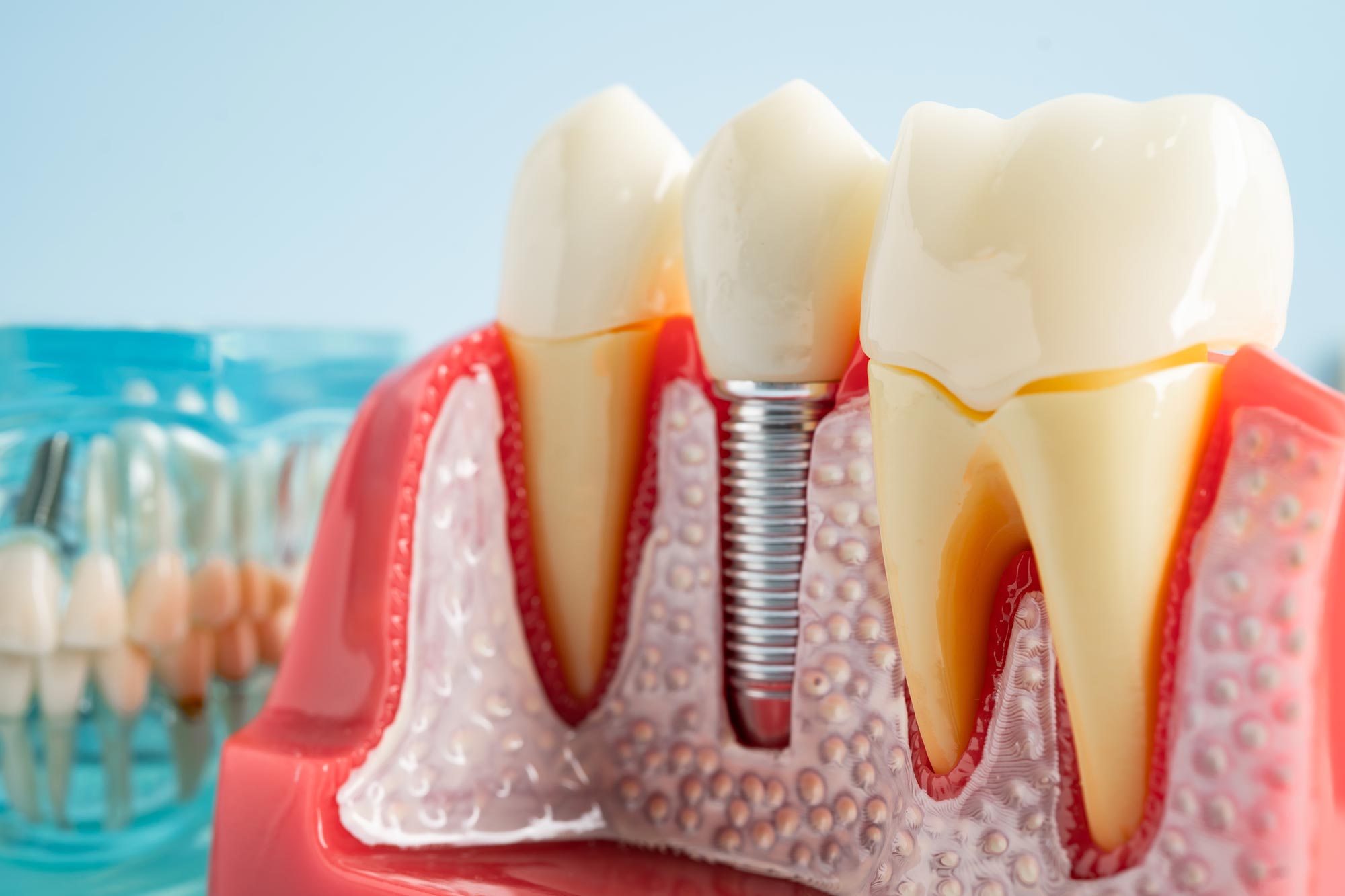
Researchers at Rutgers School of Dental Medicine have discovered why dental implant infections known as peri-implantitis often resist antibiotics. This serious infection affects 10-20% of implant recipients and damages jawbone. The study found that bacteria can corrode implants, releasing titanium particles that interfere with immune responses. These particles trap macrophages, immune cells responsible for fighting infection, in a hyperinflammatory state, leading to bone loss and ineffective bacterial clearance.
The researchers identified a calcium channel, TRPC1, which when blocked, stopped the disease progression in mice. This points to new potential therapeutic targets for peri-implantitis, a condition that costs over $1 billion annually. Routine maintenance, particularly using non-abrasive cleaning methods, is essential to prevent disease. This research offers a deeper understanding of the mechanisms behind peri-implantitis and suggests ways to improve treatment.
*****
Summary Bullet Points
- Researchers have identified the link between titanium particles released from dental implants and chronic inflammation around implants, known as peri-implantitis.
- The study revealed that these titanium particles can disable immune cell effectiveness, leading to increased vulnerability to infections.
- A specific calcium channel (TRPC1) in macrophages is implicated in the disease’s development, suggesting possible avenues for new treatments.
- Regular and careful maintenance of dental implants can significantly reduce the risk of peri-implantitis.
- This research provides exciting insights into a condition that affects a significant percentage of dental implant recipients and costs over a billion dollars annually.
Exploring the Complexities of Peri-Implantitis: Insights from Recent Research
In a world where medical and technological advancements seem unstoppable, dental implants stand as a testament to the incredible progress we’ve made in restoring function and aesthetics to millions. Yet, beneath the surface lies a perplexing challenge that has puzzled researchers for years: peri-implantitis. This condition, a chronic inflammatory disease affecting the tissue around dental implants, has proven resistant to conventional antibiotic treatment, affecting 10% to 20% of implant patients. So, what is behind this mysterious, multi-faceted issue? Let’s dive deep into the newly uncovered findings that shed light on this billion-dollar dental dilemma.
The Silent Infection
Imagine this scenario: you’ve undergone the complex and often stressful procedure of getting dental implants, eager to regain the full functionality of your mouth and the confidence that comes with it. However, months or even years after the procedure, you find yourself fighting a challenging infection. This is the reality for many implant recipients battling peri-implantitis, an infection that erodes the jawbone and stimulates inflammation. Though the symptoms can vary, the underlying issue remains largely invisible until significant damage has occurred.
Researchers at the Rutgers School of Dental Medicine have recently unveiled crucial insights into why infections like peri-implantitis are so difficult to treat with antibiotics. By employing advanced techniques, including using human tissue samples, cultured immune cells, and genetically engineered mice, they’ve managed to delineate the intricate relationship between dental implants, titanium particles, and immune responses.
The Role of Titanium Particles
For years, conventional wisdom pointed towards bacteria as the main culprits behind implant failures. However, the Rutgers study flipped this narrative on its head. What they discovered is that bacteria colonizing the surface of dental implants can corrode these titanium structures, releasing microscopic particles into the surrounding tissues. These particles are not merely by-products; they are active agents that disrupt the body’s natural immune responses.
Imagine these titanium particles as uninvited guests at a party — they come bearing gifts but really just wreak havoc once they enter the host. The immune cells, particularly macrophages, try to engulf these titanium invaders, but their efforts are thwarted as the macrophages recognize them as massive entities they cannot break down. This inability effectively traps these immune cells in a hyperactive, inflammatory state that leads to bone loss and further complications.
Deconstructing the Immune System’s Response
What makes this study particularly groundbreaking is its focus on the immune system’s responses to titanium particles. Researchers highlighted a specific calcium channel known as TRPC1 embedded in macrophages. When titanium particles activated this channel, the macrophages became less effective at performing their primary role: clearing out the harmful bacteria. Without this cellular clearing, the body finds itself in a vicious cycle of increasing inflammation and bacterial persistence.
The challenges don’t stop there. The persistent inflammatory state created by the titanium particles leads to bone loss around the implant. The macrophages not only fail to combat the bacteria, but they also contribute to the destruction of healthy bone tissue, further complicating the landscape for dental professionals treating impacted patients.
The Road Ahead: Potential Therapeutics
The significance of this research cannot be overstated. With knowledge of how titanium particles impede immune function, researchers have opened the door to potential therapeutic targets. The team led by senior author Georgios Kotsakis views the TRPC1 pathway as a promising target for developing drugs that could help regulate inflammation and immune responses in patients suffering from peri-implantitis.
What does this mean for people already navigating the challenges of dental implants? It heralds the prospect of innovative treatments that could not only prevent but perhaps reverse the effects of peri-implantitis. The pursuit of these therapies could make a substantial difference in patient care, fundamentally reshaping how dental professionals approach treatment for implant failures.
Maintenance Matters: The Importance of Care
While the study sheds light on the underlying biomedical mechanisms, it also emphasizes the perennial advice that dental professionals have long championed: regular maintenance is crucial. Professional cleanings can significantly improve the health of dental implants, but not all cleaning techniques are created equal.
Gone are the days when metal scalers were the go-to cleaning tools for implants. The findings from the Rutgers study are a reminder that certain methods can damage the surface of implants, marginalizing their long-term stability and leading to health complications. Nonabrasive techniques have become the gold standard, emphasizing that when it comes to dental hygiene, the method truly matters.
An Inspiring Future
Research findings like those from the Rutgers School of Dental Medicine not only illuminate our understanding of complex conditions but also serve as a source of inspiration. The relentless pursuit of knowledge and the gradual piecing together of the puzzle give hope to patients and practitioners alike. The more we understand the challenges we face, the better equipped we will be to tackle them.
As the study reminds us, progress is often non-linear. Just when we think we have a grasp on a challenge, new data emerges that transforms our understanding. Researchers are like detectives in a thrilling mystery novel, uncovering clues that lead us toward viable solutions. The ongoing work to find drugs targeting the TRPC1 pathway and refining maintenance methods will likely empower dental professionals to provide more effective care and ultimately improve patients’ quality of life.
In essence, understanding the mechanisms behind peri-implantitis is just the first chapter in a longer story. The implications of this research reach far beyond dental health; they encapsulate a broader truth about humanity’s ability to innovate, adapt, and overcome. Just as the researchers tirelessly search for answers in the lab, individuals everywhere are navigating their own journeys, tackling obstacles and working toward their own breakthroughs.
So whether it’s battling health challenges or striving for personal growth, the lesson remains clear: staying informed, seeking knowledge, and continually advocating for oneself leads to better outcomes. Just as patients must remain vigilant about their dental health, we too should adopt a proactive approach in all aspects of our lives, ensuring that we are prepared to address the challenges that come our way.
Conclusion: Empowerment Through Knowledge
The discovery elucidated by the researchers at the Rutgers School of Dental Medicine reinforces a powerful truth: knowledge is empowerment. With each new insight, dental professionals and patients gain tools to confront the complexities of peri-implantitis — and, by extension, they equip themselves to tackle broader life challenges.
As we stand on the brink of new treatments and methodologies in dental care, let’s remember that this journey is not just about disease management; it’s about enhancing patients’ lives through informed interventions. This fascinating intersection of science, health, and human experience thrives on curiosity and resilience, much like the patients who benefit from these advancements.
Let us celebrate this remarkable stride in dental health as a reflection of what is possible when passion, research, and innovation intersect. Our ability to seek understanding and apply findings in meaningful ways not only transforms our approach to health but also our approach to life itself. Just as researchers unravel the mysteries of disease, may we too strive to decode the complexities of our own paths—equipped with curiosity, courage, and an unwavering drive to improve.