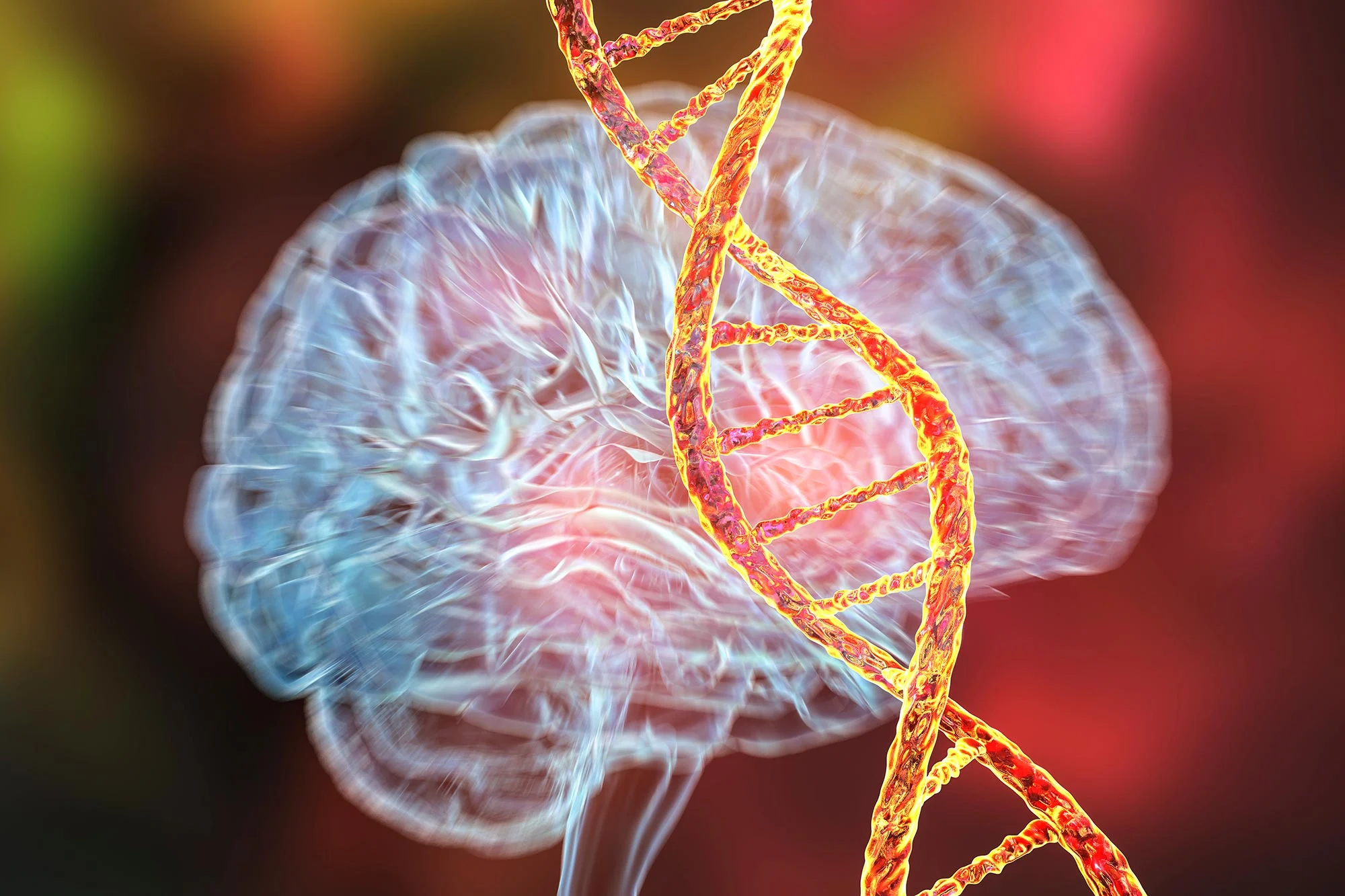
Summary of Scientists Uncover the Earliest Brain Changes That May Predict Alzheimer’s Decades Before Symptoms:
A recent study at Gladstone Institutes has uncovered how the APOE4 gene, a major risk factor for Alzheimer’s disease, influences brain function. Researchers found that APOE4 increases the production of a protein called Nell2, leading to hyperactivity in neurons, which could predict later cognitive decline. By reducing Nell2 levels in mouse models, they were able to normalize neuronal size and activity, suggesting a potential therapeutic target for preventing Alzheimer’s in those carrying the APOE4 gene. This study highlights early brain changes linked to APOE4 and their implications for understanding and addressing Alzheimer’s disease risk.
*****
Summary Bullet Points:
- Researchers at Gladstone Institutes have discovered early changes in the brains of individuals carrying the APOE4 gene, a major risk factor for Alzheimer’s disease.
- Increased levels of a protein called Nell2 result in hyperactive neurons, which can predict cognitive decline decades before noticeable symptoms.
- The study suggests that lowering Nell2 levels could help counteract these early brain changes, pointing to potential therapeutic interventions.
- This research opens new avenues for understanding how genetic factors influence brain health and prepares the ground for future Alzheimer’s treatments.
Early Brain Changes and Alzheimer’s: A Breakthrough in Understanding
Imagine a world where the specter of Alzheimer’s disease could be pushed back decades—where the very changes in your brain could be recognized long before you ever experienced memory loss or cognitive decline. A revolutionary study from the Gladstone Institutes has unearthed some compelling insights about how the APOE4 gene, known as a leading risk factor for Alzheimer’s, creates changes within the brain that might begin years before the onset of symptoms.
The research not only accentuates the importance of early detection but also showcases the malleability of our future mental robustness. Sound intriguing? Let’s dive into the sensational science behind this revelation.
Understanding APOE4 and Alzheimer’s Risk
Alzheimer’s disease isn’t just one of many neurodegenerative diseases; it’s arguably the most concerning due to its sweeping implications for millions. The APOE gene has several forms, with APOE4 standing out as the villain in this scenario. Approximately one in four people carry this gene variant, and among individuals with Alzheimer’s, 60% to 75% showcase this genetic variant.
You might be wondering, “What exactly does APOE4 do?” Here’s the kicker: it heightens your risk for cognitive decline by amplifying neuronal hyperactivity long before cognitive symptoms manifest. This situation can set the stage for a troubling evolutionary trajectory within the brain. Researchers at Gladstone took a compelling leap to differentiate the mechanical workings of neurons under the influence of the APOE4 gene.
The Neuronal Hyperactivity Connection
The Gladstone team utilized mouse models to reveal elegant intricacies in how the APOE4 affects brain function. In their study, published in Nature Aging, they reported a surprising find: hyperactivity in the hippocampus, the brain’s memory hub. Young mice carrying the APOE4 gene showed hyperactive neurons that were unusually small yet stirred up excessive activity, ultimately affecting their learning and memory capabilities as they aged.
Imagine attempting a puzzle where pieces keep moving around—making it incredibly difficult to see the bigger picture. That’s what hyperactive neurons do; they complicate the sequencing necessary for memory formation and retrieval.
The Role of Nell2: A Protein with Potential
So how does this hyperactivity happen? The answer lies in a protein called Nell2. As the researchers observed, elevated levels of Nell2 triggered the brain cells to shrink—worse yet, it made them more excitable. This created a vicious cycle of hyperactivity that could lead to lasting cognitive deficits later in life.
Here’s an empowering point from this breakthrough: the researchers determined that when they reduced Nell2 production, they were able to restore neuronal size and normal activity, even in APOE4 mice. Can you see the possibilities unfolding? It suggests that early interventions may indeed exist, providing a window for addressing these alterations in brain activity before they escalate.
A Pioneering Insight into Interventions
This research lays the groundwork for future therapies that could target Nell2 to minimize Alzheimer’s risk among people predisposed due to their genetic makeup.
Dr. Yadong Huang, one of the leading authors of the study, expressed optimism about the findings. "It opens the door to a better understanding of how APOE4 alters the function of neurons at a young age," he asserted. This could pave the way for revolutionary therapies that specifically target the underlying mechanisms resulting from APOE4.
Are we witnessing the dawning of a new era in Alzheimer’s research? This study carries enormous implications not only for treatments but also for prevention strategies—a paradigmatic shift.
The Journey Through Space: Learning and Memory
Another captivating aspect of the study is how it correlates hyperactivity and learning capabilities in spatial contexts. During their experiments, researchers observed that the extent of hyperactivity exhibited by APOE4 mice early on was predictive of how well they performed on spatial learning and memory tasks later in life. It’s like a game of predictive chess, where the opening moves could determine your position in later stages.
For a moment, consider how this could profoundly affect our approach to brain health moving forward. Can we detect and intervene at earlier stages—where cognitive decline can be forestalled through lifestyle changes or therapeutic interventions? Instead of waiting for symptoms to manifest, what if these insights could empower better brain health choices at every age?
Aging and Hyperactivity: A Lethargic Combination
Those with the APOE3 variant—a more protective variant—showed similar patterns of increased neuron excitability, but only later in life. This finding leads researchers to surmise that APOE4 may accelerate processes akin to natural aging, elucidating why people with this variant often develop Alzheimer’s symptoms earlier than others.
If chronological aging is defined as a gradual decline in neuronal functions, those with APOE4 may experience this decline at an expedited rate. The quickening descent raises an important question: what can be done to slow down this accelerated process?
Delving Deeper: Astrocytes and Neuronal Functioning
For years, scientists suspected that the primary influence of APOE4 concerning Alzheimer’s risk was via support cells known as astrocytes, but this study flipped that narrative on its head.
In a fascinating twist, the researchers discovered that the hyperactivity originated largely from neurons themselves rather than astrocytes. When the APOE4 gene was deleted from the neurons, the cells became larger and reverted to functioning normally. This radical finding reshapes our understanding of the cellular dynamics at play—evidencing that APOE4 influences neuronal behavior directly.
Nell2 as a Beacon of Hope
The key player, Nell2, has emerged as a groundbreaking target for this research. Its association with cognitive decline and hyperactivity in the brains of Alzheimer’s patients makes it a promising candidate for therapeutic intervention.
Intriguingly, when the researchers employed CRISPRi techniques to lower Nell2 levels in adult mice carrying APOE4, they observed a remarkable transformation in neuronal activity—that’s right, they fundamentally changed the game.
The success in reversing the manifestations of Alzheimer’s disease sparked excitement among researchers. Dr. Huang articulated the sentiment perfectly, stating, “That tells us the damage is not irreversible.” The door for timely intervention remains ajar, offering hope even after the onset of adverse changes.
Conclusion: Bridging Gaps in Our Understanding
The Gladstone Institutes’ research fills in gaps in our understanding of gene-related Alzheimer’s risk, presenting a panorama of hope for individuals and families affected by this disease. The findings spotlight the urgent need for early monitoring and potential interventions that could redefine how we approach cognitive health.
Moving forward, as we broaden our understanding and uncover pathways for therapeutic interventions, it becomes imperative to remain engaged in our neurological health, seeking the latest in research, embracing lifestyle changes, and advocating for timely interventions based on new scientific findings. Ultimately, the dawn of early predictive models for Alzheimer’s may pave the way for a healthier, mentally agile future.
Embrace this journey—not just for yourself, but for every mind that deserves a fighting chance at resilience against age-old adversaries like Alzheimer’s. While the study unveils critical scientific insights, it equally ignites a sense of empowerment, reminding us of the extraordinary potential that lies within the dialogues of science and proactive health choices.
This narrative stands not just as an account of pioneering research but as a beacon of hope, urging us to ponder: what decisions can we make today to safeguard our cognitive tomorrow?