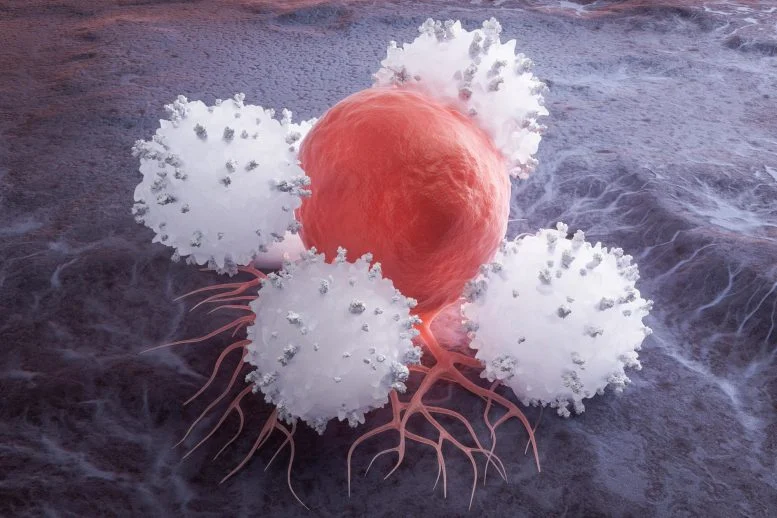
Summary of What It Takes To Make a White Blood Cell Could Unlock New Cancer Treatments:
Researchers at Iowa State University, led by Professor Raquel Espin Palazon, have identified two vital components—a protein called progranulin and the JAK2/STAT3 signaling pathway—that may help immature leukemia cells mature, potentially providing a new therapeutic strategy. In aggressive leukemia, certain blood cell precursors become trapped and fail to develop properly, disrupting healthy blood cell production.
Using zebrafish models, the team found that progranulin, when activated, can push these cells toward maturation, allowing them to complete their lifecycle. They also discovered that the JAK2/STAT3 pathway is crucial for this process, as it transmits signals necessary for cell development.
This study emphasizes the importance of using animal models to uncover biological interactions that may not be evident in isolated cell lines. The findings also highlight differences between two macrophage types, with implications for developing targeted therapies for tissue repair and leukemia treatment. However, translating these findings into clinical applications may take years and depends on further research and industry investment.
*****
Summary Points:
- Recent breakthroughs in leukemia research have identified a protein called progranulin and a signaling pathway (JAK2/STAT3) as key factors that could push immature blood cells to mature.
- Understanding the developmental process of white blood cells can reveal new strategies for leukemia treatment, potentially allowing for effective therapies to be developed.
- Zebrafish have emerged as a useful model organism in this research, enabling scientists to bypass challenges faced in mammalian studies.
- The study distinguishes between two types of embryonic macrophages, enhancing our understanding of how they can be utilized in tissue repair and regeneration.
- While promising, the transition from research findings to clinical treatments remains a lengthy process, often taking over a decade.
Unlocking New Cancer Treatments: The Role of White Blood Cells
When we think of the immune system, white blood cells emerge as valiant defenders against disease. These remarkable cells possess the potential to combat illnesses, including cancer. Yet, in some cases, they can become part of the problem—for example, when leukemia strikes. Recent research sheds light on a striking connection between a protein known as progranulin and a signaling pathway called JAK2/STAT3. Understanding how these elements interact could unlock groundbreaking treatments for leukemia.
The Journey of Blood Cells: A Complex Tale
In a healthy individual, blood cells are born from stem cells in the bone marrow, going through various stages of development that guide them toward specialized functions. However, in aggressive leukemia, certain immature blood cells find themselves trapped in this developmental limbo. Instead of maturing into disease-fighting soldiers of the immune system, they multiply uncontrollably, congesting the marrow and hijacking the body’s natural ability to produce healthy blood cells.
Raquel Espin Palazon, an associate professor at Iowa State University, likens these stuck cells to an engine that stalls—despite needing repairs, it refuses to finish the job. Her group’s pioneering research has made strides in figuring out how to coax these wayward cells to mature, ultimately aiming to restore balance within the body and combat leukemia’s devastating impact.
Progranulin: The Unsung Hero
The tale begins with progranulin, a protein present in many living organisms. While typically overlooked, it has become a focal point of recent studies. The question that has puzzled researchers is: Why is progranulin so highly expressed in human macrophages, those large white blood cells known for engulfing pathogens?
Investigations into this protein consumed Espin Palazon’s team. Utilizing zebrafish as a model—thanks to their genetic simplicity—they discovered that zebrafish possess two forms of progranulin, one of which specifically activates in blood cells. The absence of this form resulted in a failure among myeloid progenitors, the precursors to various essential blood cells, to mature into functional macrophages and neutrophils. This was an electrifying breakthrough, highlighting the possibility that progranulin could play an equivalent role in human cells.
Connecting the Dots: The Power of Signaling Pathways
However, the initial excitement was tempered by a setback. When tested directly on human leukemia cells, the addition of progranulin failed to induce maturation, leaving Espin Palazon and her colleagues scratching their heads. Revisiting their zebrafish, they found that those lacking the blood cell-specific form of progranulin exhibited disruptions in a crucial signaling pathway: JAK2/STAT3.
Armed with this newfound insight, they dove back into the world of leukemia cells, this time equipped with a clearer understanding of what they needed to investigate. With JAK2/STAT3 being hyperactive in various cancers, including leukemia, the combination of both progranulin and the signaling pathway led to promising results: leukemia cells began to mature, pushing past their developmental roadblock.
This process was thrilling to observe, as it demonstrated a tangible method for nudging malignant cells toward maturation—an essential precursor to their death. Imagine, just for a moment, the possibility of targeting these pathways as a new therapeutic avenue in the fight against leukemia!
The Evolution of Macrophages: Tweaking the Blueprint
But the revelations didn’t stop there. The distinction between two embryonic macrophage types emerged from the study, each with roles critical to tissue repair and regeneration. One particular type depended on both progranulin and the JAK2/STAT3 pathway. This raises exciting questions about the manufacturing of specialized cells for medical use. Can we mimic these effective macrophages in the lab to enhance their regenerative capabilities?
The implications extend beyond cancer treatment into broader realms like tissue regeneration and injury repair, which opens a treasure trove of possibilities for the medical community. Understanding the nuanced differences between these two macrophage types can shape future treatments, ensuring that we don’t treat all macrophages as mere interchangeable units.
The Road to Clinical Treatments: A Long Journey Ahead
Despite the exhilarating discoveries in the lab, translating them into clinical applications is fraught with challenges. The timeline for moving from discovery to therapeutic viability can span a decade or more. Espin Palazon emphasizes the importance of understanding how these cells operate before we can intelligently manipulate them for treatment.
With sufficient interest and resources funneled into research, the promise of progranulin and JAK2/STAT3 as therapeutic targets in leukemia may one day turn from hope into reality. But it’s essential to remain patient and grounded—the path to saving lives is often a winding one, filled with twists and turns as scientists decipher the complexities of the human body.
Catalyzing Change through Research
As we delve into the immune system’s intricacies and uncover its myriad interactions, it’s impossible not to feel a stir of optimism mixed with urgency. The studies led by Espin Palazon and her colleagues are crucial stepping stones toward understanding and potentially curing diseases like leukemia.
This work showcases the essence of scientific inquiry—that behind each discovery lies a complex web of questions, experiments, and hypotheses waiting to be unraveled. The role of white blood cells in health and disease serves as a reminder of the resilience of life itself and our capacity to fight against odds.
Fostering a Spirit of Inquiry
To those inspired by science, remember that curiosity isn’t just for researchers in sterile labs—it’s a quality we can all cultivate. Engage with the world around you, ask questions, and seek to deepen your understanding of how complex systems operate. Whether it’s learning about cellular signaling or simply paying more attention to the intricacies of daily life, we all have the potential to contribute to larger conversations.
Each question you ask, every bit of knowledge you glean, has the power to inspire innovation in ways we might not yet foresee. Much like the challenges faced by those studying leukemia, your journey of self-improvement can unveil breakthroughs in your own life.
The Future Is Bright
As the work continues in laboratories around the world, it is essential to recognize how far we have come and acknowledge the contributions of those relentless in their quest for answers. The fascinating interplay between white blood cells and leukemia treatment serves as an encouraging narrative, one that offers hope not just to those fighting cancer, but to all of us striving for better health and well-being.
So, as you navigate your own life’s complexities, remember the boundless potential of inquiry and discovery. In science, just as in life, it’s persistence combined with a thirst for knowledge that leads to remarkable breakthroughs. Potential therapies may be on the horizon, and maybe, just maybe, the fight against diseases like leukemia lies not just in the hands of scientists, but in our collective spirit to forge ahead.