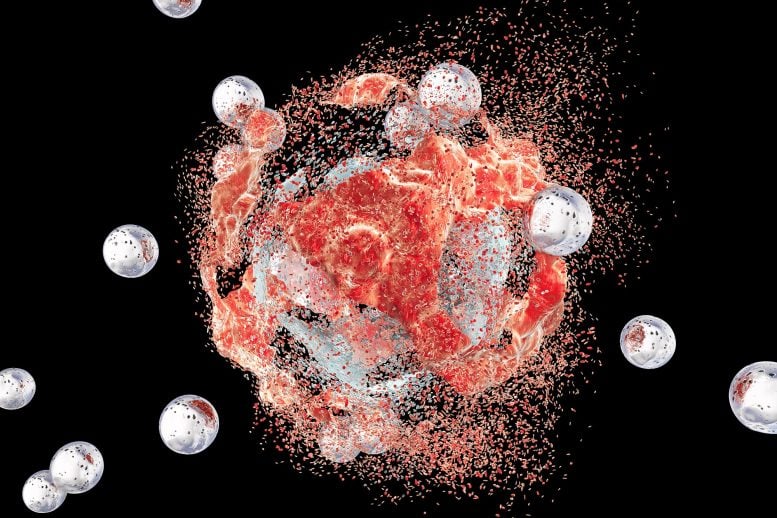
Summary of This Tiny Genetic Glitch Is Crippling Some of the Deadliest Cancers:
Australian scientists have discovered a new method to slow the growth of aggressive, hard-to-treat cancers by targeting a genetic process known as minor splicing. Published in EMBO Reports, the research shows that blocking this RNA process can significantly reduce tumor growth in liver, lung, and stomach cancers.
*****
-
Genetic Marvel: Discover the groundbreaking discovery of minor splicing and its impact on combating aggressive cancers.
-
Scientific Prowess: How Australian researchers are paving the way for new cancer treatments by unraveling complex genetic processes.
-
Targeting Tumors: Learn how blocking a tiny RNA process can change the battlefield in liver, lung, and stomach cancer treatment.
-
Hope on the Horizon: The potential implications for healthcare and patients battling these deadly illnesses.
- The Human Element: Why this discovery is more than just a scientific breakthrough—it’s a beacon of hope.
Imagine stepping into a world where the whisper of genetic secrets holds the power to change lives, where a tiny glitch in the genomic matrix can mean the difference between life and death. This isn’t science fiction. It’s a groundbreaking reality unearthed by a team of tireless researchers from Australia, who have uncovered a powerful tool hidden within the delicate dance of RNA—an intricate process called minor splicing.
A World of Tiny Wonders
The world of genetics is filled with mysteries waiting to be solved, and minor splicing is one of those enigmatic processes that, until recently, remained largely in the shadows. To put it simply, RNA acts as the middleman in translating our DNA into proteins—the building blocks of life. Minor splicing is a specialized form of RNA processing that impacts how genetic messages are conveyed. Disturbances in this process can lead to significant issues, including the devastating advance of certain cancers.
Scientists have long studied cancer, trying to find the vulnerable points in its armor. Here, a flicker of brilliance emerged from the shadows: what if minor splicing—the very factor that seemed insignificant—held the key to stopping cancer in its ruthless tracks?
Breaking Boundaries with Science
In an incredible leap forward, researchers discovered that disrupting this minor splicing process could dramatically slow down the growth of some of the deadliest cancers affecting the liver, lung, and stomach. By targeting this microscopic mechanism, they’ve illuminated a path to developing treatments for cancers that have been notoriously hard to tackle.
The research, published in the prestigious EMBO Reports, dives deep into how these scientists meticulously blocked minor splicing processes. Their findings revealed that when these tiny genetic glitches are inhibited, cancerous tumors lose their aggressive momentum.
To imagine the scale of this discovery, picture this: a skilled seamstress weaving a masterpiece, perfectly cutting and stitching each thread. Now, introduce a glitch—a minor disruption that throws the entire pattern into chaos. By exploiting this disturbance, scientists can unravel the malignancy’s threads, disrupting its growth and spread.
Implications for the Future
This discovery opens up unprecedented opportunities in cancer treatment. The potential to specifically obstruct minor splicing introduces a novel method that could complement existing therapies or become a standalone treatment for certain aggressive cancers. For patients and families facing these diagnoses, this is a groundbreaking leap closer to possible long-term management, remission, or even eradication.
But why is this discovery so important? Beyond the laboratory’s technical prowess, it represents hope—a small but luminous beacon in the often dark and overwhelming realm of cancer treatment.
A Human Connection
Now, let’s move beyond the equations, the petri dishes, and the scientific jargon. Let’s touch the human side of this monumental breakthrough.
When you hear the word "cancer," what do you think of first? Perhaps it’s the image of a loved one, the memory of a battle fought bravely, or the uncertainty that often shadows a diagnosis. This development is not merely an entry in a scientific journal; it is the culmination of countless hours of work with the potential to rewrite personal stories.
This is where the beauty of science meets the resilience of the human spirit. It’s about changing trajectories and redefining what is possible. It’s about giving those facing the most challenging battles a new weapon with which to fight.
Beyond the Microscope
Through this discovery, we can appreciate how interconnected we, the human race, truly are. From researchers in far-off labs in Australia to patients in every corner of the globe, this breakthrough underscores the collective power of human ingenuity and empathy.
It’s a testament to relentless curiosity and determination—a gentle reminder that among the hustle and relentless passage of time, we can find moments that alter destinies. In the grand architecture of life, it’s often the smallest bricks that form the strongest foundation.
The Road Ahead
With this discovery, the road to effective cancer treatment has branched into yet another promising direction. However, this is just the beginning, a first step that invites countless questions and avenues for further exploration.
Pharmaceutical companies, hospitals, and researchers worldwide can now leverage this groundbreaking knowledge. Clinical trials will eventually follow, where theory meets the real world, turning hypotheses into healing.
Just as the initial genetic discovery stirred intrigue, each subsequent step will require careful navigation, perseverance, and collaboration. Together, science, medicine, and humanity will strive toward harnessing this potential to see its promises fulfilled.
An Inspiration to Us All
While this discovery centers on cancer treatment, its implications ripple far beyond. It serves as a profound reminder of the potential for human achievement against seemingly insurmountable odds. It invites everyone, regardless of background, to recognize the potential they hold.
Every seed planted, every effort made in understanding and exploring, feeds into a greater tapestry that benefits us all. No matter your field or passion, you have a role in shaping the future. It might not seem monumental at the moment, but remember, monumental results often begin with tiny, seemingly insignificant actions.
Harnessing Potential
To harness this potential, scientists needed to tread into unfamiliar realms, explore uncharted territories, and make bold conjectures. They have walked a path paved with uncertainty and risk—and emerged victorious.
In our personal and professional lives, we can draw inspiration from their journey, understanding that breakthroughs often come from unexpected places. Embrace curiosity, challenge conventions, and nurture the audacity to pursue new perspectives. You never know where your efforts will lead or whose lives you will change along the way.
Challenge the Status Quo
With potential breakthroughs and continued exploration, the world sharpens its understanding of its most complex challenges. Scientists dared to question the role of minor splicing—a topic rarely discussed—against the backdrop of cancer. Their victory urges us all to question the status quo, both in science and in life.
Whether you’re solving hundred-year-old equations or simply seeking to become better every day, this discovery stands as a testament to the power of a different viewpoint, an alternative narrative, and the courage to pursue what others might overlook.
Parting Thoughts
This journey of scientific discovery started with the tiniest of glitches and unfolded into an expansive new frontier of possibilities. It’s a narrative of hope, perseverance, and potential—one that transcends the sterile confines of laboratories and enters the vibrant fabric of human existence.
To every researcher dedicating their life to curing diseases, to every individual facing the formidable challenge of cancer, and to everyone who dares to dream of unimagined possibilities, remember: what lies behind us and what lies before us are tiny matters compared to what lies within us. May we all continue to look deeper, reach further, and aim higher.