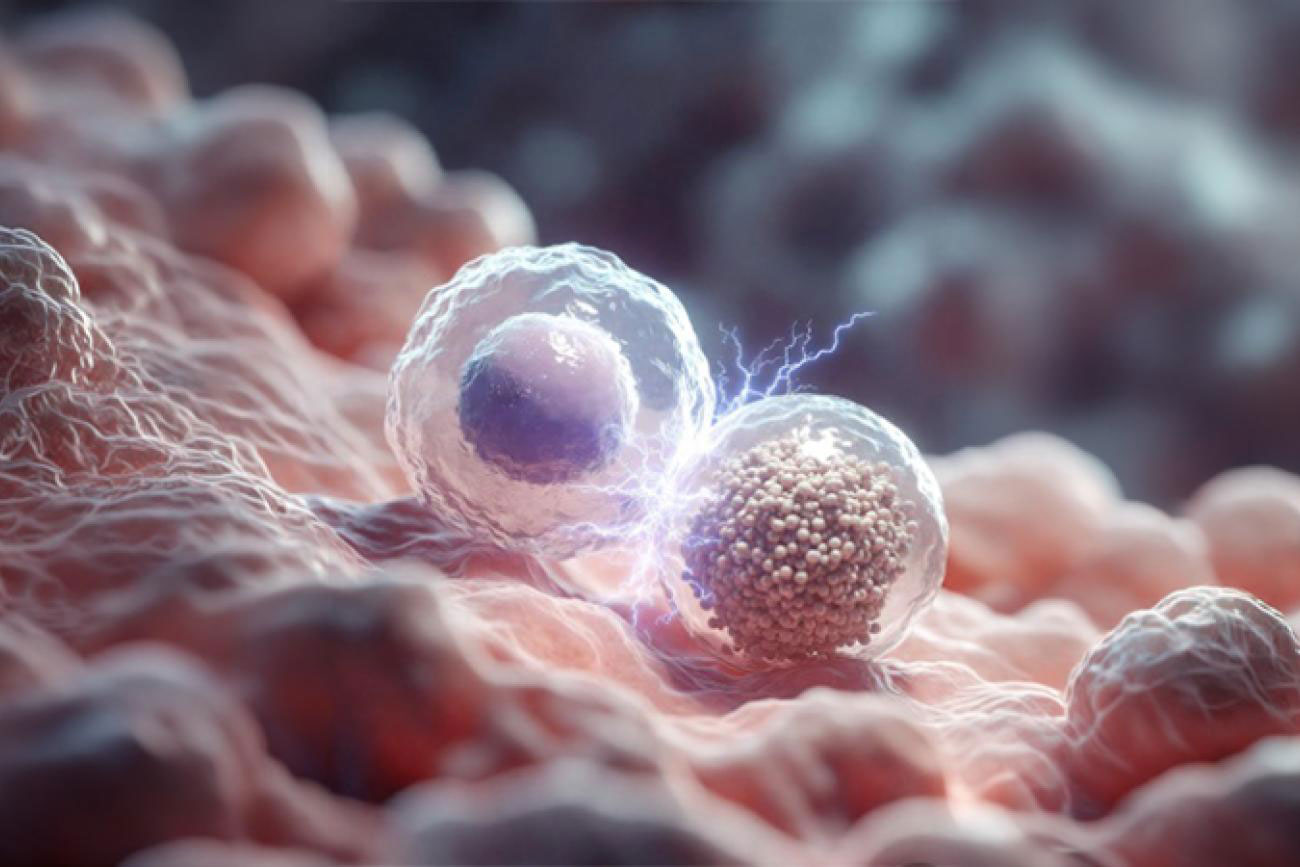
Summary of This Tiny Device Could Solve One of Immunotherapy’s Biggest Weaknesses:
Researchers at UCLA have developed an implantable device designed to enhance the effectiveness of CAR-iNKT cells, a type of immune cell used in cancer therapy. This device acts like a “charging station,” providing the necessary signals to reactivate and sustain the cancer-fighting activity of these cells, which often lose momentum once inside the body, especially within solid tumors.
The device utilizes tiny biomimetic particles that mimic the activation signals for immune cells. The reactivation is triggered by TCR antigen and includes IL-15, a protein that supports cell growth. This method has shown promising results in preclinical tests against melanoma and lymphoma, helping the engineered immune cells remain active, multiply, and remember their targets.
Key features of this technology include carefully balanced stimulation to avoid overwhelming the cells and localized signal delivery, which minimizes side effects typically associated with widespread activation methods. Ongoing refinements aim to broaden its application in cancer immunotherapy.
*****
Summary Bullet Points
-
The Challenge of Immunotherapy: Immunotherapy has significantly changed cancer treatment, but immune cells often lose effectiveness inside solid tumors.
-
Innovative Solution: Researchers from UCLA have developed a tiny implantable device that acts as a "charging station" for CAR-iNKT cells, helping them stay active longer against cancer.
-
Mechanism of Action: The device uses biomimetic particles that mimic signals to reactivate immune cells, enhancing their ability to destroy cancer cells.
-
Balancing Act: Achieving the right level of stimulation is crucial; too much can exhaust the immune cells, while too little may cause a loss of function.
- Future Prospects: Ongoing research aims to refine this technology and explore its application in various cancer types, potentially revolutionizing treatment.
A Tiny Device with Big Implications in Cancer Treatment
In recent years, the landscape of cancer treatment has witnessed radical transformation, primarily through the advent of immunotherapy. This groundbreaking approach enables the body’s own immune system to battle cancer more effectively. However, a significant challenge looms over these promising therapies: many engineered immune cells tend to lose their effectiveness soon after they are introduced into the body, particularly within the unforgiving confines of solid tumors. Here’s where an innovative solution is blossoming, driven by the untiring minds at UCLA—an ingenious tiny device that promises to rejuvenate these essential cancer-fighting cells.
The Power of Immunotherapy
Imagine your immune system as an elite task force that has been specially trained to target and eliminate cancer cells. Traditional treatments like chemotherapy and radiation have often been associated with severe side effects, draining the body’s defenses while endeavoring to obliterate the cancerous cells. Immunotherapy, conversely, enlists the body’s natural defenses to do the fighting. This revolutionary shift means that patients can enjoy improved quality of life while battling cancer.
However, this promising strategy has its Achilles’ heel. Engineered immune cells like chimeric antigen receptor-invariant natural killer T cells, or CAR-iNKT cells, have shown remarkable potential, especially for those stubborn solid tumors. Unfortunately, they often hit a wall, losing momentum as they navigate the challenging environment created by cancer. The question arises: how can we keep these valiant soldiers engaged in the fight?
A Charging Station for the Courageous
Imagine arriving at a critical moment in a battle only to realize that you’ve run out of fuel. How can you continue to fight? That’s the dilemma faced by CAR-iNKT cells after their introduction into the body. UCLA researchers have envisioned a solution: an implantable device that functions like a recharging station for these immune cells. According to the study published in Nature Biomedical Engineering, this innovation has shown favorable results in both human melanoma and lymphoma samples.
These biomimetic microparticles are superbly engineered to replicate the activation signals required for these immune cells to bounce back into action. The analogy is simple yet powerful: just as a smartphone needs to be plugged into a charger to keep operating optimally, CAR-iNKT cells need a continuous supply of the right signals to sustain their cancer-fighting capabilities.
How This Device Works: The Inner Workings
So, how does this "charging station" actually work, you may wonder? The core of the mechanism involves biomimetic particles that deploy a molecule known as the TCR antigen. These tiny particles are designed to resonate with CAR-iNKT cells, enabling them to undergo a metamorphosis and switch back to attack mode. Alongside these signals, the device is equipped with capsules of IL-15, a vital signaling protein that fosters cell growth.
In simpler terms, think of the TCR antigen as a light switch that turns these immune warriors back on. Once stimulated, the CAR-iNKT cells journey into the bloodstream, effectively sweeping through the body to eradicate cancer cells in various locations. This system prioritizes not only their activation but also their proliferation and long-term memory, which is crucial for sustained defense against cancer.
A Delicate Balance of Activation
In the grand design of this system, balance is everything. Too much stimulation can lead immune cells to become fatigued and ultimately wear out, whereas too little can render them inactive. Therefore, striking the right chord for activation signals, the release of vital proteins, and the physical characteristics of the biomimetic particles is paramount.
This careful calibration means that the device can provide localized support directly at the tumor site. Older treatment methods, reliant on circulating immune-activating drugs, often resulted in widespread side effects and unintended consequences. By keeping the energizing signals concentrated, researchers have crafted a targeted platform that protects immune cells while minimizing broader exposure to unwanted stimuli.
Pioneering a New Chapter in Cancer Treatment
As the clinical trials progress, early results demonstrate this device’s exceptional compatibility with biological systems. The research team continues to refine this technology with an eye on extending its applicability to other forms of cancer immunotherapy. What does this mean for the future? It means a world of hope is shining a little brighter for cancer patients, as researchers diligently work to transition this innovation from lab to clinical application.
The success stories emerging from this endeavor could easily transform the way we perceive and treat cancer. Those who had previously faced daunting odds may soon have access to strategies that leverage their own immune systems more effectively, leading to higher chance of survival and an improved quality of life.
Transformative Potential Beyond Cancer
While this innovation shines a spotlight on cancer treatment, the implications of the research may reach beyond oncology. The principles of specialized signaling mechanisms and localized activation can extend to other chronic diseases where immune modulation plays a vital role. Consider autoimmune disorders, in which the immune system effectively turns against the body. Could we harness similar technologies to recalibrate those misaligned defenses?
This pioneering research holds the promise of expanding into realms previously thought unattainable. It ignites a spark of curiosity and excitement about the future, inviting us to consider the endless possibilities that might arise from innovations in bioengineering and immunology.
The Importance of Resilience and Innovation
As we delve into the intricacies of such groundbreaking technologies, it’s essential to recognize the broader lessons they teach us about resilience and the spirit of innovation. The journey from challenge to solution isn’t linear; it involves setbacks, recalibrations, and relentless pursuit of answers. We’ve all been faced with hurdles that seem insurmountable, whether they’re personal challenges or the trials life throws at us.
The story of the tiny device brings to the forefront lessons that we can embody in our own lives. It embodies the notion that persistence leads to breakthrough, and that even in the face of adversity, there is hope. Just like the CAR-iNKT cells that require recharging, we too may find ourselves in moments where we need to reconnect with our sources of motivation and inspiration.
Staying Engaged in Your Own Life
So, in an era filled with uncertainties, how can we apply these lessons? Here are practical steps:
-
Recharge Your Energy: Just as the tiny devices help immune cells regain strength, reflect on your life and identify areas where you can rejuvenate. It might be by pursuing a new hobby, spending time with loved ones, or simply taking a break when overwhelmed.
-
Balanced Approach: Much like the fine-tuning of stimulation in the device, think about achieving balance in your commitments. Avoid overextending yourself; concentrate your energy on what matters most.
-
Stay Curious: Allow the same scientific curiosity that drives researchers to permeate your everyday life. Ask questions, explore new ideas, and remain open to learning.
-
Seek Support: Whether it’s asking friends for help or joining a community, remember that you don’t have to go it alone. Just as CAR-iNKT cells rely on external signals, we too can benefit from connections with others.
- Celebrate Small Wins: Each breakthrough in cancer treatment represents countless hours of hard work. In the same vein, acknowledge and celebrate your milestones, no matter how small they may seem.
Conclusion: A Future Full of Promise
In a world where challenges persist, the story of the tiny device developed at UCLA serves as a beacon of hope. From the scientific ingenuity behind those biomimetic microparticles to the broader life lessons we can draw from it, there is something fundamentally profound about the human spirit’s quest for betterment.
As we pay homage to researchers pushing the frontiers of medical science, let’s also turn inwards, confronting our own challenges with the same fervor and belief in possibilities. In the end, the fight against cancer is not just a medical endeavor; it’s a reflection of our collective resilience, innovative spirit, and unwavering hope for a brighter tomorrow.
The journey towards a world free of cancer is long and complex, yet with each small step, we move closer to achieving the extraordinary. The promise of immunotherapy, armed with tools like the “charging station,” not only advances the frontiers of medicine but also lights the way for all of us to confront our struggles and strive towards achieving our potential.