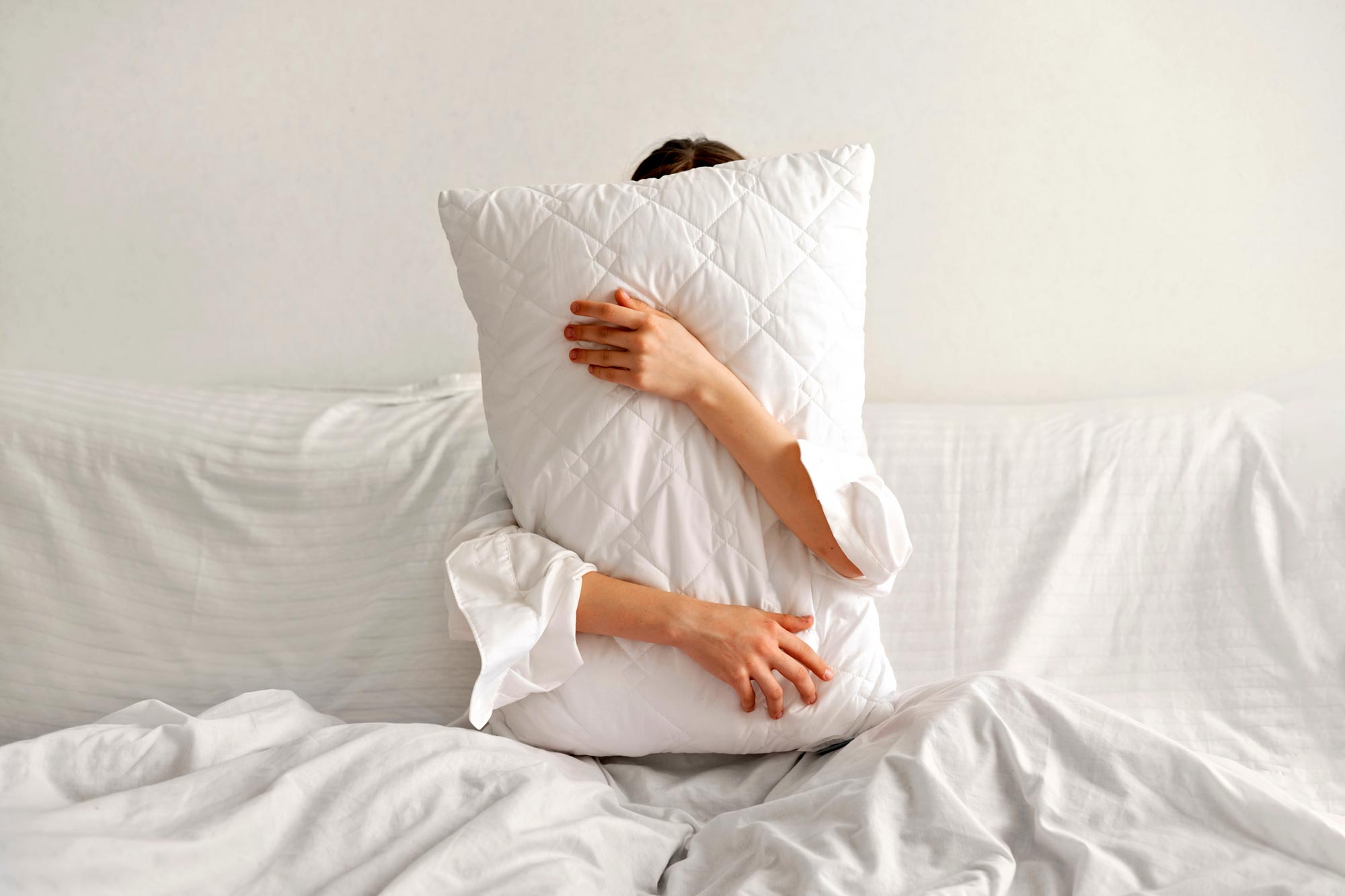
Summary of The Surprising Reason You Might Want To Sleep Without a Pillow:
A new study indicates that sleeping position, particularly the use of pillows, may significantly impact eye health by affecting intraocular pressure (IOP). Research published in the British Journal of Ophthalmology suggests that sleeping without a pillow could help lower elevated IOP, which is linked to glaucoma, a major cause of irreversible blindness.
In the study involving 144 adults with glaucoma, researchers found that elevating the head with pillows can compress the jugular vein, hindering fluid drainage from the eye and raising IOP. Participants showed an average IOP increase of 1.61 mm Hg when their heads were elevated.
Younger adults experienced larger increases in IOP compared to older participants, especially those with primary open-angle glaucoma. The findings suggest that modifications in sleep posture could be a simple strategy for managing IOP in glaucoma patients.
Though the study highlights an association rather than causation, it opens the door for further research into the effects of sleep posture on eye health.
*****
The Surprising Reason You Might Want to Sleep Without a Pillow
Summary
- Recent research indicates that sleeping without a pillow may lower intraocular pressure, crucial for eye health and glaucoma prevention.
- Higher pressures in the eye can be linked to pillow height, as it affects the neck position and subsequently the jugular vein.
- Differences in responses among various age groups suggest potential personalized sleep strategies for eye health.
- Despite the findings, the research has limitations and calls for further studies on sleep posture.
- Adjusting sleeping habits can be a simple yet effective approach for long-term health management.
Sleep is often regarded as a sacred ritual, an oasis from the chaos of our daily lives. Yet, for all its glorified benefits, we seldom think about the intricacies of how we engage in this nightly reprieve. One particularly intriguing aspect that hasn’t garnered sufficient attention is the very pillow we rest our heads upon. You might be surprised to learn that choosing to sleep without a pillow could hold surprising advantages for eye health.
A new study, which turned the spotlight on the relationship between sleep posture and intraocular pressure (IOP), uncovers fascinating insights that might just change your nighttime routine for the better. As we delve into the nuanced world of sleep, the effects on our physical well-being, especially our eyes, are certainly worth more than just a passing glance.
The Research Behind the Revelation
The adventure into this compelling inquiry began with a team of diligent researchers who wanted to understand the mechanics of sleep posture in relation to eye health. Their focus was on IOP—an often neglected but crucial component in understanding glaucoma, the leading cause of irreversible blindness globally. The study, published in the British Journal of Ophthalmology, involved 144 participants diagnosed with glaucoma, spanning various age brackets and health conditions.
Imagine sitting in a cozy, dimly lit room, perusing your medical history while undergoing a thorough eye exam. This was the reality for participants as they were closely monitored for their IOP at two-hour intervals over a 24-hour period. A basic yet profound question loomed: Does the height of a pillow influence the pressure within our eyes?
The findings revealed a remarkable insight: sleeping with elevated heads—thanks to pillows—often resulted in increased IOP. Specifically, two-thirds of participants experienced a rise in ocular pressure while their heads were elevated compared to when they lay flat. Just a slight elevation of around 20° to 35° significantly affected the pressure—an increase averaging about 1.61 mm Hg.
But why does this angle in neck positioning matter? It all comes down to the jugular vein—something many would not consider while dozing off. The tight angle created by pillow height can restrict the normal drainage of aqueous humor in the eye, which is vital for maintaining a healthy ocular pressure and ensuring oxygen and nutrient delivery to eye tissues.
Insights into Age and Health Conditions
What adds more depth to this exploration is the diversity among the participants. Interestingly, younger adults were more likely to witness more significant increases in IOP than their older counterparts. This variation emphasizes the importance of adopting personalized strategies for optimizing sleep posture—especially for those already grappling with glaucoma or elevated eye pressure.
The study also included healthy volunteers to assess whether these results were exclusive to individuals with existing conditions. They, too, validated the notion—using pillows constricted the inner space of jugular veins and heightened blood flow speed. It seems that neck positioning during sleep has broader implications affecting our circulatory system and, intrinsically, our eye health.
The Broader Implications: Rethinking Sleep Posture
For countless individuals living with or at risk of glaucoma, the findings present not just a potent insight but also actionable advice. Adapting sleeping habits may serve as a pivotal, supplementary approach to managing IOP long term—potentially even more intuitive than increasing medication or relying solely on surgical interventions.
Just think about it: how often have we overlooked something as ordinary yet pivotal as our pillow choice? In the grand tapestry of self-care and health management, this might be one thread that holds significant weight. By consciously experimenting with pillow height and exploring the option of sleeping without one, you may make strides toward more than just a decent night’s sleep.
Moreover, this isn’t merely an issue for patients or those at risk for glaucoma. The practical, everyday person can benefit from these revelations. The act of learning your own body and how it interacts with your environment is a journey in itself—one that deserves a spotlight just as bright as our traditional health regimens.
A Simple Strategy for Healthier Sleep
One intriguing proposal stemming from this research centers on the notion that sleeping without a pillow could very well become a personal health strategy. Imagine being able to enhance your sleep quality while simultaneously nurturing your eye health—two goals that often feel at odds in our modern lives.
What might this look like? Start with a simple experiment. Gradually transition to sleeping without a pillow for a few nights each week, or at the very least, trade in those high, fluffy options for something more minimalist. Pay attention to how your body reacts. Do you feel more comfortable? Is your sleep more restful? More importantly, observe any physical changes you notice—do your eyes feel less strained upon waking?
It’s not merely about eliminating any pillow; it’s about reflecting upon how your body engages with your sleep environment. The challenges that arise in adjusting to this new sleep posture are not just about bending the neck; they can ripple out into psychological shifts as well. Positioning yourself without artificial elevation might just result in a more grounded and stable approach to your overall health.
Acknowledging the Limitations
While these findings evoke a wave of optimism, it’s essential to scrutinize the research’s limitations. This study was observational, meaning a cause-and-effect relationship wasn’t definitively established. Moreover, the number of participants in certain glaucoma subgroups was relatively small, calling for larger studies to either reinforce or debunk these claims.
Another vital aspect is individual comfort. Not everyone will feel safe or comfortable eschewing their trusted pillow. Understanding your body and your unique needs is key. As much as the research presents an inviting option, always prioritize your comfort and well-being.
The Path Forward
As we conclude this journey into the captivating world of sleep and eye health, the essential takeaway rings clear: your sleep posture matters more than you realize. Sleeping without a pillow could be a stepping stone toward optimizing your ocular health, but it’s not the only thing you can do. Regular eye exams, a balanced diet rich in nutrients, and remaining mindful of your overall health are integral components of well-being.
Moreover, life as we know it can often feel insurmountable in its relentless pace. Yet, the beauty of methods like adjusting your sleep posture lies in their simplicity and accessibility. Anyone can do it. With each small tweak, you could gradually enhance not only your sleep quality but also your connection to your body.
So why not embrace this exciting new strategy? Your eyes—and perhaps your overall health—may just thank you. After all, sleep is a journey. Let’s make it a good one.