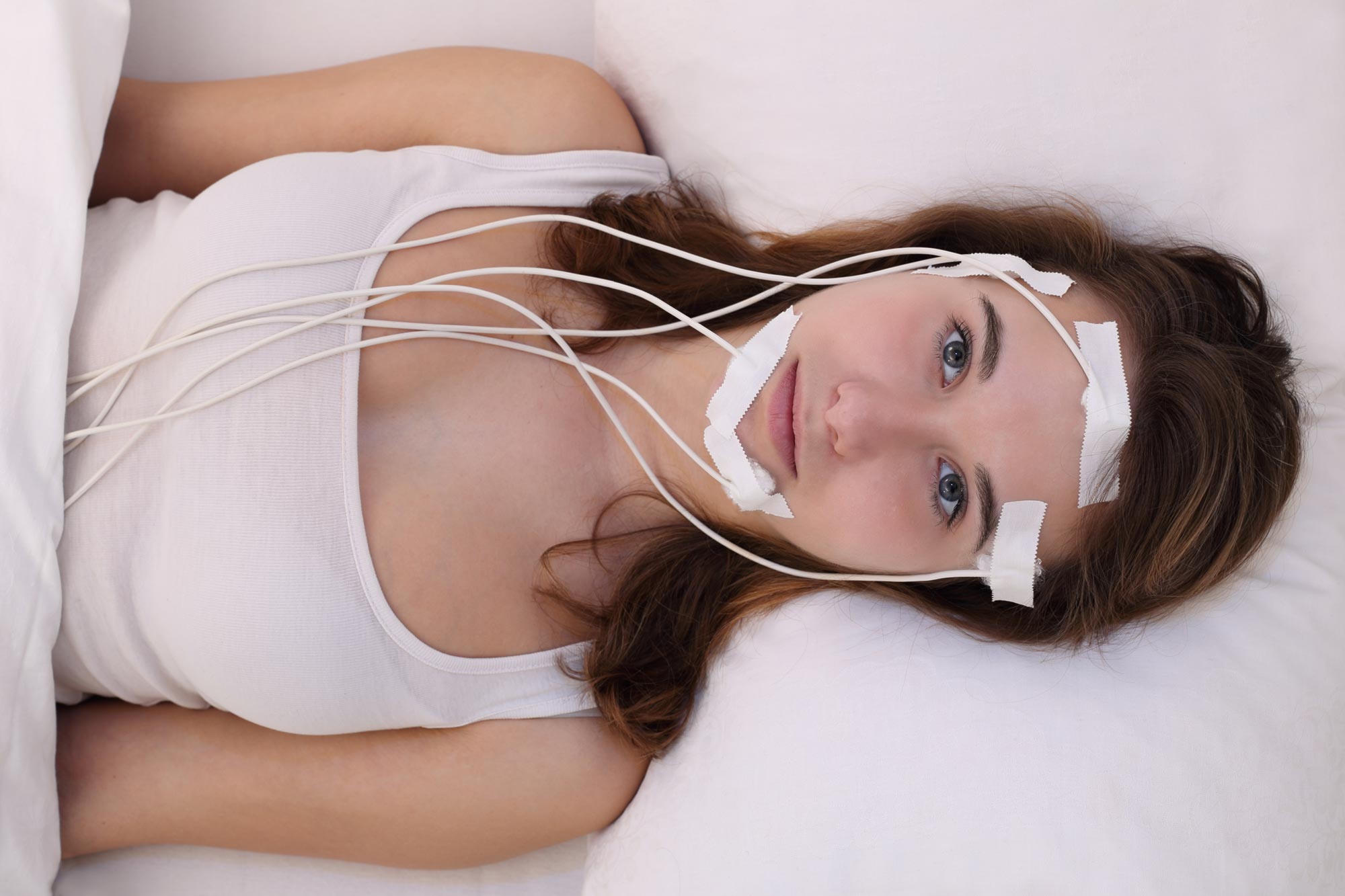
Summary of Stanford’s AI Predicts Disease Risk From a Single Night of Sleep:
Researchers at Stanford Medicine have developed an AI system, SleepFM, that predicts the risk of over 100 diseases using data from just one night of sleep. This model analyzes signals from polysomnography, a comprehensive sleep test capturing brain activity, heart rhythms, and more. Trained on nearly 600,000 hours of sleep data from 65,000 participants, SleepFM identifies subtle mismatches in physiological signals that may indicate health risks long before symptoms arise.
By linking sleep data with long-term medical histories, the AI identified 130 diseases it could predict with high accuracy, especially for conditions like cancer and neurological disorders—showing a C-index of 0.8 or higher for many diseases. The researchers aim to enhance the model’s precision and understand its prediction processes, with potential future integrations of data from wearable devices.
*****
Summary Bullet Points:
- Sleep as a Data Gold Mine: The Stanford AI, named SleepFM, utilizes detailed sleep recordings to predict the risk of over 100 diseases from just one night of sleep data.
- Polysomnography Uncovered: This traditional sleep study reveals rich physiological signals, often overlooked, that can indicate future health issues.
- The Language of Sleep: SleepFM learns patterns from vast datasets, similar to how language models like ChatGPT operate, but focused on biological signals.
- Predictive Power: The AI demonstrates impressive accuracy in predicting conditions like cancer, cardiovascular issues, and mental health disorders.
- Future of Sleep Science: Ongoing enhancements aim to deepen understanding of sleep’s connection to health, potentially through wearable technology.
Unveiling the Secrets of Sleep: How One Night Could Predict Your Health
Have you ever woken up after a night of restless sleep, blaming it on an uncomfortable mattress or too much caffeine? While that grogginess may just feel like a bad morning, recent research from Stanford Medicine suggests that your sleepless night could signify much more—a hidden roadmap to your long-term health. Imagine an AI that observes your patterns through the lens of sleep data, illuminating potential health risks you never saw coming. Let’s embark on a fascinating exploration of how such technology exists and what it means for all of us.
The Sleep Gold Mine: More Than Just Rest
It’s easy to underestimate sleep. After all, it’s often viewed merely as the time we recharge our bodies and minds. But researchers have discovered that a night of sleep encapsulates a treasure trove of information—information that can predict major health issues years before they manifest. This is where the brilliance of the AI, SleepFM, comes into play.
Developed at Stanford, SleepFM analyzes detailed recordings made during polysomnography—a comprehensive overnight sleep test that captures brain activity, heart rhythms, and even breathing patterns. With nearly 600,000 hours of data from about 65,000 individuals, researchers realized they were sitting on a wealth of untapped potential. They recognized sleep studies not just as a diagnostic tool for disorders, but as a means to explore general physiology. “It’s an extraordinary collection of signals,” said Dr. Emmanual Mignot, underscoring that sleep study recordings can be much more than mere diagnostics—they can unlock secrets about future health.
Traditionally, only a limited aspect of this data has been examined, often sidelining valuable information that could be key indicators of disease. Advances in artificial intelligence have made it possible to harness this full spectrum, unveiling patterns and predictions that were previously unseen.
The Language of Sleep: Teaching AI the Ropes
But how does SleepFM accommodate this symphony of signals? The magic lies in its training. Just as we learn languages by absorbing extensive vocabulary and grammar, this AI model learns what constitutes healthy sleep through vast data sets. By analyzing five-second segments of sleep recordings, it dissects brain waves, heart rhythms, and various other physiological signals. Dr. James Zou describes this process as “learning the language of sleep.”
Using a novel training technique called leave-one-out contrastive learning, the AI temporarily removes one type of signal to experiment with reconstructing it from the remaining data. This allows it to understand the relationships between different biological processes during sleep. The integration of various signals leads to richer, more effective predictions—it’s about finding harmony among the data, much like the delicate balance maintained in a compatible dataset.
From Sleep to Health Risk: The Predictive Leap
Once the groundwork was laid, the researchers put SleepFM to the test by linking sleep data with decades of long-term medical histories from patients at the Stanford Sleep Medicine Center. This journey from data collection to disease prediction provides profound insight into what the future holds for our health simply through our nightly habits.
The AI examined over 1,000 disease categories and identified 130 ailments—predictions showed success rates scoring a C-index (a measure of prediction ranking accuracy) of over 0.8. Each numeric score gives us a peek into a fantastic world where predictions about health outcomes can be made from something as simple as sleep data.
For instance, impressive results showed predictions for diseases like Parkinson’s (C-index 0.89) and various cancers (like breast and prostate at C-index scores of 0.87 and 0.89, respectively). Even more astonishing was the model’s ability to dare guess life events, including overall mortality—cautioning us, perhaps, to take our sleep more seriously than we have before.
Breaking Down Prediction Accuracy
But what does a C-index of 0.8 mean in layman’s terms? Picture two friends, John and Mike, both of whom lead similar lifestyles. SleepFM’s model might indicate that John has a higher likelihood of developing heart disease than Mike. A C-index score of 0.8 indicates that 80% of the time, the model’s predictions are correct.
Models with lower accuracy, often around a C-index of 0.7, currently assist in clinical care—think of them as supporting resources rather than primary tools. This clear delineation emphasizes the remarkable scientific leap SleepFM represents. In essence, the research team was both excited and surprised to uncover how diverse and informative these predictions could be.
Understanding the Whys Behind the Predictions
As the study progresses, researchers are keen to refine SleepFM and uncover the pathways behind its predictions. The goal is not merely to state a risk but to understand the why behind it. Future iterations may amalgamate additional datasets from wearable technologies or daily life indicators, potentially capturing a more holistic view of an individual’s health.
While it remains a challenge for the AI to articulate its reasoning in human language, interpretation techniques are evolving to help researchers grasp which signals most influence certain predictions. For instance, heart-related signals seem to carry weight in cardiovascular disease predictions, while brain signals play a more significant role when it comes to mental health. No single signal serves as a definitive answer; the richest insights emanate from the harmonious interplay of diverse data points.
Imagine a brain that looks like it’s sleeping while the heart is racing; that dissonance could hint at underlying issues waiting to surface. By producing a clear picture of how systems interact, we edge closer to more personalized healthcare.
The Future of Sleep Science: A Healthier Tomorrow
So, what does all this mean for you and me? The journey unveiled by SleepFM is only just beginning. Each of us has an intimate relationship with sleep, and understanding its implications could drive us to treat it as vital to our overall health—as essential as nutrition and exercise.
Picture yourself integrating this knowledge into your lifestyle—prioritizing sleep just as you plan your meals or exercise routines. It may appear simplistic, but the implications are profound. Reflect on how many decisions you make daily impact your sleep: the late-night snacks, the screen time, the endless mental to-do lists. By adjusting your habits to prioritize full, restorative sleep, you might just be taking the most crucial preventive step toward a healthier future.
In essence, if one night of sleep can yield clues to your long-term health, it’s time to recognize the power of our nocturnal habits. The Stanford team is paving the way toward a future where sleep data informs not just personal health but societal health standards as a whole.
In a world brimming with uncertainty, where health challenges often feel out of our hands, SleepFM offers a beacon of hope, underlining that even in slumber, we hold the keys to a healthier life. It’s an invitation to invest in understanding our bodies better and making conscious decisions that encourage well-being—because sleep, as new research shows, is far more than simply shutting our eyes at night; it is the very foundation upon which our health is built.
So, as you head to bed tonight, consider how your dreams may serve as a backstage pass to your health journey. Sleep is magic; now, we just might have the AI to reveal its secrets.