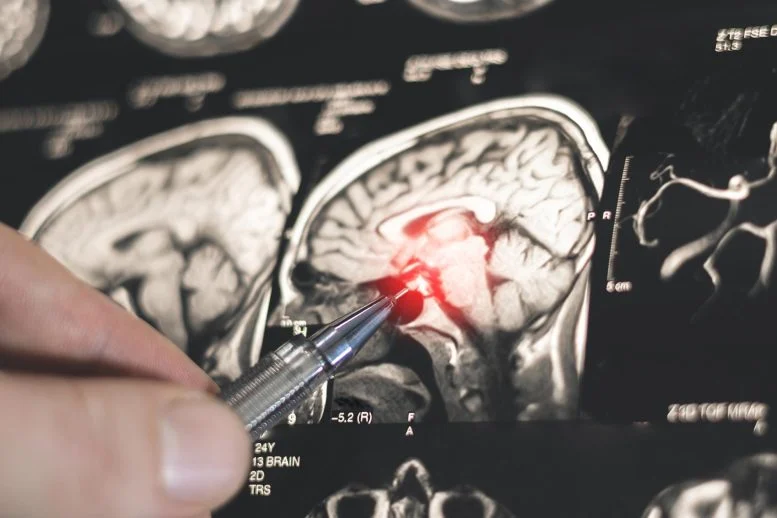
Summary of Sleep Strengthens Memories, but Epilepsy Can Break the Connection:
Researchers from the Kennedy Krieger Institute and Johns Hopkins Medicine have discovered that three key brain regions— the orbitofrontal cortex, thalamus, and hippocampus—synchronize their activity during sleep to enhance memory consolidation. Their study is the first to link these interactions directly with memory processes in humans.
However, in patients with epilepsy, disruptions in this synchronization due to epileptic spikes lead to diminished memory performance. The findings provide insights into how memory is preserved during sleep and the cognitive challenges faced by those with epilepsy. This research could pave the way for better monitoring and treatment of memory-related problems in epilepsy patients.
The study was published in the Proceedings of the National Academy of Sciences.
*****
Summary Points
- Sleep plays a crucial role in strengthening memories through the coordination of three brain regions: the orbitofrontal cortex, thalamus, and hippocampus.
- Epilepsy disrupts this synchronization, leading to impaired memory performance in affected individuals.
- Recent research highlights the unique rhythms of brain activity during sleep and their importance in memory consolidation.
- Understanding these processes provides significant insights into treating cognitive issues related to epilepsy.
- The interdisciplinary approach in research has unveiled a clearer understanding of these complex brain interactions.
Sleep: The Secret Architect of Our Memories
As day transitions to night, the world quiets down, but it’s during these seemingly mundane hours that our brains embark on a fascinating journey. Imagine your mind as a diligent architect, meticulously constructing and reinforcing the structure of your memories while you drift into slumber. Recent findings reveal that during sleep, three interconnected regions of the brain work in concert to strengthen newly formed memories. However, for those grappling with epilepsy, this intricate web of connections can be disrupted, leading to memory challenges.
The Symphony of Sleep: How Our Brain Constructs Memories
Let’s delve into the architecture of memory in sleep. The orbitofrontal cortex, thalamus, and hippocampus are not just arbitrary names; they are pivotal actors in the grand performance that occurs each night. This coordination among regions allows for the consolidation of our experiences, ideas, and learned concepts.
-
The Orbitofrontal Cortex: Think of this area as the decision-maker, involved in processing rewards and assessing emotional responses. It tunes in to signals that prioritize which memories deserve special attention.
-
The Hippocampus: Often referred to as the memory hub, this region acts as a temporary holding space for information before it gets archived. It’s akin to a library where books are sorted and cataloged, ensuring that essential details aren’t misplaced.
- The Thalamus: Acting as a relay station, the thalamus communicates messages between the cerebral cortex and other parts of the brain. It plays a critical role in regulating alertness and attention, laying the groundwork for memory consolidation.
During the various stages of sleep—especially during deep sleep—these regions synchronize their electrical activities. This rhythmic collaboration fosters an environment for strengthening memories. Picture it as a well-orchestrated symphony where each musician plays their part in harmony, creating music that resonates within.
Epilepsy: The Disruptor of Memory Formation
However, not everyone enjoys this seamless architectural feat. For individuals with epilepsy, this stunning symphony can be interrupted by “epileptic spikes” in brain activity. These spikes act like uninvited guests crashing a celebration, disrupting the carefully crafted flow of memory consolidation.
Recent studies have shed light on how these interruptions correlate with memory performance. Research from the Kennedy Krieger Institute and Johns Hopkins Medicine highlights that disturbances in the synchronization of these brain regions can lead to poorer memory outcomes in people with epilepsy. Imagine trying to listen to your favorite song while someone keeps turning the volume up and down—it becomes impossible to appreciate the melody.
Dr. Catherine Chu, a prominent figure in this research, articulated a crucial aspect of these findings: “We haven’t understood why patients with epilepsy have problems with memory. This helps to close that gap.” By understanding the chaotic nature of brain activity during sleep in epilepsy, researchers stand on the brink of potentially transformative interventions.
The Dance of Sleep Rhythms: How They Shape Our Memories
When we sleep, our brains engage in complex rhythmic patterns of electrical activity. Think of these patterns as the dance steps that align energy and intention. Different types of neural rhythms impact how memories are consolidated. Key components include:
-
Sleep Spindles: These bursts of oscillatory brain activity are thought to play a role in memory consolidation. They help to re-organize memories and integrate new information with old.
-
Hippocampal Ripples: These are rapid bursts of activity in the hippocampus that help reinforce memories. They synchronize with the activity in the cortex during sleep, ensuring that what we learn throughout the day is preserved.
- Neural Oscillations: The various frequencies of oscillations represent different brain states. High-frequency oscillations may enhance memory consolidation, while low-frequency waves may support the underlying architecture.
This perfectly choreographed dance manifests bits and pieces of what we experience. Each stage of sleep—ranging from light slumber to deep sleep—has a role in organizing and reinforcing the treasures stored within our minds.
Implications for Cognitive Health and Epilepsy
Understanding this intricate dance not only sheds light on the fundamental workings of memory but also has substantive implications for cognitive health, especially in those with epilepsy. Research indicates that by identifying the patterns of brain activity during sleep and the points at which disruptions occur, there could be new avenues for intervention and treatment.
Consider this: if we can better understand how sleep rhythms support memory, we may develop strategies to enhance these processes. For someone dealing with epilepsy, managing sleep hygiene could become an essential part of treatment—adopting practices that promote healthy sleep architecture, which in turn may help mitigate memory challenges.
The Interdisciplinary Approach: Unveiling Complex Interactions
A hallmark of this research is its interdisciplinary foundation. The melding of disciplines—neuroscience, mathematics, and statistics—has allowed for a more holistic understanding of brain functions. When experts collaborate, they can unravel complexities with clarity. For instance, researchers like Mark Kramer are employing mathematical models to sift through the myriad of data that brain recordings produce, transforming chaotic patterns into clinically relevant information.
This interdisciplinary connection not only enhances our understanding of epilepsy but also builds a framework for a more profound comprehension of human cognition as a whole. Imagine educators and healthcare providers actively utilizing this knowledge to develop better curricular designs and wellness interventions, which take into account the critical role of sleep in learning and memory retention.
The Road Ahead: Strategies for Memory Conservation
For those who are not affected by epilepsy, understanding the sleep-memory connection still bears significant relevance. How can we ensure our memory remains sharp and resilient?
-
Prioritize Sleep Hygiene: Establish a sleep routine that fosters quality rest. Go to bed and wake up at the same time every day, limit screen time before bed, and create a calming pre-sleep ritual.
-
Practice Mindfulness and Stress Reduction: Engage in meditation, yoga, or deep-breathing exercises to enhance relaxation. Reducing stress can help promote better sleep, which in turn supports memory consolidation.
-
Stay Mentally Active: Challenge your brain with puzzles, reading, and new learning experiences. Engaging in mentally stimulating activities during the day can boost the information you retain overnight.
-
Maintain a Healthy Diet: Nutrition impacts brain health. Foods rich in omega-3 fatty acids, antioxidants, and vitamins play a role in cognitive function and memory preservation.
- Get Regular Physical Activity: Exercise not only supports overall health but also enhances sleep quality. Finding activities you enjoy can make incorporating exercise into your life an enjoyable habit.
Bridging Gaps and Creating Futures
As we navigate the intersection of sleep, memory, and epilepsy, we’re reminded of the broader implications of these insights. The more we understand the brain’s functions, the more equipped we become to face challenges related to memory and cognitive performance. Future generations may be nurtured with these discoveries, leading to a culture that not only values but prioritizes sleep—a fundamental pillar of cognitive health.
In embracing the understanding that sleep is not merely a period of inactivity but rather an active process that strengthens and solidifies our memories, we cast a new light on well-being. The pursuit of knowledge propels us toward innovations in healthcare, education, and beyond, fostering a future where cognitive challenges are better understood and effectively addressed.
Conclusion: Embracing the Power of Sleep
So, the next time you settle into your cozy bed, remember that you are not just drifting into unconsciousness; you’re embarking on an extraordinary nightly expedition. As your brain orchestrates its symphony of memories, you are participating in a profoundly intricate dance of life.
For those with epilepsy, this exploration becomes even more poignant, unveiling pathways toward understanding and healing. In either case, recognizing the power of sleep enriches our perspective, presenting an opportunity to enhance our cognitive health.
There’s much to learn, create, and improve within this realm. Let us champion sleep as a crucial ally in the quest for personal development and optimal cognitive function, not just when the sun sets but throughout our lives. Embrace your slumber—it might just be the most productive part of your day.