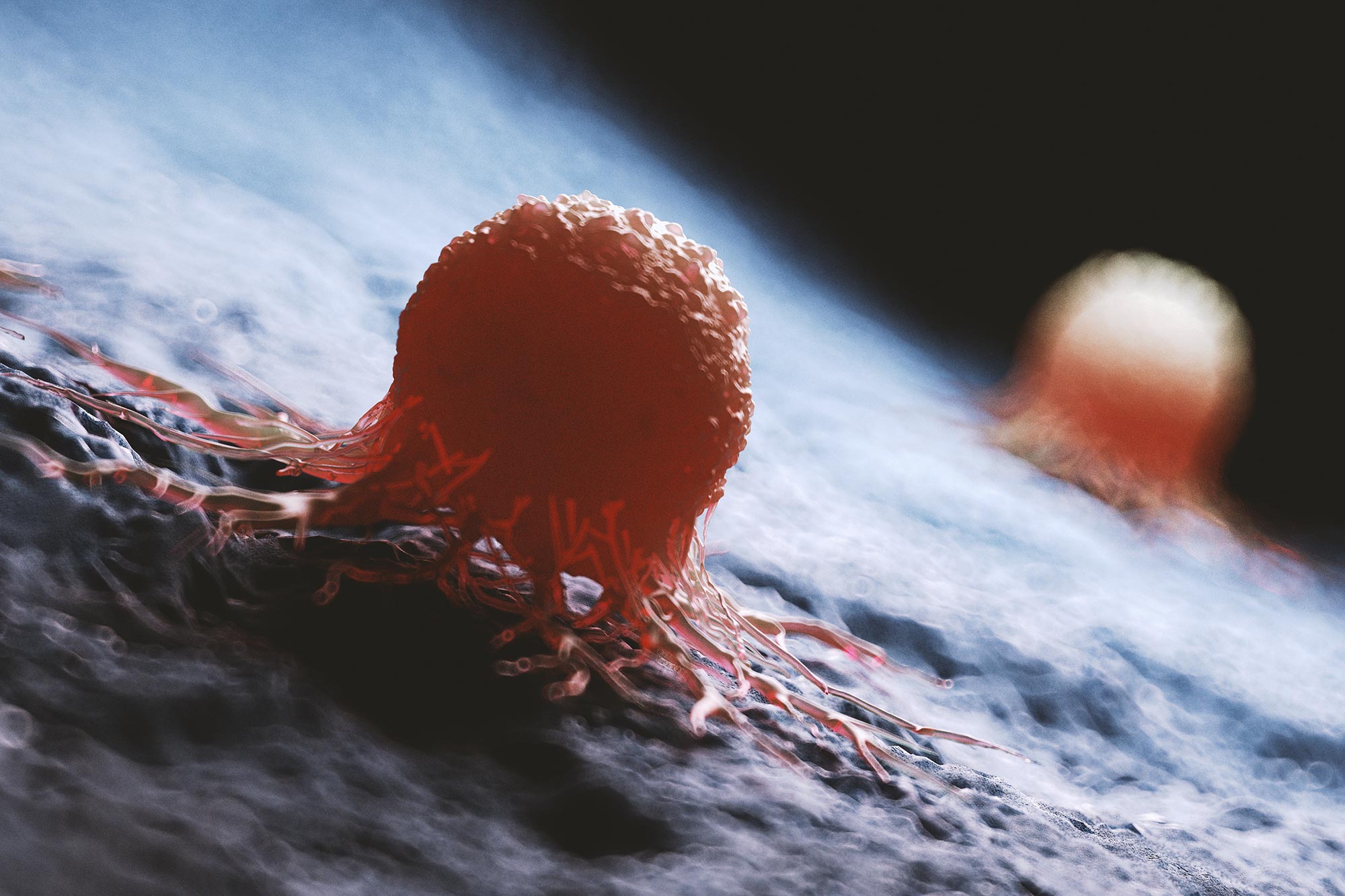
Summary of Scientists Uncover a Hidden Switch That Helps Colon Cancer Spread to the Liver:
Researchers from Weill Cornell Medicine and MIT have discovered that the loss of the protein GATA6 allows colorectal cancer cells to enter a flexible state that enhances their ability to spread to the liver, leading to metastasis. This study, published in Cell Stem Cell, suggests that rather than solely relying on genetic mutations, cancer spread may also be influenced by changes in cellular identity.
GATA6 normally helps maintain stable cell identities, and its loss results in cancer cells adopting characteristics associated with fetal development, making them more adaptable during the challenges of metastasis. The study found that GATA6-deficient cancer cells shifted to an LGR5-negative state, linked to increased metastatic potential. Interestingly, removing GATA6 increased liver metastasis without affecting the primary tumor’s growth.
The findings indicate that monitoring GATA6 levels could help identify patients at higher risk for metastasis and point to new treatment strategies aimed at preserving cellular identity. Future research plans to explore unique vulnerabilities in GATA6-deficient cells that may help in drug development to prevent metastasis.
*****
Key Takeaways
-
Loss of GATA6: A critical protein, GATA6, helps maintain cellular identity. Its loss in colorectal cancer cells can lead to increased adaptability and aggressive behavior, promoting liver metastasis.
-
Lineage Plasticity: The phenomenon where cancer cells adopt fetal characteristics increases their ability to survive and thrive in new environments, facilitating metastasis to the liver.
-
New Mechanisms of Metastasis: This research shifts focus from purely genetic mutations to epigenetic changes, highlighting the importance of cellular identities in cancer spread.
-
Potential Biomarker: Low levels of GATA6 might serve as a biomarker for metastatic potential, helping tailor monitoring and treatment strategies for at-risk patients.
- Future Therapies: Targeting the mechanisms driving metastasis could help develop therapies that hinder cancer’s spread, emphasizing the need for innovative approaches in oncology.
Colorectal cancer remains a formidable opponent in the realm of medical science and public health. Its threat often lies not within the primary tumor itself but in its ability to spread, particularly to the liver. It’s a complex and alarming reality: once this cancer spreads, treatment options can become limited, and survival rates can plummet. New research, however, shines a light on previously obscured mechanisms at play.
Scientists from Weill Cornell Medicine and MIT recently published findings that uncover how some colorectal cancer cells operate like chameleons, changing their identities to enhance their metastatic capacities. This transformation occurs largely due to the loss of a critical protein known as GATA6. Imagine a cell that typically knows its role—like a well-trained soldier—suddenly losing its training and becoming erratic, ultimately morphing into something more dangerous.
Understanding Cellular Identity
Every cell in our body has a specific identity—it’s what allows intestinal cells to absorb nutrients while liver cells detoxify harmful substances. This stable identity is maintained through a series of genetic programs overseen by proteins like GATA6, which acts as a gatekeeper. Under normal circumstances, it helps cells stay true to their roles. However, a startling revelation has emerged: during the progression of colorectal cancer, especially when it targets the liver, this identity can be compromised.
Losing GATA6 isn’t just a minor detail. Just like a pilot losing their radar, it can lead to disorientation and chaos. The research team discovered that lower levels of GATA6 correlate with aggressive cancer behavior and poorer patient outcomes. By uncovering this loss as a potential switch that can toggle cancer cells from non-metastatic to pro-metastatic, scientists are reshaping how we view cancer aggressiveness.
Metastasis: A New Perspective
Traditionally, research has sought specific genetic mutations responsible for driving metastasis. But perhaps the answer does not lie solely in genetics. Instead, the study highlights the significance of epigenetic changes—the alterations that impact gene expression without modifying the DNA sequence itself. This realization is crucial. If cancer cells can change their identities through mechanisms like these, then our strategies for combatting cancer must adapt too.
Dr. Norihiro Goto, one of the study’s leaders, emphasizes that this “switch” provided by GATA6 loss can redefine the cells. It’s not just about changing how genes function; it’s about transforming the very essence of what a cancer cell is. This remarkable flexibility, termed lineage plasticity, means that cancer cells can abandon their specialized functions and take on new, more robust characteristics more commonly found in fetal development.
The Experimental Breakthrough
One of the primary challenges in studying metastasis is observing the early stages before the cells have already spread. The researchers innovatively created organoids—miniature 3D clumps of cancer cells that mimic real tumors—to simulate this process. By transplanting these organoids into mice and allowing them to evolve, they could actually witness how cancer cells refine their metastatic strategies over time.
This experimental method mimicked the evolution of cancer in a way that provided invaluable insights. It revealed that as GATA6 levels dropped, cancer cells began shifting from an LGR5-positive state to an LGR5-negative state, the latter of which carries a greater risk of metastasis. It’s like observing a transformation where a soldier sheds their armor to become more stealthy and flexible.
The Return to a Primitive Way of Being
What makes this discovery particularly captivating is the parallel drawn to fetal development. Cancer cells losing GATA6 adopt characteristics that help them navigate a hostile environment. They manage to detach from their surrounding tissues, survive in the bloodstream, evade immune responses, and settle in their new home, all while mimicking a more embryonic state of being.
When think about this transition, it opens up a dialogue about nature versus nurture in cancer biology. While traditional treatments focus on size and growth of primary tumors, they may not be fitting for tumors that are exceptionally good at sneaking away. Such insights elevate GATA6 from a mere observation to a crucial player.
New Directions for Treatment and Monitoring
This research points toward not just identifying at-risk patients but also opens the door to potential new treatments aimed at preserving cellular identity. One exciting possibility is that oncologists could focus on preventing cancer cells from slipping into that adaptable, metastasis-driving state. The study suggests that restoring GATA6 activity could significantly hinder the cells’ ability to spread.
In addition, GATA6 may serve as a promising biomarker. Understanding its expression levels could help tailor treatment plans based on a patient’s metastatic risk. It’s akin to equipping healthcare providers with a new set of tools—they can identify who requires closer monitoring and who may need more aggressive treatment strategies.
While promising, translating these findings into actionable therapies will be complex. The same biological processes that allow cancerous cells to be more adaptable are also fundamental for normal tissue repair. Ethical considerations will emerge as medical science navigates these intersections.
Looking Ahead: A Future of Hope and Clarity
Ultimately, research like this serves as a beacon of hope. The journey to understand how colorectal cancer spreads is filled with challenges, but these discoveries suggest that we are edging closer to effective interventions. Understanding the switches that enable cancer cells to adapt and thrive opens up a world of possibilities—new treatments, personalized therapies, and ultimately, improved patient outcomes.
The insights gained serve as reminders that the medical field is akin to a vast, complex network, constantly evolving with new discoveries at every turn. As we continue to unveil the intricate layers of cancer biology, the collective endeavor of scientists, researchers, and healthcare professionals aims to light the way toward enhanced prevention and treatment strategies.
This ongoing exploration of GATA6 may one day lead to groundbreaking therapies that not only confront cancer’s spreading arms but also empower patients on their journeys. Just like the transformative journey from a seed to a flourishing plant, understanding and targeting the mechanisms of metastasis can foster resilience and lay the groundwork for healing.
In the end, as researchers peel back the layers of this hidden biological switch, they offer not just insights into cancer but serve as a reminder of the tenacity of human ingenuity—a collective spirit that persists in the face of adversity. Each finding is a small victory, a step toward a future where hope outshines fear, and knowledge means more effective treatments for those affected by cancer. Through commitment and curiosity, we advance toward a brighter horizon—one where the battle against cancer is waged with intelligence, compassion, and innovative strategies that transform lives for the better.
