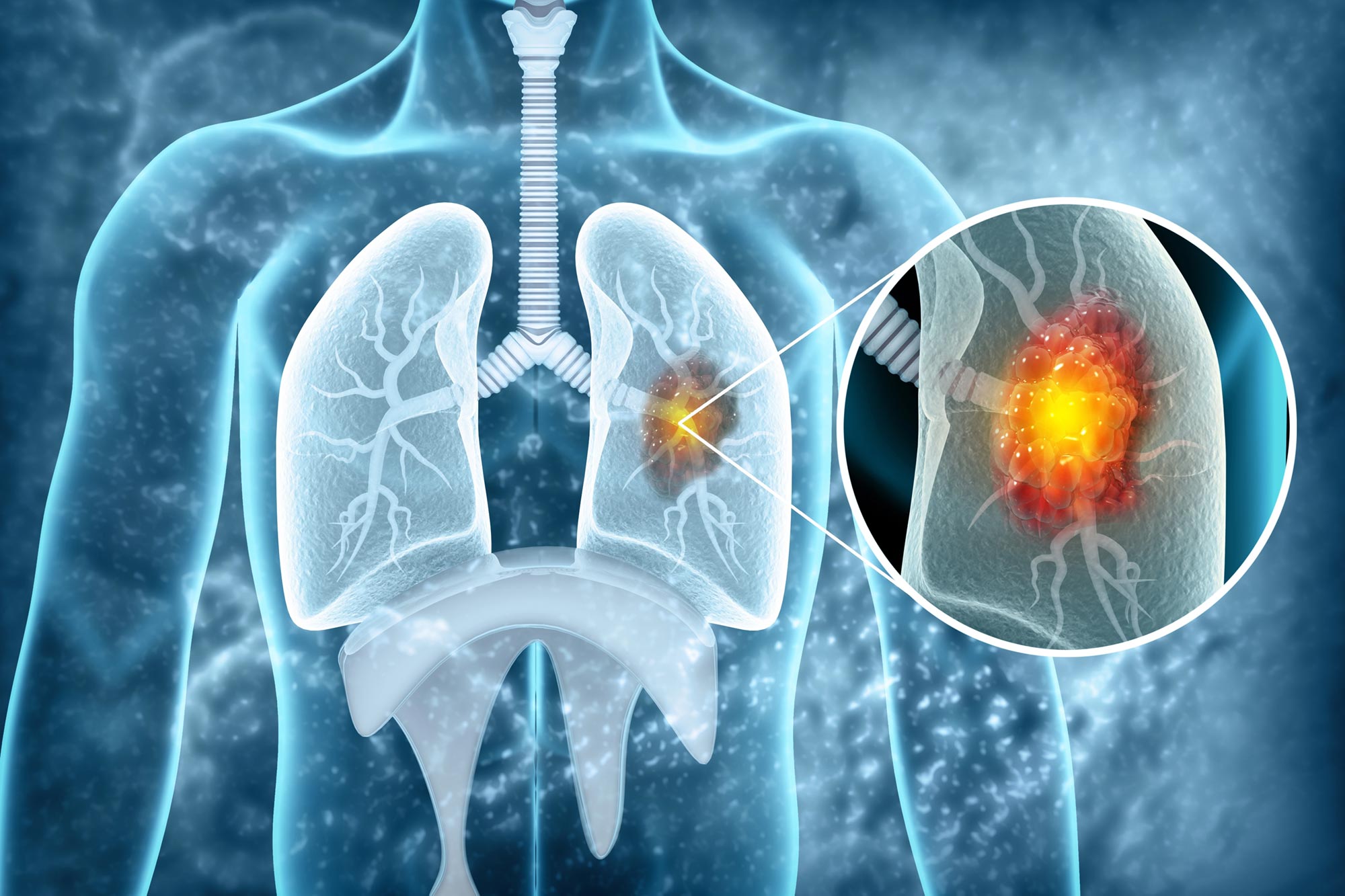
Summary of Scientists Uncover Aging Link That Could Change How Cancer Is Treated:
A study from the University of Gothenburg reveals that aging alters how lung cancer spreads, identifying a stress-response protein called ATF4 as a key factor. Researchers compared lung tumors from young and older mice and analyzed data from around 1,000 lung cancer patients. They found that while older patients often have smaller, slower-growing tumors, these cancers tend to be more advanced and metastasized by diagnosis.
ATF4 helps regulate cellular stress responses but is exploited by tumors in older individuals, enhancing their ability to metastasize. Elevated levels of ATF4 in tumors correlate with a higher chance of recurrence post-surgery and lower survival rates in lung adenocarcinoma.
Blocking ATF4 in older mice led to significantly reduced tumor spread, suggesting that targeting this pathway in older patients could improve treatment outcomes. The researchers emphasize the need for more age-appropriate cancer research, as current treatments focus on rapidly growing tumors, neglecting the nuances of tumors common in older adults.
*****
Summary Bullet Points
- Discovery of ATF4: Scientists at the University of Gothenburg have identified a protein called ATF4 that may increase the risk of lung cancer metastasis in older adults.
- Age-Related Tumor Behavior: Research contrasts lung cancer progression in younger and older mice, revealing that older patients often have smaller, slower-growing tumors that are advanced at diagnosis.
- Hijacked Stress Response: The study reveals how cancer cells hijack the stress-response mechanism to promote metastasis, especially in aging populations.
- Targeted Treatment Potential: Blocking ATF4 or its controlled metabolic processes in older mice shows significant promise for reducing tumor spread, indicating new avenues for specialized therapies in older patients.
- Need for Age-Focused Research: The findings call for a shift in cancer research toward understanding how biological aging affects tumor development, potentially improving treatment outcomes for older patients.
A New Era in Cancer Research: Understanding the Aging Link
Imagine a world where the mysteries of aging unravel before us, throwing light not just on how we grow old but also on how diseases like cancer exploit our biological changes. That intriguing world is becoming a reality thanks to groundbreaking research from the University of Gothenburg, where scientists are opening doors to a better understanding of lung cancer – particularly in older patients.
The crux lies in the discovery of a protein named ATF4. While the name may not yet trigger any excitement for the average reader, this molecule seems to play a pivotal role in how lung cancer behaves in older adults. And understanding this mechanism could transform how we approach treatment in a demographic that is often neglected in clinical studies.
Bridging the Gap: Young vs. Old
It’s a troubling paradox: older patients with lung cancer often present with smaller tumors that seem to grow slowly yet show signs of advanced disease. On the surface, it may seem counterintuitive. Why would smaller tumors, indicative of less aggressive cancer, coincide with advanced-stage diagnoses? The researchers tackled this riddle by comparing lung tumors from young and older mice, alongside analyzing medical data from around 1,000 lung cancer patients in Sweden. The results painted a clearer picture, suggesting that age fundamentally alters the growth and spread of lung tumors.
Interestingly, while older tumors grew more slowly, they were frequently linked to a greater degree of metastasis, spreading to distant organs like the brain, liver, and bones. “This helps explain a paradox that physicians often observe,” notes Volkan Sayin, an Associate Professor leading the research.
The Role of Stress Response
Aging is not just about wrinkles and gray hair—it’s profoundly biological. One of the most intriguing aspects of the research is how the stress-response system changes with age. Under normal circumstances, ATF4 helps manage the integrated stress response, activating protective and repair processes that allow cells to cope with various challenges. However, in older patients, tumors appear to “hijack” this system. The cancer cells exploit the metabolic pathways controlled by ATF4, enabling them not to necessarily grow faster but become more adept at spreading.
In older individuals, elevated levels of ATF4 in tumors not only correlate with worse outcomes but also hint at a deeper relationship between aging and cancer progression. As Clotilde Wiel, another Associate Professor involved in the research, elaborates, “Our results indicate that ATF4 is not just part of the mechanism behind the spread of lung cancer but also serves as a marker for a more aggressive form of the disease.”
A Game-Changing Approach to Treatment
As scientists glean more insight into this age-related metabolic rewiring, potential new treatment strategies are emerging. The study reveals that interventions targeting the ATF4 pathway could dramatically reduce tumor spread, especially in older mice. This finding sparks a question: What if we applied the same strategy to human patients, specifically targeting those most likely to benefit from it?
The results suggest that existing drugs aimed at cancer treatment might perform optimally if administered to older patients showing high ATF4 activity. In a medical landscape often embracing a “one-size-fits-all” approach, this could signal a shift towards more personalized and attentive treatment paradigms.
Why This Research Is Crucial
While prognosis is often grim for older cancer patients, understanding the biological effects of aging in relation to cancer development could transform therapeutic strategies and potentially improve survival rates. This focus on biological aging is crucial since conventional therapies like chemotherapy and radiation are frequently designed to attack aggressive, rapidly growing tumors. However, these approaches might fall short against the more deceptively less aggressive tumors prevalent in older patients.
It’s clear: we need more focused attention on how aging intersects with cancer biology. Investing in age-appropriate models is essential, though research has often shied away from this due to financial and logistical challenges. As Sayin points out, the research landscape has yet to catch up to the realities of biological aging and its implications for cancer research.
The Larger Conversation
This discovery isn’t just an isolated scientific breakthrough; it opens the door to broader conversations about how we treat age-related diseases. It highlights a universal truth: as we blink and transition through the seasons of life, our biological systems undergo complex transformations. These changes influence not only how diseases manifest but also how we can engage with, confront, and potentially treat them.
In a society that often prioritizes youth, this research serves as a gentle reminder of the value of wisdom and lived experience—both in life and in the sphere of medical science. Just as older adults contribute invaluable knowledge to society, they represent a wealth of untapped data regarding health conditions that affect them.
A Call to Action
As we sit on the cusp of understanding the tangled relationship between aging and cancer, we are called not just to observe but to act. For those involved in healthcare—researchers, policymakers, and clinicians—redirecting focus toward age-inclusive studies can lead to more effective strategies that could very well save lives.
For individuals, there’s motivation to be derived from knowledge about our aging biology. The more we understand the science behind aging and disease, the better equipped we are to take charge of our health. Knowledge empowers us; it inspires us to be proactive rather than reactive.
Now imagine a future where cancer treatment is not merely a race against time but a strategic engagement tailored to the individual. With evolving approaches, we may soon find ourselves writing new success stories where aging no longer demotes us to a mere statistic in the cancer fight but instead, empowers us as subjects of innovation in personalized medicine.
Conclusion
In conclusion, the exploration of how aging alters lung cancer dynamics is not just another chapter in medical literature—it’s part of an evolving story that intertwines hope, knowledge, and healing. The discoveries at the University of Gothenburg serve as a shining beacon, guiding us to rethink conventional medicine.
As we ponder over these revelations, let’s cultivate a mindset where aging is celebrated, understood, and explored. Let’s advocate for better research frameworks that honor the complexities of aging and disease interaction. By doing so, we will not only advance science but also enrich our collective human experience.
In essence, the journey through aging and its relationship with diseases like cancer offers us an incredible opportunity—for understanding, compassion, and ultimately, transformation. So let us embrace this saga with open hearts and minds, pioneering a healthier, brighter future for all.
