Summary of Scientists Overturn 30 Years of Beliefs About Rare Immune Disease:
Researchers at the Garvan Institute have identified a new cause of mevalonate kinase deficiency (MKD), a rare inflammatory disorder. Previous beliefs attributed inflammation primarily to macrophages, but the study reveals that natural killer (NK) cells are dysfunctional in MKD patients. These NK cells fail to mature properly and can’t effectively destroy infected cells, leading to excessive inflammation. The findings suggest that JAK inhibitors, already approved for other conditions, might be an effective treatment for MKD, as demonstrated in a case where an infant showed improvement after treatment with baricitinib. This significant research shift could help in understanding related disorders and improving diagnosis and treatment options.
*****
Summary Bullet Points
- Researchers have uncovered a new mechanism behind mevalonate kinase deficiency (MKD), shifting the focus from macrophages to natural killer (NK) cells as the key drivers of the disease.
- The study from the Garvan Institute of Medical Research indicates that malfunctioning NK cells lead to unchecked inflammation, challenging 30 years of scientific belief.
- Potential new treatments involving JAK inhibitors show promise for alleviating symptoms in MKD patients, leading to fewer inflammatory episodes and improved overall health.
- The term "prenylopathies" has been introduced to classify other disorders related to this newfound mechanism, enhancing diagnostic clarity for patients.
Overturning Beliefs: A New Dawn in Understanding Mevalonate Kinase Deficiency
A gentle reminder sweeps through the field of science: what we accept as truth today may become the misunderstanding of tomorrow. This is fervently illustrated by the recent groundbreaking discovery from the Garvan Institute of Medical Research regarding mevalonate kinase deficiency (MKD), a rare immune disorder that challenges what had been accepted for over three decades. Let’s dive into this fascinating realm of science and explore how these new insights could alter not only our understanding of MKD but the future of treatment options as well.
The Long Road of MKD
To understand the implications of this recent study, we must first unravel what MKD truly entails. This inflammatory condition, inherited genetically, affects hundreds of individuals across the globe. Although its prevalence is low, the impact on the lives of those affected is enormous. The disease manifests as recurrent fevers, skin rashes, joint pain, and abdominal inflammation, often resulting in life-threatening flare-ups. Oddly, despite years of research and treatment protocols, many patients find little relief, often trapped in a cycle of debilitating symptoms.
Turning the Lens: Revisiting Old Hypotheses
Historically, the spotlight shone brightly on macrophages—the immune cells thought to be responsible for the inflammatory response in MKD. For over thirty years, scientists focused on these cells, believing them to be the main culprit causing the brutal and unpredictable inflammatory episodes characterizing the condition. It was like following a red herring, leading researchers down paths that would yield disappointing results. Current therapies attempt to block the inflammatory signals issued by macrophages, yet remain ineffective for nearly half of those afflicted.
Imagine the intrigue when researchers pivoted to analyze the role of natural killer (NK) cells, a different component of the immune defense. These cells are generally the body’s first responders against viral infections, equipped with the artillery needed to combat pathogens. Scientists, armed with new techniques and insights, started examining these lesser-considered warriors.
A New Paradigm: The Role of NK Cells
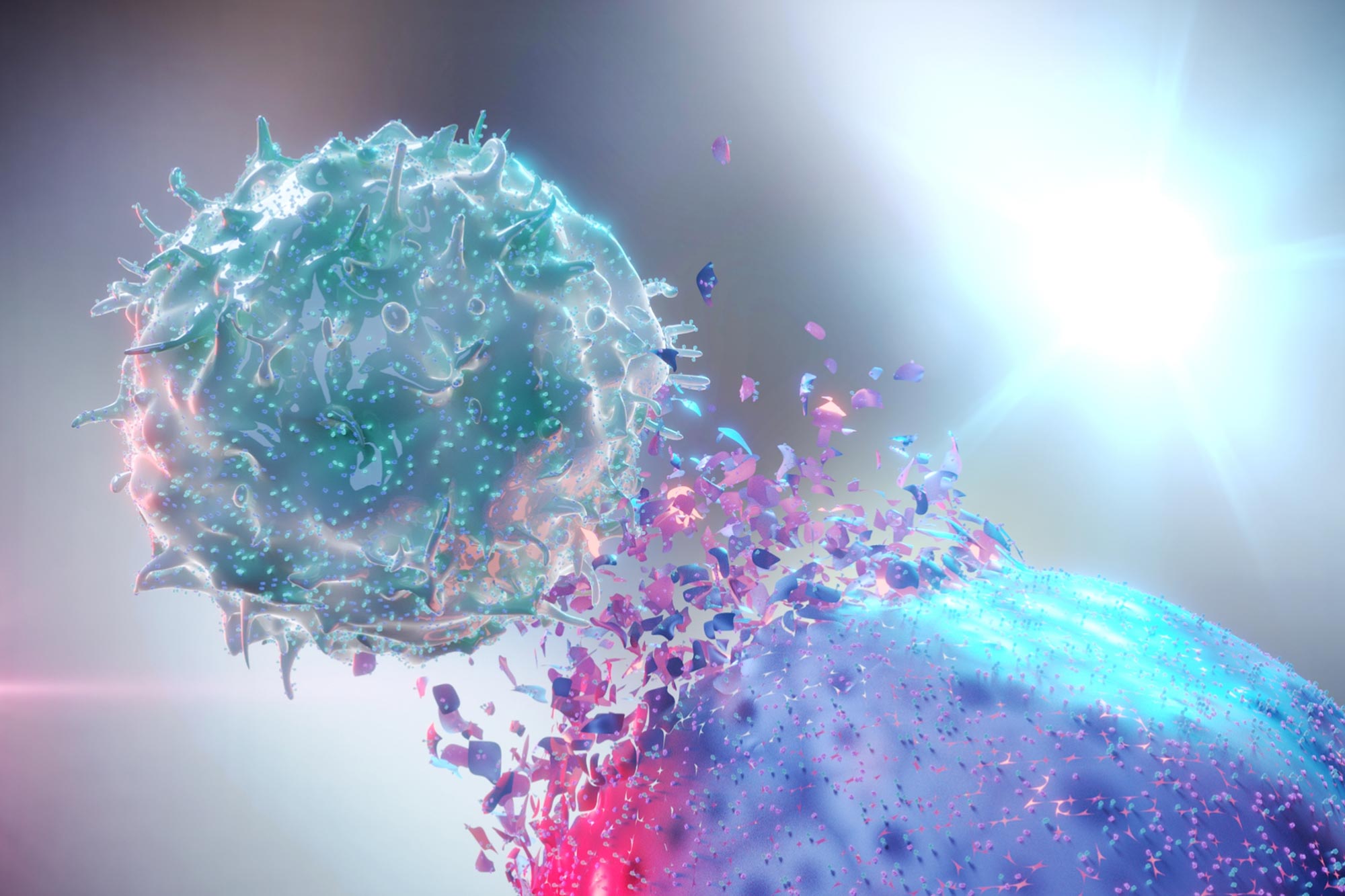
The findings from the Garvan team revealed an astonishing truth: in patients with MKD, NK cells were malfunctioning. They were misfiring, unable to mature and unleash their lethal granules upon infected cells. The failure to eradicate these cells set off a reverberating chain reaction, leading to a flood of inflammatory signals and resultant symptoms that characterized the disease.
Let’s take a moment to process this. For years, we thought we knew the adversary; instead, we find ourselves confronted by a blind spot in our understanding of human immunology. This profound shift in paradigm doesn’t merely represent a minor tweak in scientific thought; it represents an exhilarating leap into an entirely new realm of possibilities.
The Working Mechanism: Understanding the Misfire
Delving deeper into why NK cells fail brings us to a striking image. Picture a soldier with a full arsenal of weapons that, for some unfathomable reason, cannot fire. In healthy NK cells, toxic granules deploy to obliterate infected cells. However, in MKD, these granules are trapped inside the NK cells. The pent-up energy transforms these once-effective soldiers into restless, overwhelming forces that cry out for help through excessive production of interferon gamma—a powerful inflammatory signal that further incites inflammation and fever.
Dr. Marcia Munoz, a lead researcher on this revolutionary project, captures the essence of these findings well: "What was thought to be the underlying mechanism of the disease has been turned on its head. The primary problem lies within NK cells, not macrophages as previously assumed."
Real-World Implications: A Promising Treatment Option
With new knowledge inevitably births new avenues for treatment. Inspired by their findings, the research team explored the potential of JAK inhibitors, namely baricitinib, as a therapeutic approach for treating MKD. While commonly used for conditions such as rheumatoid arthritis and eczema, its efficacy in tackling MKD had remained unexplored.
In a compelling case study, researchers teamed up with clinicians at the Royal Children’s Hospital in Melbourne to treat an infant suffering from severe MKD. By incorporating baricitinib into the standard treatment regimen, remarkable transformations began to unfold. The frequency of the inflammatory episodes decreased dramatically, while severe gastrointestinal inflammation began to heal.
A single case may seem a drop in the ocean of scientific inquiry, but it resonates profoundly with hope. With substantive methodology, this new approach may translate to broader applications, paving the way for advancements in treating MKD and potentially other maladies revealing similar cellular dysfunction.
Beyond MKD: The Concept of “Prenylopathies”
As scientists begin to peel back layers of ignorance surrounding MKD, they’ve also birthed another intriguing term: "prenylopathies." This nascent classification aims to unite a host of genetic disorders affecting the same metabolic pathways as MKD under a common umbrella. As more is understood, we may see a massive leap in diagnostic clarity, relieving patients from the often-grueling odyssey to receive effective treatment.
Picture a world where the myriad diagnostic hurdles melting away, rendered obsolete by clearer scientific understanding and avenues of treatment. Such developments can invigorate hope for many who have felt lost in the medical labyrinth, deprived of effective solutions for far too long.
The Power of Inquiry and Adaptation
What stands out in this story is the power of curiosity and adaptation. Researchers didn’t settle for conventional wisdom; they interrogated assumptions and unturned stones that had been long neglected in the rush of scientific progress. In science—as in life—there is no greater mantra than “question everything.” This proactive mindset cultivates innovations that can forever alter lives.
The strides made within the field of MKD stand as a poignant reminder that exploration can yield unforeseen treasures. They inspire enthusiasts and professionals alike to remain open-minded as new discoveries challenge existing models.
Inspiring Future Generations
As we look to the future, the excitement surrounding such revelations is not merely confined to laboratory benches. It spills into the realm of humanity. Each breakthrough illustrates an essential truth: the arc of history does bend toward improved understanding. Future generations could unveil therapies that save countless lives and reshape medical agendas, nurturing hope within families long haunted by chronic conditions.
By sharing these insights around the emergence of NK-cell dysfunction in MKD, we wield each story as a beacon of hope and a reminder of our capacity to adapt and evolve in pursuit of better health solutions.
Conclusion: The Journey Continues
So, what does this mean for you? Life is a complex equation full of variables — the medical breakthroughs, mental hurdles, and personal battles that define our unique journeys are part of the grand adventure of existence. Whether you’re a patient, a researcher seeking out the next big question, or simply a curious observer, what unfolded with MKD is a testament to the resilience of human inquiry.
We may not always have the answers, but the quest will always yield treasures, sometimes hidden in plain sight. Whether it’s a new discovery in the medical field or re-examining our own paradigms, we can take heart that progress, though sometimes slow, is often revolutionary. The next frontier awaits, and it is as pregnant with possibility as these recent findings provide compelling evidence. Don’t just stay curious—stay engaged in your journey, the world needs your inquiry into the truths waiting to be discovered.