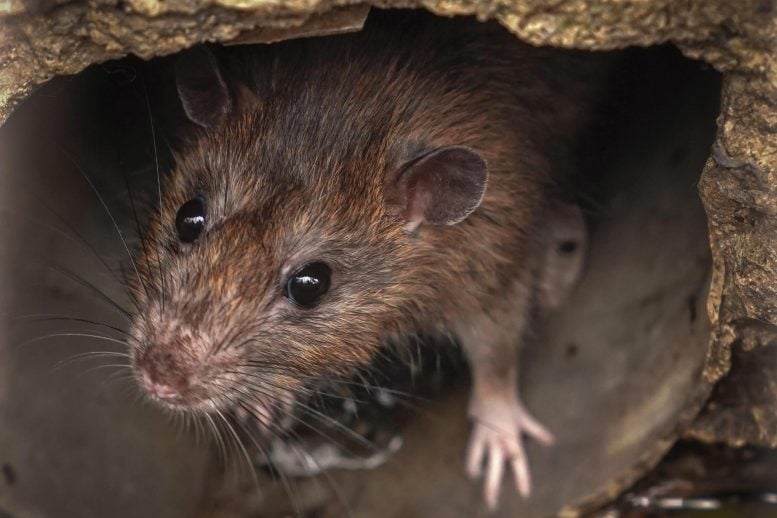
Summary of Rats Are Spreading a Deadly Disease in Boston:
Researchers analyzed rodent behavior to better comprehend the interactions between various populations and how their movements facilitate the spread of leptospirosis. A six-year study led by Tufts University found that urban rats are not just a nuisance; their migration through cities can contribute to the spread of this harmful disease.
*****
Summary Bullet Points:
- Rats as urban travelers: Their migratory patterns and their consequences.
- Leptospirosis: A silent threat lurking in the alleys of Boston.
- Insights from a six-year study on rodent behavior and disease spread.
- The importance of understanding wildlife movements in urban settings.
- Actionable steps to mitigate the risks posed by rodent-borne diseases.
Rats. Just the mere mention might make your skin crawl or inspire a certain curiosity about these nocturnal explorers. In the hustle and bustle of urban landscapes, these small creatures weave through the fabric of city life, mostly unseen yet always present. They’re survivors, making the most of the environment humans create. However, in cities like Boston, these rodents are carrying more than just a primal mystery—they’re transporting an invisible hazard: leptospirosis.
Leptospirosis is a bacterial disease that slyly finds its way into humans and animals alike. Borne by the microscopic villains commonly found in rat urine, it moves silently, undetected, leaving no room for complacency. So, what makes these rodents such effective carriers, and why Boston? That’s where an enlightening six-year study by researchers at Tufts University steps in, aiming to decipher the labyrinth of rat movements and their link to disease transmission.
Let’s delve deeper into the underworld of urban wildlife, exploring rat behavior and drawing insights that are both intriguing and educational. But hey, fear not! This journey is not just about lurking in shadows; it’s about understanding, adapting, and taking proactive steps to safeguard our urban environments. Let’s embark on this exploration together!
Rats on the Move: The Unseen Commuters
Imagine the city’s veins as conduits through which the lifeblood of urbanity flows. Streets thrumming with traffic, subways bustling below ground, and high-rises touching the sky. Yet beneath this vibrancy lies another network—rat pathways. These tunnel-dwelling critters have adapted remarkably to city life, finding crumbs of comfort amid human civilization. Boston, with its cobblestone streets and historic charm, becomes the backdrop for a real-life urban safari of these rodent adventurers.
Rats aren’t content with merely staying put. They journey, often migrating from one end of the city to another, responding to environmental cues, food sources, and habitat changes. This movement, while seemingly innocuous, plays a pivotal role in disease spread. Their nocturnal pilgrimages mean they’re constantly in contact, intermingling with different rat populations, a perfect storm for leptospirosis transmission.
Unveiling the Silent Threat: Leptospirosis
Leptospirosis might not enjoy the spotlight like other diseases, but don’t let its humility fool you. This bacterial infection can cause symptoms ranging from mild flu-like signs to severe complications affecting the liver and kidneys—no small matter. And in an urban setting, where rats multiply fearlessly, the threat level quietly escalates.
Understanding leptospirosis requires a peek into the microscopic world. The culprit? Leptospira bacteria, which wade through pools of water contaminated with rat urine. A slight brush with a surface, a drop of rain, an unnoticed puddle—these mundane encounters can become unwitting rendezvous with disease.
The Tufts University study unveils how these infections latch onto the rhythm of the city. Microbial hitchhikers travel on the backs of rats, moving seamlessly through neighborhoods. This revelation beckons an essential takeaway: the importance of comprehending the intersections between wildlife ecology and urban planning.
Insights from the Labyrinth: A Six-Year Endeavor
In a spectacularly patient and methodical study spanning six years, researchers engaged in an elaborate dance to map the movements of Boston’s rat population. This wasn’t your ordinary rat race! By using technology akin to GPS tracking, these modern-day navigators unraveled a rodent tapestry: how different populations interconnect, how often migrations occur, and the potential ripple effects on public health.
A fascinating aspect uncovered was the social structure among rats. They aren’t just random walkers; they’re organized into territories and communities. A veritable rodent society. These insights challenge our perceptions and prompt us to reconsider our engagement with urban wildlife.
Tufts’ research provides a crucial lesson—they meld extensive data with a compassionate understanding of these creatures. Instead of viewing rats merely as pests, the study presents them as integral components of the urban ecosystem. This paradigm shift encourages us to rethink how we cohabit our shared environments.
Navigating the Urban Maze: Why It Matters
Balancing the interaction between urban cities and the creatures that inhabit them is pivotal. As urban landscapes continue to expand, our understanding of the intricacies within these habitats must deepen. Here’s where the science transforms into actionable steps, guiding cities to plan landscapes that recognize the movements and behaviors of these unseen inhabitants.
Moreover, acknowledging the presence and influence of rats and similar urban wildlife makes us stakeholders in their management. It becomes a call-to-action for individuals and communities—a rallying cry to redesign cities with health, safety, and harmony in mind.
But listen, this isn’t all gloom and doom! It’s a story of empowerment, too. By dissecting these small truths, we arm ourselves with the knowledge to forge paths toward safer, healthier urban environments. And who knows? Maybe in understanding rats, we find a reflection of our tenacity and adaptability.
Positive Steps Forward: Mitigation and Hope
Where do we go from here? Recognizing the movements of urban wildlife like rats can inform public health initiatives, ensuring swift responses to potential outbreaks. Proactively, communities can adopt measures that include improved waste management, structural integrity checks, and educational programs focusing on hygiene.
The potential for using technology, like sensors and data analytics, to anticipate rat movements is promising. Imagine cities equipped with real-time updates on rodent activity, empowering public health agencies to act decisively.
Furthermore, collaboration across sectors—be it healthcare, urban planning, or wildlife management—fuels innovative solutions. It invites novel approaches and creative thinking, reminding us that progress emerges from collective action and shared vision.
The Adventure Continues: Learning and Adapting
As we traverse the ever-evolving urban wilderness, the wisdom gleaned from these rodent societies encourages creativity. Cities themselves are living organisms, pulsing with endless possibilities for adaptation and change. By embracing both the visible and invisible threads that connect us, a richer tapestry of urban life unfolds.
So, bring your curiosity! Let’s look deeper into our surroundings, question the mundane, and reimagine the seemingly insignificant. The insights derived from a humble rodent may be just the catalyst needed to inspire broader change in how we navigate complex ecosystems.
Let’s journey forward, hand in hand with nature, guided by curiosity and ingenuity. City by city, person by person, we step into a future where human resilience and environmental harmony coalesce, weaving stories splendidly intertwined with the dance of life itself.
As we close this chapter of discovery, may your perspective remain as vibrant and unpredictable as the city streets you traverse. Each step, each glance, a reminder of our shared journey through the wonders of urban life.
Stay curious. Stay engaged. Welcome the unexpected.