Summary of These “Good” Immune Cells Could Hold the Key to Spinal Cord Regeneration:
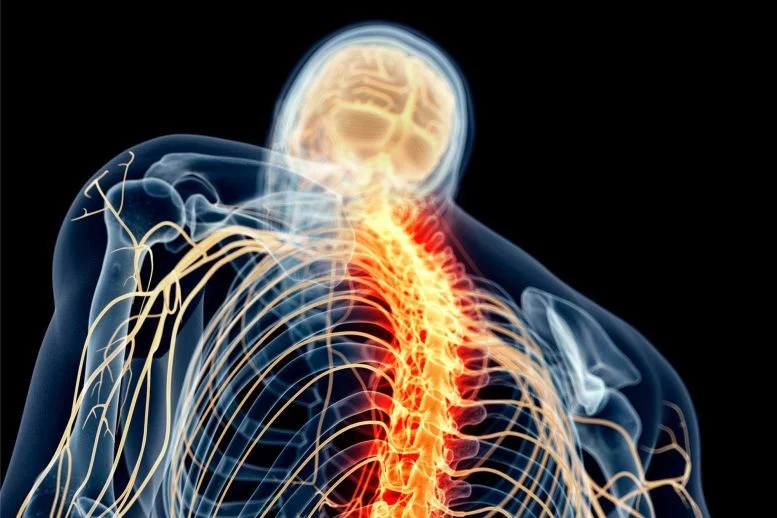
Research from the Becker group at TUD Dresden University and the University of Edinburgh has uncovered how zebrafish can effectively regenerate their spinal cords post-injury, unlike humans. The study identifies a subgroup of neutrophils that release the signaling molecule Il-4, which helps control inflammation and fosters a regenerative environment. This immune response allows for nerve fibers to regrow, contrasting with the excessive scarring seen in human spinal cord injuries. Although the role of Il-4 in humans remains unconfirmed, the findings offer promising avenues for potential therapeutic strategies in spinal cord repair.
*****
Key Takeaways
- Neutrophils’ Role: In zebrafish, a specialized subgroup of neutrophils releases the signaling molecule Il-4, essential for controlling inflammation and promoting spinal cord repair after injury.
- Zebrafish vs. Human Healing: Unlike humans, zebrafish can effectively manage their immune response, allowing for complete spinal cord regeneration, a crucial insight for regenerative medicine.
- Implications for Research: The study highlights the importance of carefully regulating immune responses rather than simply enhancing or suppressing them, opening new avenues for human treatments in spinal cord injuries.
- Promising Future: The discovery of Il-4’s role in the healing process hints at potential applications in human medicine, requiring further investigation into whether similar mechanisms exist in human immune cells.
- Scientific Adventure: The ongoing research into spinal cord injuries and recovery is not just about understanding biology; it’s a journey into the possibilities of human regeneration.
The Fascinating Intersection of Immunology and Spinal Cord Regeneration
Imagine a world where a spinal cord injury might not be the definitive end of mobility that it is today. Science has often felt like a whimsical journey, filled with unpredictable twists and turns, and recent discoveries indeed reflect that sentiment. One such intersection of intrigue arises from research into zebrafish, and their remarkable ability to regenerate spinal cords. At the heart of this story lies an unexpected protagonist: the neutrophil, a type of immune cell that may have answers for human medical challenges.
Understanding the Basics
Before we dive into the depths of this research, let’s take a moment to ponder the role of the immune system. Traditionally regarded as the body’s defense mechanism, the immune system can sometimes become overenthusiastic; think of it like a dog that gets overexcited at the sight of a squirrel. In cases of injury, this vigorous response can lead to excessive inflammation, producing substantial scarring. For humans, this scarring style locks the door on healing, leaving us stranded in the aftermath of a spinal injury.
Zebrafish, however, have emerged as a stunning exception. They not only control this inflammatory response but do so effectively enough to regenerate their spinal cords and restore movement—an ability that has eluded humans for ages. The secret lies in a specific subgroup of neutrophils and their magic signaling molecule, Il-4.
The Neutrophils: More than Just Debris Clearers
Historically, neutrophils were viewed as household cleaners of the immune system; they’re the ones who arrive first at the scene of an injury, ready to clear the mess. Their functions, however, extend far beyond that initial role. In the recent study emerging from the Becker group at the Center for Regenerative Therapies Dresden, researchers have shed light on this multifaceted cell type.
They discovered that certain neutrophils do not merely react to damage; rather, they play a constructive role in the healing process. By releasing Il-4, these cells send a critical message to other immune components: “Hold on a minute! Let’s dial down the inflammation and switch gears toward healing.”
Intriguingly, when the researchers disabled this selective group of neutrophils in larval zebrafish, chaos ensued. Without the protective signal from Il-4, the remaining immune cells ramped up the inflammatory response, leading to a frustrating halt in nerve fiber regeneration. In essence, these neutrophils are akin to conductors in an orchestra, ensuring that the immune response aligns towards a beautiful symphony of recovery rather than devolving into a cacophony of destruction.
The Remarkable Journey of Zebrafish Regeneration
While the mechanisms underlying zebrafish regeneration are captivating, they underscore a fundamental question: Why can these small aquatic creatures regenerate their spinal cords while humans generally cannot? This is not just a matter of biology; it’s a philosophical conundrum worthy of its own banquet of inquiry.
In humans, the aftermath of a spinal injury often resembles a tragedy, as inflammation extends the injury process instead of aiding it. Why does nature grant zebrafish this miraculous ability? The answer seems to center on the subtleties of their immune response—something that we will dissect further in the following paragraphs.
In their regenerative prowess, zebrafish rely on finely-tuned mechanisms that actively promote nerve growth through the injury zone. When we consider the inflammatory mechanisms in humans, the picture becomes far more tangled. Chronic inflammation can feed into permanent damage, locking the body in an unending cycle of non-recovery. This emphasizes a stark difference in immune regulation strategies between species.
Il-4: A Key to Potential Healing in Humans
Among the significant findings from the Becker group’s research is the identification of Il-4 as a game-changer in the dynamic landscape of spinal cord repair. In conducting their experiments, researchers were able to introduce Il-4 directly into the injury site of zebrafish, leading to swift subsiding of inflammation and complete spinal cord regeneration—despite the absence of those previously mentioned neutrophils. This suggests that Il-4 alone contains the potential to guide the immune response toward repair.
As with any scientific discovery, the immediate follow-up is compelling. Could Il-4 play a similar role in human spinal injuries? This tantalizing question stands at the forefront of regenerative medicine.
Dr. Xiaobo Tian, who conducted the study, remarked on the uncertainty surrounding the translatability of their findings to human biology. “It remains to be seen if Il-4 plays a similar role in humans and whether it can finely balance inflammation, allowing for better healing.” This prospect spurs the scientific community on a thrilling quest toward understanding our own biology as it mirrors or diverges from that of model organisms such as zebrafish.
The Future: A Voyage into the Unknown
As we stand at the threshold of further studies and continue to plunge into the depths of regenerative medicine, it’s essential to embrace the uncharted territories that lie ahead. Human biology is complex, often resisting easy answers. If Il-4 can indeed serve a similar function in humans, it hints at transformative treatments for spinal cord injuries and beyond.
This is not merely a dry scientific narrative; it’s a dance of hope, progress, and potential. Imagine a future where the concept of “healing” evolves beyond its current capacity. Imagination fuels innovation, and the merging of immunology and regenerative therapy might just be the key to unlocking human potential.
Embracing the Journey of Discovery
The unfolding story of spinal cord regeneration through immune modulation invites us all to contemplate our own journeys of growth and transformation. Much like the immune response at an injury site, healing often requires a harmonious interplay of various factors. Whether in the body or in life, balance and timing play pivotal roles in achieving recovery.
Just as neutrophils in zebrafish work to steady the immune response, perhaps we too have internal mechanisms that guide us toward well-being. Embracing the challenges we encounter can lead to personal growth and a renewed sense of purpose. The research into zebrafish serves as a refreshing reminder that solutions are often hidden in the unlikeliest of places and that digging deeper can yield unexpected results.
In essence, the fascinating dynamics of zebrafish immunity and spinal cord regeneration serve both as scientific lessons and a reflection on resilience—a call to embrace innovation, nurture our inherent capacities, and venture into the unknown with open hearts and minds.
In summation, as research on spinal rehabilitation continues to unfold, it’s a remarkable homage to the potential that resides within nature, our bodies, and ourselves. The mysteries yet to unravel promise not only scientific breakthroughs but potential horizons of healing for many in the human experience.
Let us stay curious, celebrate these scientific adventures, and anticipate a future brimming with possibilities—a world where recovery is not merely a dream but a living reality.