Summary of Addressing Myelin Degradation Could Prevent Disease:
A new study by researchers at the Max Planck Institute has found that impaired myelin actively contributes to the changes observed in Alzheimer’s disease. The study showed that compromised myelin directly contributes to disease-related changes observed in Alzheimer’s disease and that curbing age-related degeneration of myelin could prevent or slow its progression. Alzheimer’s, an irreversible form of dementia, is the most prevalent neurodegenerative disease globally. Age is the predominant risk factor for this disease, but the reasons behind this are still not fully understood.
*****
– Alzheimer’s disease, irreversible dementia, is the most prevalent neurodegenerative disease globally.
– Myelin, the protective sheath around the brain’s nerve cells, degenerates as one age.
– Impaired myelin directly contributes to the changes observed in Alzheimer’s disease.
– Age-related myelin degradation increases the risk of Aꞵ peptide deposition.
– Curbing the degeneration of myelin that comes with age could present new opportunities for preventing the disease or slowing its progression in the future.
Myelin and Alzheimer’s Disease: A New Potential Target for Prevention and Treatment
Every year, millions of people are diagnosed with Alzheimer’s, an irreversible dementia that robs them of their memories and mental abilities, leading to care dependency in the end stage. It is the most prevalent neurodegenerative disease globally, affecting an estimated 50 million people worldwide as of 2021. The disease primarily affects the elderly, with the risk of developing Alzheimer’s doubling every five years after age 65. While age is the predominant risk factor for Alzheimer’s, the reasons behind this are still not fully understood.
Recent research has shown that myelin, the protective sheath around the brain’s nerve cells, undergoes degeneration as we age and directly contributes to the changes observed in Alzheimer’s disease. Myelin ensures rapid communication between nerve cells and supports their metabolism. Intact myelin is critical for normal brain function. But compromised myelin actively promotes disease-related changes in Alzheimer’s disease.
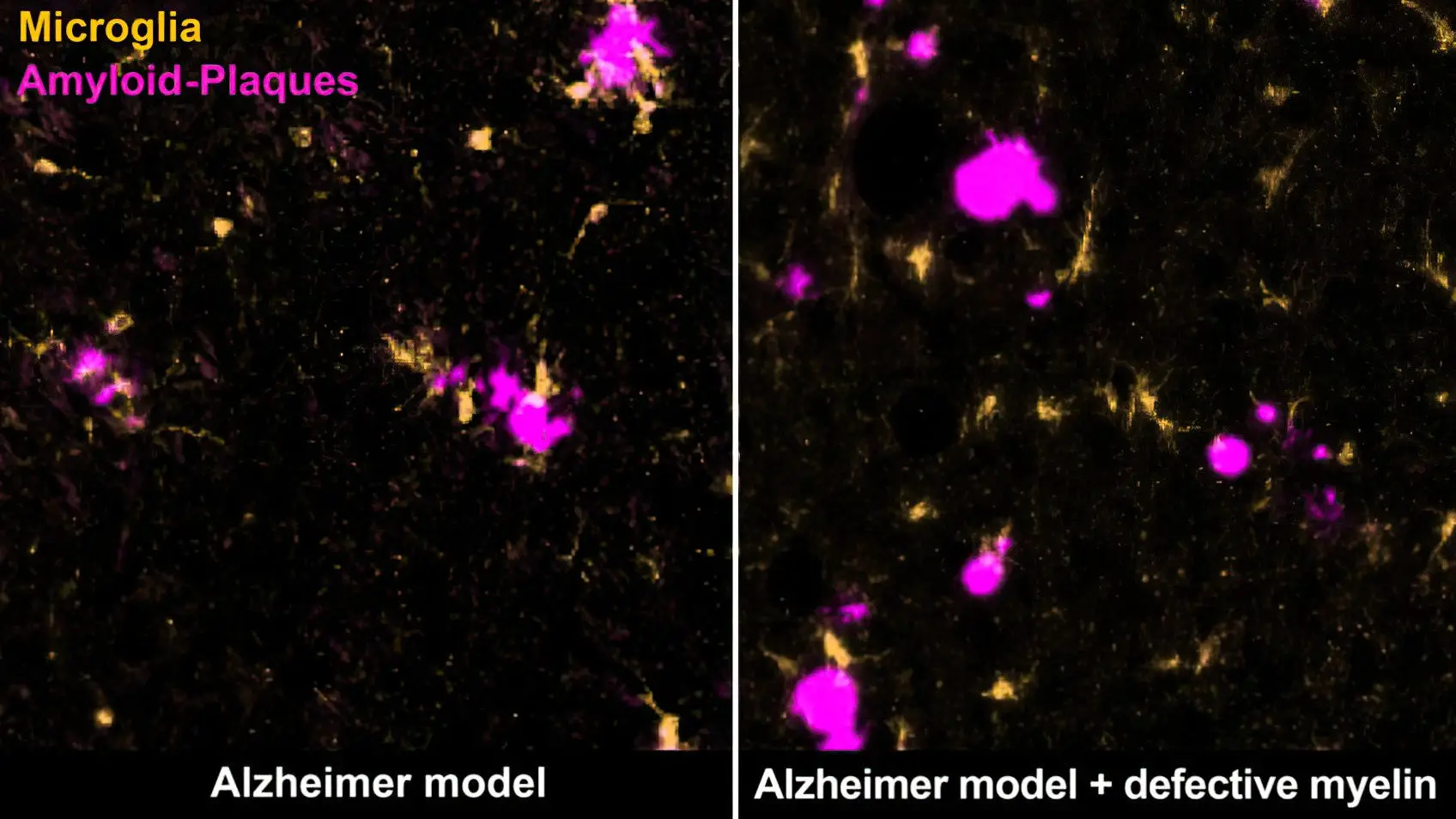
In a new study conducted by researchers at the Max Planck Institute for Multidisciplinary Sciences in Göttingen, for the first time, scientists explored the possible role of age-related myelin degradation in the development of Alzheimer’s. Using imaging and biochemical methods, the scientists examined and compared different mouse models of Alzheimer’s in which amyloid plaques occur similarly to those in Alzheimer’s patients.
The study showed that defective myelin in the aging brain increases the risk of Aꞵ peptide deposition. The aging brain with impaired myelin can no longer support the efficient communication between nerve cells, and nerve fibers experience stress, leading to the buildup of the Aꞵ peptide associated with Alzheimer’s disease. Unfortunately, immune cells called microglia, which are vigilant and monitor the brain for any sign of impairment, are “distracted” or overwhelmed by the myelin damage and cannot respond appropriately to plaques.
However, there is hope in the finding that curbing the degeneration of myelin that comes with age could present new opportunities for preventing the disease or slowing its progression. Interventions such as promoting exercise, education, and a healthy lifestyle, as well as taking preventive measures for cardiovascular diseases, have proved to benefit brain health and may have protective effects on myelin.
In conclusion, the findings of this study represent a significant step forward in understanding the relationship between age-related myelin degeneration and Alzheimer’s disease. While more research needs to be done, these results offer hope for developing new therapies and treatments that target myelin to slow down or prevent Alzheimer’s disease. We should care for our brains by staying active and healthy and getting necessary medical attention. The brain is our most valuable thing, and maintaining health is essential for a fulfilling life.