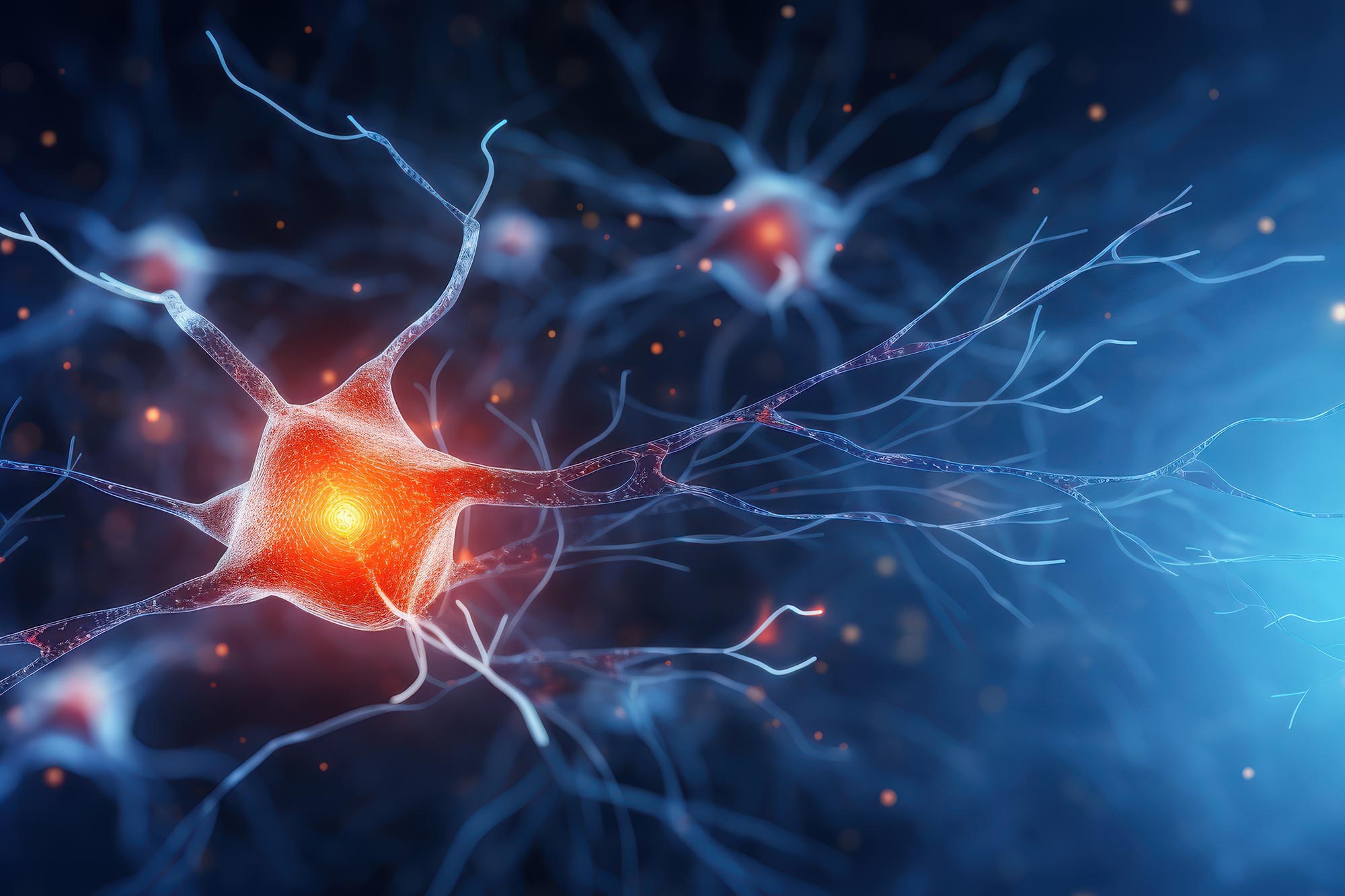
Summary of Overworked Brain Cells May Hold the Key to Parkinson’s:
Researchers at Gladstone Institutes have discovered that overactivation of dopamine-producing neurons may lead to their deterioration and death, a pattern seen in Parkinson’s disease. In studies with mice, they found that prolonged overactivity of these neurons caused them to lose connections and die, specifically in the brain’s substantia nigra region. This mirrors what happens in human Parkinson’s patients.
The study suggests that this overactivity, driven by genetic risks, environmental factors, and the strain on remaining neurons, could be a root cause of neuron death. The research indicates that altering neuron activity patterns through drugs or deep brain stimulation might protect neurons and slow disease progression. The findings are consistent with molecular changes observed in Parkinson’s patients, including alterations in gene expression related to dopamine metabolism and calcium regulation.
*****
- Scientists have discovered that overworked dopamine-producing neurons in the brain may hold the key to understanding Parkinson’s disease.
- Chronic overactivation of these neurons in mice led to their degeneration and loss, mirroring human Parkinson’s symptoms.
- Research suggests a potential vicious cycle in the disease where overactive neurons eventually die, intensifying movement problems and exacerbating the condition.
- Adjusting neuronal activity through drugs or deep brain stimulation might offer new avenues for Parkinson’s treatment.
- Molecular changes associated with overactivation reflect those seen in early-stage Parkinson’s patients, providing potential targets for intervention.
The Secrets of the Overworked Brain: Unlocking the Mysteries of Parkinson’s Disease
Imagine your brain as a bustling city at night. Lively, bright, and constantly buzzing with energy. But what happens when the lights stay on all the time, with no rest in sight? Everything starts to flicker, fade, and eventually burn out. This analogy might just capture the essence of a groundbreaking discovery by scientists at the Gladstone Institutes in their exploration of Parkinson’s disease.
The Dance of Dopamine
Dopamine is not just a word; it’s a symphony. It’s the maestro directing the orchestra of your brain, ensuring you move with grace and precision. However, in Parkinson’s disease, this symphony turns into a cacophony. Researchers have long been fascinated by the grim fate of dopamine-producing neurons, particularly those nestled in the substantia nigra—a small but mighty region at the heart of motion control.
When the harmonious dance of dopamine becomes a frenzied jig, these neurons are forced into overdrive. It’s like asking a marathon runner to sprint indefinitely. Eventually, these overworked athletes—the neurons—start to collapse. Scientists have now shown that this relentless overactivation is not just a footnote in the annals of Parkinson’s research; it might be a crucial chapter.
Bringing the Lab to Life
To grasp these findings, Nakamura and his team embarked on a journey deep into the mind—to a place where science and imagination intermingle. By introducing a receptor into the dopamine-producing neurons of mice, they could crank up these neurons’ activity by using a drug called clozapin-N-oxide. Uniquely, this drug was stealthily added to the animals’ drinking water, ensuring a continuous, gentle buzz of overactivation.
The results were staggering. Within days, the mice’s normal activity patterns took a nosedive. Weeks in, the very fibers connecting their neurons began to fray. And before long, entire neurons were extinguished—perhaps a haunting echo of what happens in human brains wracked by Parkinson’s.
The Cycle of Cellular Collapse
Imagine your brain cells as industrious workers. If they clock in extra hours, pushing the limits day in and day out, exhaustion sets in. Over time, these workers become less productive—or worse, they quit. This cycle could be a metaphor for the chain of events in Parkinson’s: overstressed neurons dial back dopamine production as a desperate survival tactic, leading to insufficient levels, impaired movement, and ultimately, more neuronal burnout.
This mirrors a question that has haunted the bright minds unraveling Parkinson’s: Why does neuron activity ramp up as the disease progresses? The answer, shrouded in the interplay of genetics and environment, suggests a vicious spiral catalyzing early in the disease’s timeline. As motor symptoms escalate, the heart of the brain’s motion-inducing orchestra falls silent.
Humans and Mice: Unlikely Allies
The revelations are not confined to mice alone. Remarkably, the molecular changes seen in these tiny creatures resonate with patterns observed in humans. Scientists measured gene expressions in early-stage Parkinson’s patients and unearthed a similar downturn in genes related to dopamine metabolism, calcium handling, and stress resilience. These shared signatures ignite hope for potential prevention and treatment strategies, envisioning drugs or deep brain stimulation to temper neuronal tumult.
A Symphony of Inspiration
But let’s take a moment. Let’s step back and admire not just the science, but the story—the human tale woven through every discovery. Here lies an opportunity to harbor hope, to pioneer potential, and to find fascination in the facts. The research inspires a broader question central to life itself: How do we manage our rhythms, our exhaustion, and our need for equilibrium?
Just as the overly active neurons reflect burnout, so too do our daily lives. We hustle, strive, and stretch ourselves, sometimes ignoring the whispers warning us to slow down. Parkinson’s research offers a biological blueprint and, perhaps, a philosophical one—underscoring the value of balance, care, and vigilance.
Where Do We Go from Here?
With newfound understanding, the horizon of Parkinson’s treatment draws nearer. Could we intercept this neuronal marathon? Could interventions calibrate the symphony before the final note fades?
Researchers like Rademacher and Nakamura believe so. They suggest that manipulating the activity of these vulnerable cells with therapies might slow, or perhaps stall, the progression. In this research, there’s a melody of optimism—a call to action for warriors in lab coats and beyond.
As scientists continue untangling the complex web of neurotransmission, their work shines a light on uncharted paths. By deciphering why neurons work overtime and safeguarding them from burnout, we edge closer to therapies that may one day silence Parkinson’s unwavering grip.
An Invitation to Curiosity
Being part of this unfolding narrative invites each of us to reflect on the nature of exploration. It captures the essence of discovery and the relentless pursuit of answers that reside just a whisper beyond our reach. The story of overworked neurons opens doors to further questions, further quests, and possibly, further breakthroughs.
Whether you’re pouring over scientific jargon or simply pausing to ponder your well-being, the dance of dopamine and the tale of Parkinson’s offer more than insight—they offer introspection.
In life’s own bustling symphony, may we appreciate the harmony, seek the balance, and nurture the rhythm in ways that leave us inspired, informed, and always, always curious.