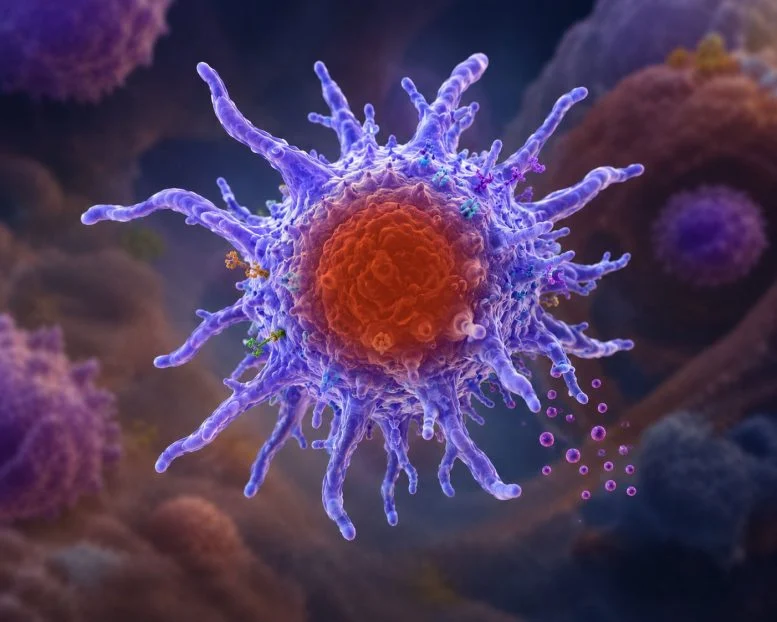
Summary of These Overlooked Immune Cells Supercharge the Fight Against Cancer:
Researchers at the University of Manchester have discovered that activated dendritic cells play a vital role in sustaining the immune response against cancer during immunotherapy. Using newly developed mouse models, the study published in Immunity demonstrates that these specialized immune cells are crucial for activating and maintaining the function of cancer-fighting T cells. When activated dendritic cells were absent, T cells were unable to effectively target tumors, diminishing the immune response and the overall effectiveness of immunotherapy.
The findings suggest that enhancing the activity of these dendritic cells could improve treatment outcomes for patients, especially those whose cancers are resistant to current therapies. This research opens new avenues for enhancing cancer immunotherapy and addresses broader questions about the immune system’s response to cancer and other diseases. The study received funding from Cancer Research UK and other organizations.
*****
Key Points Summary
- Activated Dendritic Cells Role: Newly discovered that activated dendritic cells are crucial for both initiating and sustaining the immune response against cancer.
- Research Innovations: Researchers developed unique mouse models that enable specific labeling and removal of these cells, allowing a deeper understanding of their function.
- Potential for Enhanced Immunotherapies: Findings suggest that boosting activated dendritic cells could improve the effectiveness of immunotherapy for cancer patients.
- Research Implications: These insights could solve current challenges in immunotherapy, unlocking better treatment responses for more people.
- Future Research Directions: Additional studies are required to capitalize on these findings, paving the way for transformative strategies in cancer treatment.
Unveiling the Immune Warriors: How Overlooked Cells Supercharge the Fight Against Cancer
When you think of the body’s defenses, images of heroic cancer-fighting T cells might come to mind. These warriors of the immune system get most of the glory. Yet, lurking in the shadows is a group of overlooked soldiers—activated dendritic cells. These specialized immune cells play a pivotal role in the battle against cancer, and recent research has shed new light on their extraordinary capabilities.
Imagine an army without commanders. The soldiers might have strength, but they wouldn’t know where to strike. Activated dendritic cells serve as those commanders, organizing and directing T cells to mount a calculated attack on tumors. If we can harness the potential of these immune cell generals, the landscape of cancer treatment may change forever.
The Discovery Journey
Researchers at the University of Manchester’s Cancer Research UK Manchester Institute recently embarked on a pioneering investigation into activated dendritic cells. Their groundbreaking work has unveiled how these cells not only initiate an immune response but also sustain it, making them essential players in anti-cancer immunity. Until now, understanding these cells has been hindered by the lack of advanced research models.
Imagine the challenge: if you can’t easily study these cells, how can you comprehend their full potential? Enter the newly developed mouse models that allow for specific labeling and selective removal of activated dendritic cells. This innovation is akin to giving scientists a previously unbreakable code to decipher.
The results were astonishing. When researchers removed these cells, cancer-killing T cells struggled to be activated and maintain their activity once they entered tumors. This emphasizes the crucial nature of dendritic cells, without which the immune system’s natural ability to control cancer crumbles.
Sustaining the Fight
Let’s delve deeper into the mechanisms at play. The activated dendritic cells act like efficient coordinators within the immune system. They don’t just trigger a response; they ensure the T cells stay engaged long enough to effectively attack the cancer cells. This coordination directly influences the outcomes of immunotherapies, treatments designed to leverage the body’s own immune system against tumors.
The first author of the study, Maria Koufakis, outlines a critical insight: “Modern immunotherapies rely on strong and coordinated immune responses, yet many people still do not benefit from these treatments.” This underscores a crucial point: enhancing the activation and sustainability of dendritic cells could be the key that unlocks greater efficacy for immunotherapies.
The Immune System’s Understudied Star
Let’s not overlook the complexity of our immune system. Behind every successful response lies a myriad of interactions among various immune cells. Activated dendritic cells’ role goes beyond merely launching the attack; they visibly shape the battlefield within tumors. Understanding this could ultimately lead to more effective treatments for patients whose cancers currently resist therapy.
The implications of these findings are profound. Researchers speculate that if we can creatively amplify the function of activated dendritic cells, we might enhance the immune system’s overall response to cancer. Imagine a world where the body’s defenses work harmoniously and where fewer patients are left without treatment options!
Open Questions and Future Directions
As the research unfolds, many questions surface. Why do immunotherapies work beautifully for some while remaining ineffective for others? Could the key hinge on these activated dendritic cells? Insights from this research could unlock further answers, steering scientists toward a better understanding of the immune landscape within cancer.
Research Information Manager at Cancer Research UK, Dr. Marianne Baker, emphasizes the necessity for more inquiries. “Immunotherapies that harness our immune system to beat cancer are saving lives, but we don’t yet understand why they work for some people and not others.”
Future investigations will likely build on the findings regarding activated dendritic cells and immunotherapy. Scientists could explore other contexts as well—like how these cells respond in autoimmune diseases or when facing viral infections.
A Call to Action for Everyday Heroes
While the research spotlight focuses on dendritic cells and their characteristics, it’s an excellent moment for all of us to ponder our engagement in our personal battles—whether against challenges in health, work, or our personal lives. Just as activated dendritic cells rally T cells, we too need to orchestrate our strengths to face our unique battles.
Consider this: just like the immune system requires coordination between a network of cells to effectively combat cancer, your journey toward self-improvement may necessitate a harmonious alignment of your goals, resources, and support systems.
Empowering Change Through Understanding
Knowledge is transformative. Just as our understanding of activated dendritic cells can redefine treatment pathways, a solid grasp of our motivations and skills can direct how we navigate life’s numerous challenges. This research serves as a reminder that breakthroughs often arise from overlooked areas; we must remain curious and dedicated to exploring the unknown.
Imagine if we could each become adept at recognizing our challenges, activating our inner strength, and sustaining our efforts over time. Perhaps we could even turn our lives into inspiring examples for others, much like how immunotherapies inspired hope for cancer patients.
Bridging Gaps and Building Futures
As this research gains traction, it may ignite fresh conversations surrounding cancer treatment and our immune systems. Active participation in future studies could lead to remarkable strides in understanding how to amplify the efficacy of immunotherapies.
In the grand tapestry of life, we should see ourselves as integral threads, each contributing uniquely to the broader design. By embracing the lessons drawn from research, we can collectively embark on the journey toward change. Just as activated dendritic cells amplify our immune response, so too should we enhance our capabilities through education, collaboration, and unwavering determination.
Conclusion: Embracing the Next Steps
As we conclude this exploration into the fascinating world of activated dendritic cells, let us reflect on our personal journeys and the potential within each of us to stimulate positive change. Whether it’s learning, sharing insights, or through collaborative endeavors, we can find “activated” moments in our lives to lead us toward healing and growth.
There’s a great deal to learn from our immune system’s intricate dance. Just like activated dendritic cells that lead T cells into battle, we too can orchestrate our paths with intention and purpose. Let’s harness our strengths, face our challenges head-on, and amplify our efforts in whatever fight we face, together paving the road to a healthier, more vibrant future.