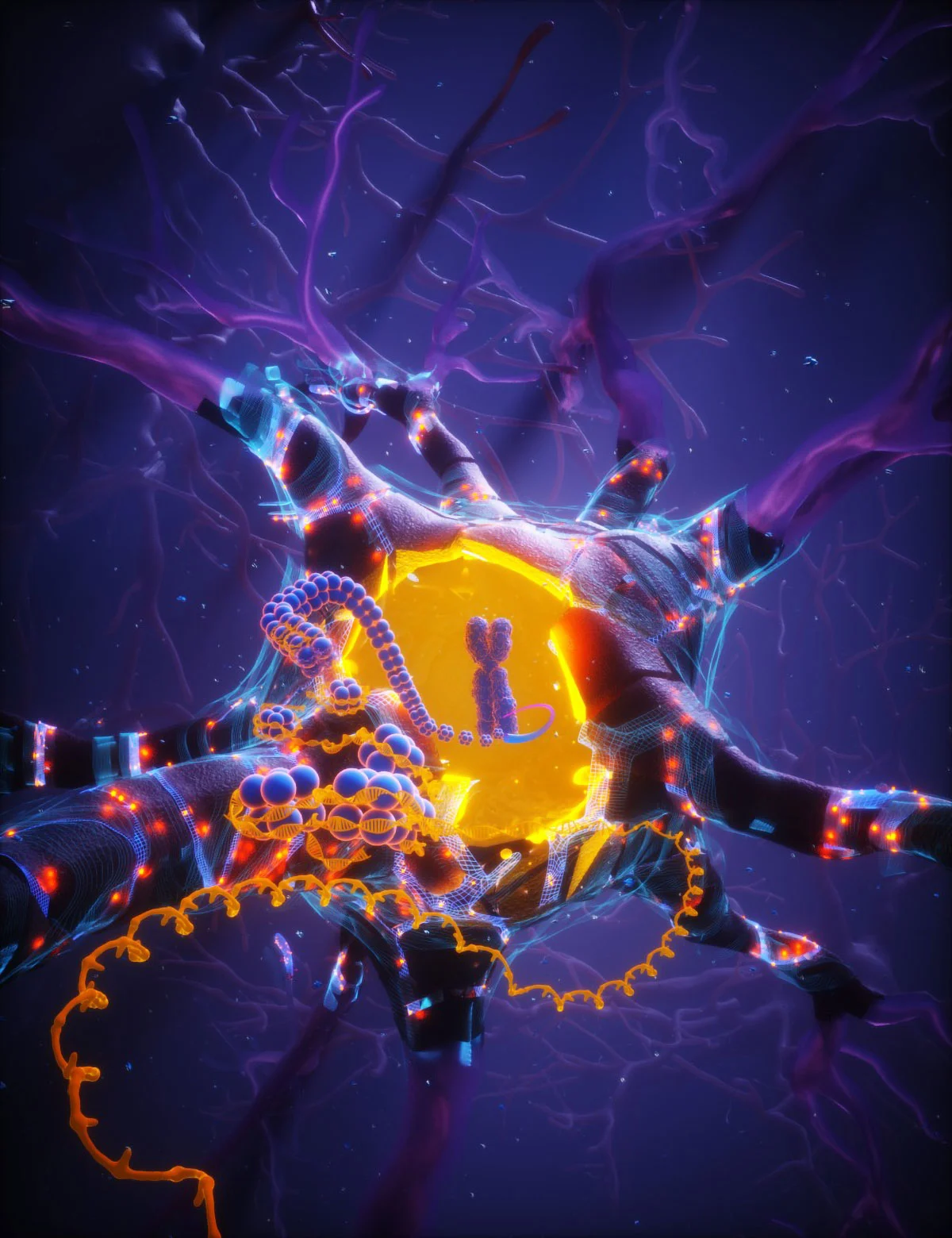
Summary of This “Longevity Gene” May Protect the Brain From Aging and Dementia:
A recent study from the Buck Institute for Research on Aging has revealed that the APOE2 variant of the apolipoprotein E gene may enhance the brain’s resilience against stress and age-related damage, thereby lowering the risk of Alzheimer’s disease. Unlike the APOE4 variant, which is linked to higher Alzheimer’s risk, APOE2 carriers tend to have longer lifespans and better brain health.
The research indicates that APOE2 aids in preserving DNA integrity and preventing cellular senescence—an aging-related state that can lead to neurodegeneration. Scientists found that APOE2 neurons exhibit superior DNA repair capabilities and resist age-related changes compared to those with other APOE variants. Moreover, introducing APOE2 protein to APOE4 neurons reduced DNA damage, suggesting possible therapeutic implications.
The study underscores the potential for future Alzheimer’s therapies targeting DNA repair and cellular senescence, especially for individuals with the high-risk APOE4 genotype. Further research is needed to understand the exact mechanisms by which APOE2 offers these protective effects.
*****
Summary of Main Topics
- APOE2 Variant: The APOE2 variant of the apolipoprotein E gene is linked to longevity and a reduced risk of Alzheimer’s disease.
- Cellular Resilience: New research indicates that APOE2 helps brain cells better withstand stress by enhancing DNA repair mechanisms.
- Comparison of APOE Variants: Different variants of APOE—APOE2, APOE3, and APOE4—have distinct impacts on Alzheimer’s risk and brain health.
- Research Findings: Studies show that APOE2 neurons exhibit less DNA damage and are more resistant to cellular aging compared to other variants.
- Therapeutic Implications: Insights gained from this research could guide new therapies to bolster brain resilience and combat age-related neurodegeneration.
The Longevity Gene: Unveiling APOE2’s Protective Powers Against Aging
The human brain—an intricate network of neurons and synapses—navigates through life’s complexities, processing information, emotions, and memories with astonishing dexterity. But like any multifaceted machine, it is susceptible to wear and tear as the years unfold. Among countless studies exploring the foundations of aging, one fascinating aspect has emerged: the APOE2 gene, often hailed as the “longevity gene,” may play a crucial role in safeguarding our neurological health against the tides of time. This discovery invites us to reflect not just on biology but also on strategies for nurturing our well-being.
The Gene that Might Change Our Future
APOE, or apolipoprotein E, comes in several variants, namely APOE2, APOE3, and APOE4. While whether you carry one variant or another is largely a matter of luck, understanding their implications can be transformative. APOE4, for instance, is somewhat infamous—it significantly increases the risk of late-onset Alzheimer’s disease. Conversely, carriers of APOE2 tend to have a lower risk and, intriguingly, often enjoy longer lives. But why is this? What is the underlying mechanism that makes APOE2 so beneficial?
Recent revelations from a study conducted at the Buck Institute for Research on Aging shed light on this enigmatic gene. Researchers discovered that APOE2 enhances the brain’s ability to combat age-related decline by promoting the preservation and repair of DNA. Isn’t it peculiar to think that something as minute as a genetic variation could afford such significant protection and longevity? This exploration into the biology of aging has broader implications, not only for scientific communities but for individuals seeking a path toward healthier aging.
Unraveling the Mechanisms of APOE2
Imagine neurons equipped with enhanced capabilities to repair their own DNA and resist the ravages of time—it’s a scientific marvel poised to redefine how we think about aging. In the lab, researchers discovered that neurons carrying the APOE2 variant were adept at activating pathways responsible for DNA repair. This finding is thrilling! It suggests that maintaining our genetic integrity can help stave off not only cognitive decline but a range of age-related issues.
To elucidate this, let’s dive into the specifics. Scientists utilized human induced pluripotent stem cells (iPSCs) engineered to express different APOE variants. By differentiating these cells into various neuron types, researchers examined how each variant influenced cellular health. The results indicated that neurons with the APOE2 variant accumulated significantly less DNA damage compared to those with other variants, especially APOE4.
Here lies the crux: DNA damage is recognized as a substantial contributor to aging and neurodegenerative diseases. If APOE2 can mitigate this, it may offer a formidable line of defense against conditions like Alzheimer’s.
The Impact of Cellular Resilience
Elderly neurons don’t merely stop functioning; they deteriorate in a multitude of ways. Among these, cellular senescence—a state where cells lose their ability to proliferate and function properly—has emerged as a critical player in aging. This phenomenon is concerning, as increased senescence in brain cells can lead to cognitive decline and diseases like Alzheimer’s.
Remarkably, research has shown that neurons with the APOE2 variant exhibit a lower propensity for senescence. When subjected to stressors, such as radiation or chemotherapy, these resilient neurons showed significantly fewer markers indicative of aging. This again underscores the protective capabilities of APOE2. Can you imagine a future where we harness this knowledge to elevate overall brain health?
Implications for Therapeutic Approach
What’s perhaps most exhilarating about this research is its implications for future therapies. In a world increasingly focused on the nuances of genetic predispositions and aging, the findings compel us to reconsider existing strategies to combat cognitive decline. By identifying cellular resilience as a target, new therapies could potentially mimic the protective effects of APOE2.
Imagine therapies that enhance DNA repair mechanisms or eliminate senescent cells from the brain. Such innovations could be particularly beneficial for individuals carrying the APOE4 variant, often viewed as a genetic time bomb. The notion that we could develop interventions based on the findings of this research brings a glimmer of hope, creating pathways for healthier aging.
A Lifelong Journey Towards Resilience
It’s noteworthy to mention that while genetics can impart certain advantages or disadvantages, our lifestyle choices are equally crucial. A holistic approach to wellness—encompassing balanced nutrition, physical activity, mental stimulation, and social engagement—can significantly impact how well we navigate the aging process.
If APOE2 carriers experience a lower incidence of Alzheimer’s and greater longevity, we should all strive to adopt lifestyle habits that mimic these protective effects. Regular physical exercise can enhance blood flow to the brain, promoting neurogenesis— the birth of new neurons—while also improving cognitive function. Meanwhile, a diet rich in antioxidants, like fruits and vegetables, may help in reducing oxidative stress and, in turn, DNA damage.
Furthermore, engaging the mind through lifelong learning and cognitive challenges can fortify neural connections. Curiosity and continuous learning are the brain’s elixirs, urging it to remain agile and vibrant. Invest time in activities that stimulate your mind—be it reading, puzzles, or exploring new hobbies.
A Broader Perspective on Aging
Let’s expand our gaze for a moment. The intersection of science and self-improvement invites us not only to understand our biology but also to become proactive stewards of our well-being. Aging, with all its complexities, does not have to be viewed solely through a lens of decline and loss. We possess the power to inform our journeys with intentionality, bolstered by the insights gleaned from studies like those on the APOE2 variant.
The pursuit of resilience—a tenet that resonates not solely in biology but in life itself—urges us to embrace challenges, adapt, and ultimately thrive. When faced with obstacles, whether in our minds, bodies, or lives, the capacity to recover and repair embodies the essence of resilience. If APOE2 enhances neurons’ resilience, perhaps we can take a page from that narrative.
Looking Ahead: The Future of Longevity Research
The research surrounding APOE2 has just begun to scratch the surface of what may be possible. While we stand at the dawn of discovery, it’s exhilarating to think of the potential breakthroughs that lie ahead. Future studies may unravel the exact molecular mechanisms by which APOE2 fortifies neurological health—knowledge that could revolutionize treatments for those carrying more vulnerable genetic variants.
Imagine a world where therapeutic strategies could not only counteract the effects of aging but actively enhance our cognitive capabilities. The transition from mere survival to thriving in later life is an aspiration worth pursuing, one illuminated by the continued exploration of genetics and its relationship with aging.
In conclusion, the discoveries regarding the longevity gene APOE2 serve as both a scientific milestone and a personal invitation to embrace proactive health measures. By understanding and embracing the intricacies of our biology, we can embark on a journey toward resilience, longevity, and ultimately, a more fulfilling life as we age.
Let’s keep the dialogue going, explore the neuroscientific findings, and weave them into our daily narratives. The story of aging is not just about getting older; it’s about thriving and celebrating every chapter we write along the way. After all, our lives are the unfolding narratives of resilience, courage, and vitality—intertwined beautifully with the science of longevity.