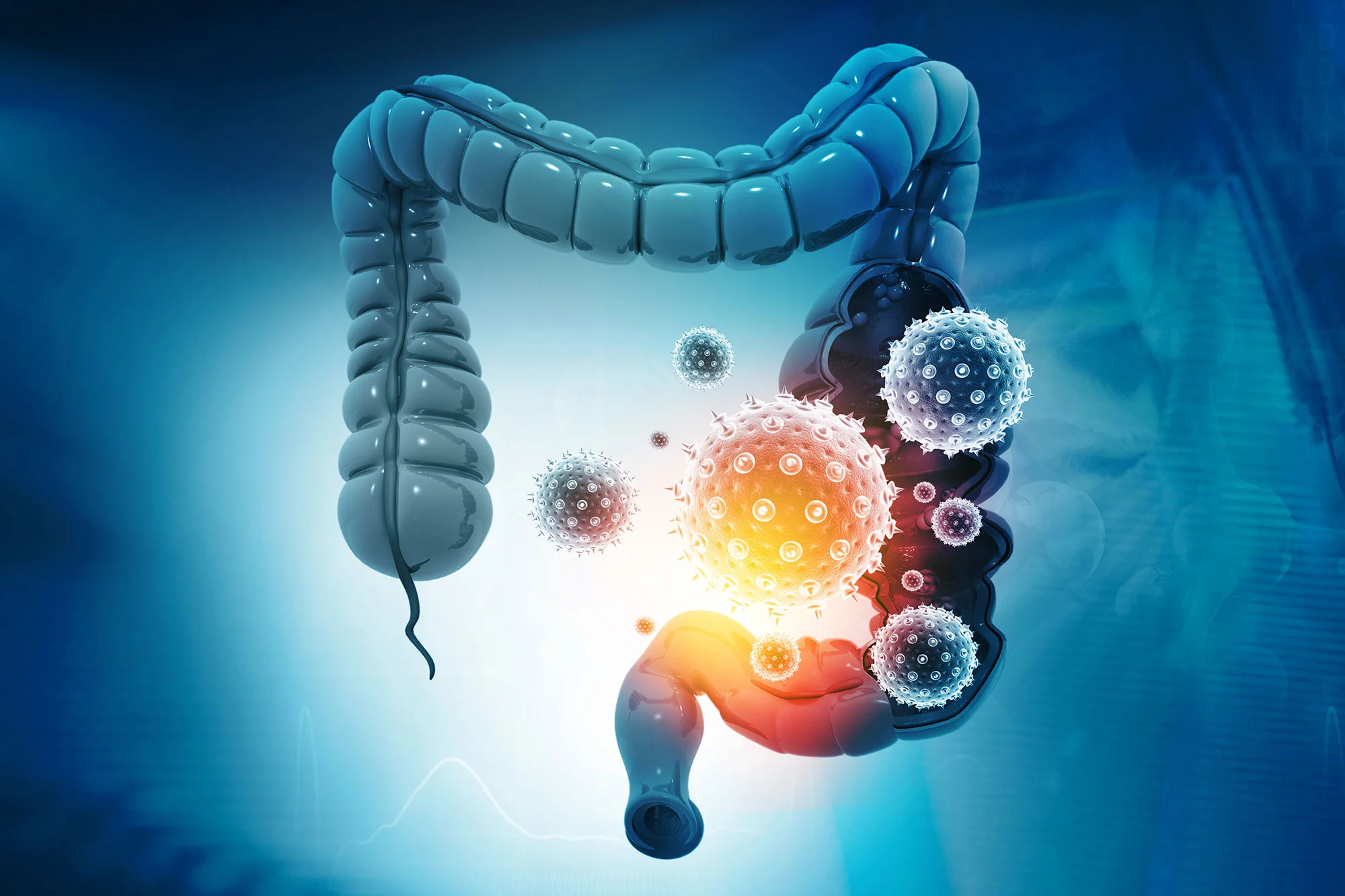
Summary of The Immune Chain Reaction That Raises Colon Cancer Risk in IBD:
A study by researchers at Weill Cornell Medicine highlights how gut inflammation, particularly in inflammatory bowel disease (IBD), can lead to colorectal cancer. The focus is on TL1A, an immune signaling protein that, when activated, triggers white blood cells (neutrophils) from the bone marrow to migrate to the gut. This process creates an environment conducive to tumor growth. The research indicates that interventions targeting TL1A, the immune cells involved, or other related components could help manage IBD and reduce cancer risk. The findings pave the way for new strategies in early detection and treatment.
*****
Summary of Key Topics
- Immune Chain Reaction: Researchers at Weill Cornell Medicine have identified an immune mechanism linking inflammatory bowel disease (IBD) to increased colon cancer risk, focusing on the protein TL1A.
- TL1A’s Role: TL1A activates immune cells in the gut, which leads to the recruitment of neutrophils from bone marrow and exacerbates inflammation and tumor growth.
- Importance of IBD: IBD, including Crohn’s disease and ulcerative colitis, poses significant health risks, including a heightened incidence of colorectal cancer, often at younger ages.
- Research Insights: The study highlights potential therapeutic targets, including TL1A and ILC3 cells, for reducing cancer risk in IBD patients.
- Future Directions: Ongoing research aims to understand this immune pathway better, with the hope of uncovering new strategies for early intervention and prevention.
The Immune Chain Reaction That Raises Colon Cancer Risk in Inflammatory Bowel Disease
In recent years, the intricate dance between the gut’s immune system and its role in various diseases has garnered significant attention. Among the many discoveries, one stands out: the immune chain reaction that escalates colon cancer risk in individuals suffering from inflammatory bowel disease (IBD). It’s a captivating narrative intertwined with biology, signaling pathways, and the encouraging potential for new strategies in medical intervention.
So, what exactly is happening beneath the surface, within the confines of our gut? The latest research from Weill Cornell Medicine sheds light on a compelling mechanism that links chronic gut inflammation from IBD to the frightening escalation of colorectal cancer risk. It highlights the pivotal role played by an inflammatory protein called TL1A, a name that might not ring a bell for most, but could very well be a cornerstone in future treatment methodologies.
Unpacking TL1A
At the heart of this fascinating story is TL1A—a dynamic player in the immune response to inflammation. TL1A is produced by immune cells within an inflamed gut, particularly in those battling IBD. This protein doesn’t merely act in isolation; it sets off a chain reaction involving another group of immune cells known as ILC3s (innate lymphoid cells). When TL1A whispers to these cells, it ignites a fervor, summoning large numbers of neutrophils—those valiant white knights of our immune system—from the bone marrow into the battlefield of the gut.
This initiation of neutrophil recruitment does not simply bolster defenses; it triggers a phenomenon known as emergency granulopoiesis. This burst in neutrophil production may sound like a good thing, but hold on—what follows is the unwelcome emergence of conditions that favor tumor growth. It’s a juxtaposition of defense leading to offense.
The Role of Neutrophils
Neutrophils are often portrayed as the heroes of our immune system. They tackle infections and provide crucial defense against pathogens. However, their role becomes tragically multifaceted in the context of IBD and colorectal cancer. Once these immune sentinels are activated by TL1A and the ILC3s, they adopt a distinctive gene expression pattern. This pattern includes heightened activity of genes linked to tumor initiation and growth, as uncovered by the research team.
It’s striking to learn that a mere recruitment of “reinforcements” can lead to the cultivation of a fertile ground for cancerous growth. This nuanced understanding of immune behavior reveals how complex the interactions in our body can be.
Why IBD Increases Cancer Risk
The implications of IBD are not merely limited to digestive distress. Spanning conditions like Crohn’s disease and ulcerative colitis, IBD is characterized by relentless inflammation in the digestive tract. This condition affects millions, leading to a significantly elevated risk of colorectal cancer. In fact, individuals diagnosed with IBD often encounter cancer at alarming younger ages and experience poorer outcomes.
This alarming correlation raises crucial questions: Why do those with IBD experience such dire consequences? The research sheds light on this inquiry, revealing how TL1A and the subsequent immune cascade create an environment where tumor growth can thrive. When inflammation persists unchecked, the body’s own mechanisms—paradoxically designed for protection—begin to converge in a manner that augments cancer risk.
A New Horizon: Treatment Possibilities
With knowledge comes power, and this research illuminates several intriguing prospects for eradicating the risk factors associated with colorectal cancer in individuals with IBD. The study suggests that not only TL1A, but also ILC3 cells and GM-CSF (granulocyte-macrophage colony-stimulating factor) could serve as potential therapeutic touchpoints. Imagine a future where treatments can precisely target these immunological pathways, effectively curtailing the rise of cancer as a secondary consequence of inflammation!
Dr. Randy Longman, a senior author of the study, expresses hope for precision medicine in this field. Knowing that there’s a systematic communication pathway in play that interlinks the gut and bone marrow inspires optimism for devising targeted interventions and therapeutic strategies. This science of connections drives home the point that our body is not a collection of isolated systems; instead, it operates in concert, with far-reaching repercussions.
What Lies Ahead in Research
The journey doesn’t stop here. Researchers are continuing to explore this complex immune communication pathway. They seek to unravel whether early or intermittent exposure to GM-CSF can predispose bone marrow cells, tipping the scales toward increased susceptibility to IBD over time. Could our understanding of such processes lead to groundbreaking strategies for early intervention and prevention? It is possible, and it is compelling.
This ongoing research holds the promise of better management for those facing IBD, offering a ray of hope that extends beyond simply managing symptoms to actively reducing the associated risks of colorectal cancer.
Encouragement Through Knowledge
This exploration of the immune chain reaction related to colorectal cancer and IBD serves as a powerful reminder: knowledge is indeed a great catalyst for change. While battling chronic conditions like IBD can feel isolating and daunting, it is essential to recognize the ever-expanding horizons of research and discovery. By staying informed, advocating for oneself, and engaging in meaningful discussions with healthcare providers, individuals can participate actively in their own health journeys.
Final Thoughts: Embracing a Journey of Exploration
Whether you’re directly affected by IBD or are a keen observer of medical advancements, this intricate tale of TL1A, neutrophils, and immune responses offers a fascinating window into how interconnected our biological processes truly are. The complexities of our immune systems, while daunting, are also filled with opportunity for learning and growth.
As we reflect on cutting-edge research that aims to demystify these connections, let’s remain optimistic. The promise of new strategies could change the prognosis for countless individuals battling these diseases. Every scientific advancement paves the way for improved therapies and deeper understandings that fuel not just academic dialogue, but regular conversations about health, wellness, and the future.
In concluding this deep dive into the immune chain reaction that raises colon cancer risk in patients suffering from IBD, one thing stands firm: the journey of understanding and discovery is not a solitary endeavor. It is a unified crusade, merging knowledge and hope, fueled by the collective pursuit of a healthier tomorrow. So, let’s continue exploring these possibilities, armed with curiosity and determination, for within each study lies the potential to transform lives.