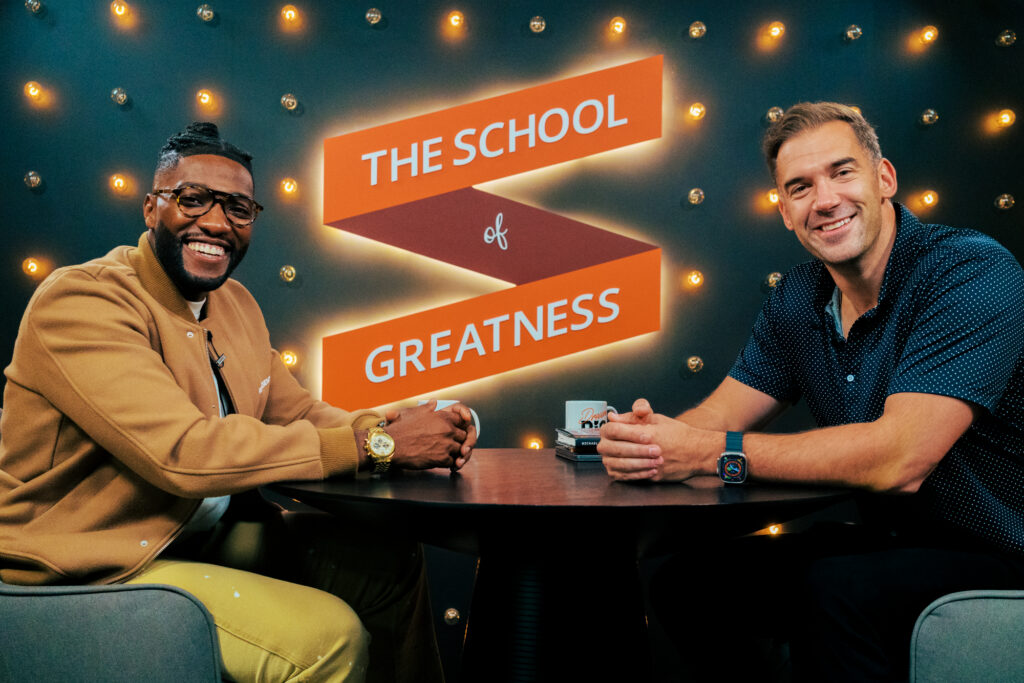
Summary of Why Your Past Trauma Is Costing You Real Love:
Pastor Michael Todd discusses a common yet often unacknowledged truth among high achievers: their relentless pursuit of success is frequently rooted in unaddressed emotional wounds. He reflects on a pivotal moment from his childhood that instilled feelings of inadequacy and shaped his life choices. Todd explores how unresolved trauma affects relationships and personal identity, emphasizing the need for healing. He provides insights and tools for individuals to confront their past, aiming to build healthier, more authentic relationships. The conversation encourages both individual and relational healing for lasting fulfillment.
*****
Main Topics Summary:
- Understanding how unprocessed trauma inhibits genuine love and connection
- Examining personal narratives and the lasting impact of formative experiences
- Exploring the concept of bringing one’s ‘full self’ into relationships
- Practical tools and strategies for healing and fostering healthy connections
- The cyclical nature of trauma transfer and its effect on close relationships
Why Your Past Trauma Is Costing You Real Love
In the midst of our ambitious pursuits, it’s easy to overlook the origins of our drive. For many high achievers, the fuel for success comes not merely from passion or tenacity, but rather from unresolved wounds buried deep within their psyche. Pastor Michael Todd illustrates this poignant truth with an unforgettable anecdote from his childhood—a moment that crystallized his understanding of how past trauma shapes our identities and influences our relationships.
The Weight of Unprocessed Trauma
Consider the vivid image of a young boy seated in a maroon chair, disheartened by the words echoing in his ears: "You’re not good enough." That boy was Michael Todd, and those words were a catalyst, instilling a relentless pursuit of greatness that would dictate his life path. While on the outside he appeared to be flourishing, the internal script remained tethered to that unprocessed moment, urging him to prove his worth.
This scenario encapsulates the essence of unhealed trauma. So many of us erect elaborate facades and build entire lifetimes on a foundation of past damages, never daring to confront the root cause of our pain. Instead, we cultivate careers, relationships, and identities that inadvertently act as coping mechanisms. Yet, as Todd emphasizes, success can be hollow if we’re not first able to love ourselves fully and authentically.
The Struggle to Love and Be Loved
Why do so many individuals find genuine connection elusive? The short answer lies in the struggle with vulnerability. Healed wounds allow for openness, creating space for emotional intimacy and authentic relationships. Conversely, unhealed trauma manifests as defense mechanisms—walls that we erect to protect ourselves but ultimately hinder our ability to connect with others.
When we bring only our defended versions into relationships, we don’t truly engage with our partners. This dynamic can lead to patterns of disconnection, resentment, and misunderstanding. Relationships flourishing in such environments often lack that essential aspect of fulfillment rooted in safety and trust.
So, how do we navigate this complex terrain? How do we ensure that our past traumas don’t dictate our current realities?
The Transfer of Trauma
One of the often-overlooked aspects of unhealed emotional pain is the phenomenon of trauma transfer. Unhealed wounds subtly seep into our interactions, affecting not just our romantic partners but also friends and loved ones. In many cases, the patterns of hurt become cyclical, passed along like a hidden inheritance.
Imagine, for a moment, someone who has never learned to express love due to emotional neglect during childhood. This person might unintentionally convey similar patterns of neglect in their relationships, perpetuating a cycle of emotional distance.
Understanding this transfer of trauma is crucial. Recognizing the impact of your past on your present relationships can illuminate the road toward healing, enabling you to break these destructive patterns.
Bringing Your Full Self to the Table
So, what does it mean to bring your ‘full self’ into a relationship? It involves peeling away the layers of defense—acknowledging your vulnerabilities, insecurities, and past traumas while seeking to forge genuine connections.
To bring your full self means to enter relationships with authenticity. It means confronting your fears and anxieties instead of letting them guide your choices. By embracing your own imperfections, you provide space for others to do the same, paving the way for deeper understanding and emotional intimacy.
Engagement in relationships as your authentic self can feel daunting, especially if you have built a protective armor over your vulnerabilities. Yet, it’s essential—the less you invest in defensive postures, the more room you create for love to flourish.
Practical Steps for Healing
Healing isn’t a quick fix; it’s a journey that unfolds over time. Here are some actionable steps to start addressing your past trauma while fostering healthier, more fulfilling relationships:
-
Reflect on Your Past: Engage in self-reflection—examine moments in your life that triggered strong emotional responses. Identify any patterns that might reveal unresolved issues.
-
Express Yourself: Writing in a journal can be a powerful method to confront and articulate your feelings. Whether it’s through poetry, prose, or simple entries, allow your emotions to flow without restriction.
-
Seek Professional Guidance: Sometimes, the guidance of a therapist or counselor can provide unparalleled insight into your trauma. They can assist in unpacking complex feelings, creating a structured path for healing.
-
Practice Vulnerability: Exercise small acts of vulnerability. Share a concern with a close friend or partner. Gradually, share more as you grow comfortable, allowing deeper connection to emerge.
-
Build a Supportive Community: Surround yourself with individuals who foster an environment of understanding and safety. Engaging with communities—be it friends, family, or support groups—can provide crucial affirmation through shared experiences.
- Commit to Growth: Consider embarking on workshops or self-improvement seminars focused on healing trauma, attachment styles, or relationship building. Learning from experts can equip you with tools to provoke healing.
The Full Circle: Love Beyond Limits
As you engage in the healing process, be mindful that love should never be limited by the past. The journey of self-discovery and healing is not merely about confronting trauma; it’s also about uncovering the capacity for love within you—your innate ability to forge connectedness, intimacy, and resilience.
The more you heal, the more you recognize that love is an expansive energy that thrives when rooted in sincerity. It can be a cathartic release of years spent navigating emotional turmoil alone. Authentic love not only nurtures but also transforms—cultivating deeper bonds born from a shared commitment to growth.
Moving Forward
The path to healing is not linear, often characterized by both challenges and breakthroughs. By integrating the lessons borne from your past into your present, you can dismantle the defenses that hinder genuine connection. As individuals ready to embrace our vulnerabilities, we pave the way for sustainable love free from the shackles of past trauma.
So, as you embark on this journey, remember the essence of true connection lies not in a glossy exterior of success but in the authenticity rooted in being your full self. Offer that to the world, and you may just rewrite your story into one that celebrates enduring love.
With each step in the pursuit of healing, not only do you liberate yourself, but you also cultivate the rich soil from which meaningful relationships can blossom. Engage, connect, and love—not from a place of fear, but from a vibrant wellspring of your healed self.
Final Thoughts
Healing is a promise, a journey towards understanding and embracing your historical narrative while transforming it into a vessel for love. Break free from the chains of your past and dare to bring your full, authentic self into the world. When you allow yourself to heal, you’ll discover that the love you’ve sought always resides within you, waiting to radiate outward.
Utilize these insights not just as a guide but as a catalyst towards a brighter, more connected future. The journey may be complex, but the rewards are boundless—offering the capacity for love that knows no bounds.