- Exploring the intersection of physics and simulation theory, examining the latest discoveries and what they reveal about reality.
- Investigation into the concept of life after death through the lens of physics, potentially transforming traditional perspectives.
- Insight into how modern physics theories, like quantum mechanics, weave into broader existential questions and philosophical ponderings.
- Understanding the interconnectedness of physical health, particularly insulin sensitivity, and broader mysteries of the universe.
- The impact of these theories on our perception of diet, nutrition, and metabolic disease, and their interplay with human physiology.
Recent advances in physics are questioning our fundamental understanding of the universe. One such debate is the intriguing simulation theory, which suggests our reality might be an artificial simulation. This theory has surged in popularity, fueled by new data in quantum mechanics and computer science, sparking discussions about the very essence of existence.
Simulation theory posits that our lives may not be the original reality but part of an advanced and sophisticated computer simulation. This idea challenges existential assumptions and compels people to consider their place in a potentially controlled universe. The implications of this theory also extend into other philosophical domains, including the enigma of life after death. With new revelations from physics, the concept of an afterlife is gaining fresh perspectives, potentially bridging the gap between science and spirituality.
Quantum mechanics plays a crucial role here. At the core of quantum theory is the notion that particles can exist in multiple states simultaneously until observed. This principle challenges the traditional laws of physics, suggesting that the universe at its smallest scales operates differently than expected. The potential for simulated universes ties into this concept, as quantum mechanics suggests layers of reality beyond human perception.
Moreover, this conversation intertwines with our understanding of health and wellbeing, particularly in the context of diet, nutrition, metabolic disease, and insulin sensitivity. These concepts, while seemingly unrelated to simulation theory, offer a biological perspective on the physics-based discussion. Just as quantum theory proposes a multi-layered reality, so too do the intricacies of our metabolic processes reveal complexities beyond surface-level understanding.
Insulin sensitivity is a pivotal factor in metabolic health, influencing everything from weight management to chronic diseases. The body’s ability to use insulin effectively is critical for regulating blood glucose levels, preventing the onset of conditions such as type 2 diabetes. Exploring the mechanics behind insulin sensitivity can reflect broader patterns found in physics: the emergence of systemic issues from seemingly minor internal discrepancies.
Delving deeper, the parallels between quantum physics and metabolic health become apparent. Consider the impact of mitochondrial function—a crucial aspect of cellular energy production. Mitochondria can be likened to quantum systems, operating with precision and efficiency. Just as physicists analyze quantum states, exploring how mitochondria affect energy and metabolic rates can provide new insights into chronic diseases and their prevention.
Altering one’s diet and lifestyle to enhance insulin sensitivity involves a multifaceted strategy. Balanced diets rich in whole foods, coupled with regular physical activity, have shown effectiveness in improving insulin uptake. This mirrors the layered understanding of reality suggested by advanced physics; intricate and interconnected parts working harmoniously lead to systemic health.
The discussion of life after death through the lens of physics introduces another dimension. Historically, thoughts on the afterlife were primarily spiritual or philosophical. However, modern interpretations influenced by scientific thought are evolving. Some physicists propose that consciousness may persist beyond death, with quantum information theoretically living on, much like data saved in a computer.
This stance is not without controversy. The scientific method demands empirical evidence, yet the nature of consciousness transcends measurable phenomenon—posing challenges similar to those faced by the advocates of simulation theory. Both subjects require an expansion of traditional thinking and a willingness to integrate diverse areas of study.
The synthesis of these concepts suggests a holistic viewpoint: that understanding the universe, whether through the lens of simulation theory or life after death, necessitates considering the role of physical health and human physiology. Nutrition, metabolic processes, and cellular health reflect the intricate systems at play in theoretical physics.
In conclusion, modern physics opens unexplored avenues into existential inquiries, including the nature of simulated realities and what might lie beyond life. These concepts awaken new perspectives on health, underscoring the interconnectedness of the body and the universe. Through examining the microcosm of metabolic health and its ties to insulin sensitivity, parallels can be drawn with the macrocosm of quantum physics and its implications—linking the tangible with the theoretical, the seen with the unseen.
*****
Source Description
CashApp: Download Cash App Today: https://capl.onelink.me/vFut/v6nymgjl #CashAppPod
iRestore:Give yourself the gift of hair confidence this year. For a limited time only, our community is getting a HUGE discount on the iRestore Elite when you use code IMPACT at https://irestore.com
Shopify: Sign up for your one-dollar-per-month trial period at https://shopify.com/impact
Hey Impact Theory family,
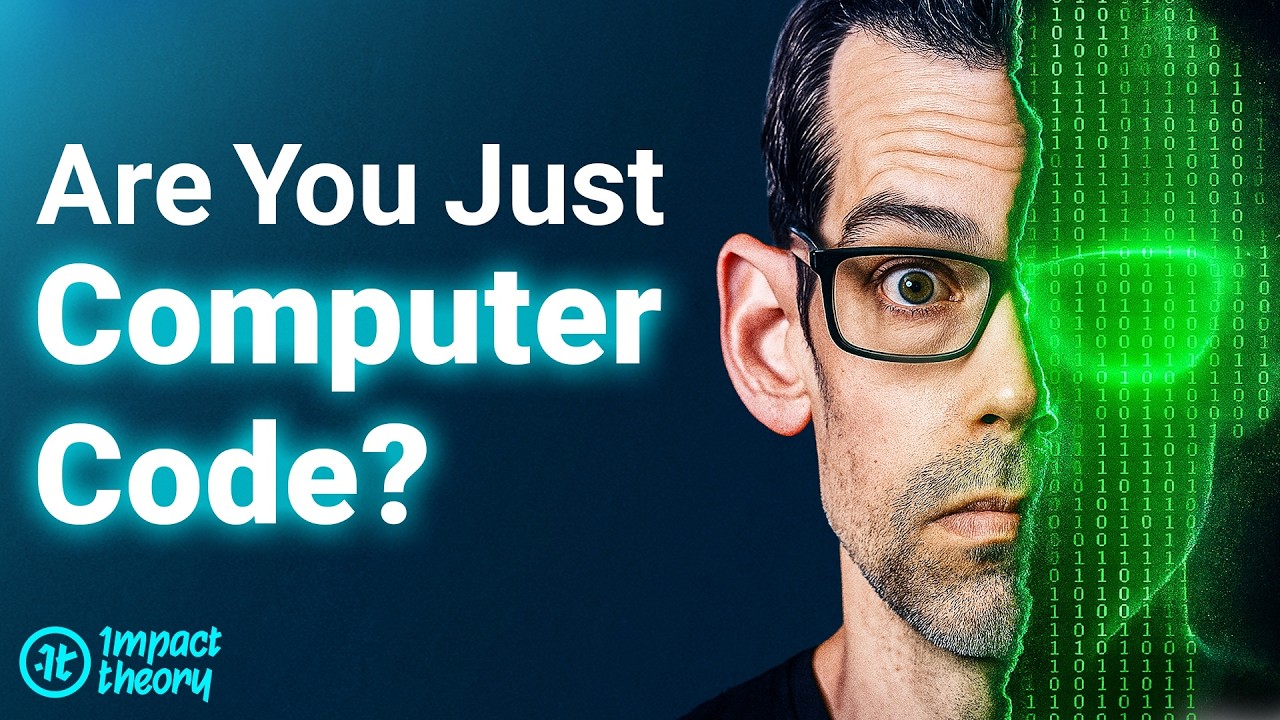
This week’s episode is one for the books! I sat down with MIT-trained computer scientist, author, and video game entrepreneur Rizwan Virk to dive deep into one of the most mind-bending questions of our time: Are we living in a simulation?
Here’s a quick rundown of what you’ll find in this episode:
Quantum Physics Meets Video Games The episode starts with Tom referencing a ground-breaking scientific discovery: In 2022, Nobel Prize winners confirmed that “the universe is not locally real.” In plain English—reality only “renders” when you observe it, just like in a video game (no, seriously!).
Simulation Hypothesis 101 Rizwan shares how his background in gaming and his research into quantum physics led him to believe that a simulated universe actually makes more sense than a purely physical one. Ever heard of Schrodinger’s cat being both alive and dead until observed? That quantum weirdness is central to Rizwan’s argument for simulation theory.
Memory, Probability, and Purpose The conversation gets wild as Rizwan and I debate ideas like the multiverse, free will, and whether the past is “real” or just rendered on demand. We explore why our universe seems so ‘perfectly tuned’ for life, and whether that supports the idea of some kind of higher intelligence or just infinite trial and error—simulation style.
Ancient Wisdom, Modern Tech Rizwan draws fascinating connections between the world’s mystic traditions (think Hinduism, Buddhism, and even Christianity and Islam) and modern technology. Did you know Eastern religions talk about reality as a “dream” or “illusion”? Rizwan suggests they were describing something akin to a simulation all along but didn’t have the vocabulary we have today.
NPCs vs. Players: Do We Have Free Will? Are we just characters running on autopilot, or are we players choosing our path? Tom and Rizwan tackle the age-old free will debate—contrasting rules-based programming (NPCs) with the possibility of having a “player” or soul controlling our conscious experience from outside the simulation.
Life After Death, Near-Death Experiences & The Game Metaphor From near-death experiences to the idea of a “life review,” this episode explores what happens when the game of life is over. If we are in a simulation, is death game over, or just logging out until next time?
What Does It All Mean for You? Whether you’re skeptical or convinced, the Simulation Hypothesis offers a new framework for thinking about personal challenges, meaning, and the nature of reality itself.
Chapters:
00:00 Simulated Multiverse and Efficient Universes
17:57 Simulation Hypothesis and Reality Perception
22:54 Simulation Theory: Metaphysical Perspectives
36:09 Delayed Choice in Quantum Mechanics
41:45 Evolution of AI: From Rules to Networks
57:01 Exploring Universality in Religious Teachings
01:05:53 “Life Preview and Review Theory”
01:21:56 “Intent-Driven Advertising Insights”
01:29:52 Questioning Materialist Paradigms
01:35:38 Aliens: Scientific Possibility and UFOs
01:44:11 Religious Mysticism and Theophany Origins
01:55:45 Simulation Theory: Coexisting Roles & Glitches
02:05:11 The Illusion of Kompromat
To learn more about Riz and to check out his new book go to this link:
https://www.penguinrandomhouse.com/books/774523/the-simulation-hypothesis-by-rizwan-virk/