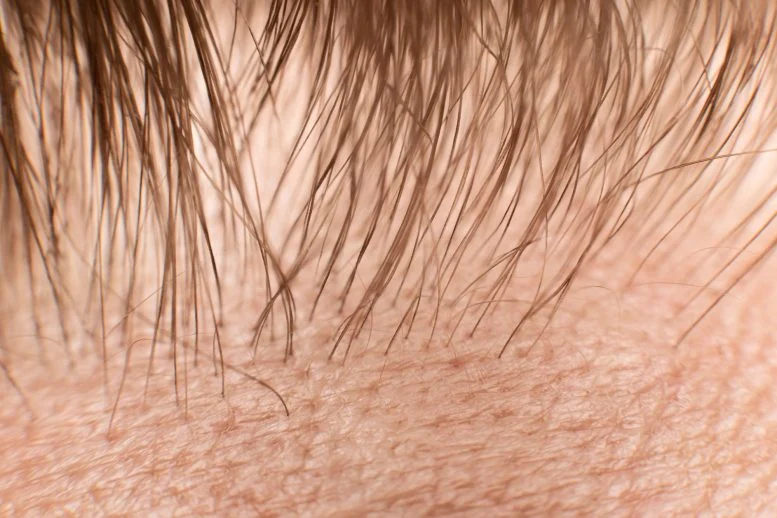
Summary of A Deadly Fungus Has Found the Perfect Hiding Place: Human Hair Follicles:
Researchers from UCSF have found that Candida auris, a dangerous hospital-associated fungus, can persist on human skin by altering immune responses. This fungus, first identified in Japan in 2009, poses a significant threat to vulnerable patients, leading to around 3,000 deaths annually in the U.S.
The study revealed that C. auris is better at colonizing skin than other fungi, remaining in hair follicles by evading the immune system. It triggers a different immune response than Candida albicans, another common fungus, suppressing the typical antifungal defenses. The research suggests potential strategies to prevent C. auris colonization, like redirecting immune responses or blocking the chitin it uses to evade detection.
Overall, understanding how C. auris survives on skin could help explain its ability to cause severe infections when it enters deeper tissues in medically susceptible patients.
*****
Summary Bullet Points
- Fungal Threat: The fungus Candida auris is a rising concern in hospitals due to its ability to colonize human skin undetected, becoming fatal when it enters systemic circulation.
- Immune Evasion: Unlike typical fungi, C. auris cleverly manipulates the immune response to create a protective niche within hair follicles, allowing it to persist.
- Differential Responses: While Candida albicans prompts an immune boost, C. auris activates signals that protect it, highlighting a unique adaptation mechanism.
- Potential Solutions: Research offers insights that could lead to new therapeutic strategies, such as redirecting immune responses or blocking fungal mechanisms.
- Broader Implications: Understanding C. auris can shed light on how many microbes coexist harmlessly yet can turn dangerous under certain conditions.
Unveiling the Hidden Predator: The Fascinating World of Candida auris
Imagine a tiny, unseen world thriving right on your skin. It’s one we don’t usually think about, chalking up to the notion that our bodies are castles, rugged and resilient. However, lurking within the folds of our most ordinary features—like our hair follicles—is a deadly invader: Candida auris. This fungus has transformed into a harbinger of hospital-acquired infections, and understanding how it operates could help us protect ourselves and others.
The Rise of a Fungal Menace
Discovered in Japan in 2009, Candida auris appears to thrive in hospital environments, particularly among the most vulnerable populations. This unassuming fungus can lead to severe bloodstream infections, with mortality rates climbing alarmingly. Research has found that around 3,000 patients succumb to its effects annually in U.S. healthcare settings. Yet the real challenge lies not just in its lethality but in the fact that it’s often unnoticed until it’s too late.
Consider this: how does something so trivial become a significant public health issue? Researchers from UC San Francisco have embarked on this intriguing exploration, revealing how C. auris outsmart the immune system, setting itself up for dominance.
A Game of Immune Chess
At the core of this pursuit is an examination of how C. auris evades detection—essentially a game of chess against our immune system. When examining a common variant—Candida albicans—scientists noted stark contrasts. This regular player is swiftly dealt with. In studies with mice, it vanished within days as the immune system launched a vigorous response.
Enter C. auris, the maestro of survival tactics. Unlike its counterpart, it parks itself in hair follicles and camouflages with finesse. Dr. Dean Merrill, a dermatologist at UCSF, aptly notes, "Candida auris colonizes skin way better than most other fungi, setting it up to invade once the immune system is weakened." This meticulous strategy reveals not just a fungal survivor’s instinct but a challenge for modern medicine to confront.
Immune Signals and Fungal Manipulation
What exactly happens when Candida auris enters the scene? It seems that one of its tricks involves the reshaping of its outer cell wall, exposing more chitin—a molecular sentinel that can significantly manipulate immune responses.
This newfound exposure sends the immune system into a tizzy, prompting it to produce interferon gamma, a signaling molecule typically associated with viral infections. But here’s where it gets intricate: rather than cueing a defense, interferon gamma suppresses the usual antifungal responses, such as IL-17, which would normally guide the immune system to renew its defenses. It’s almost as if C. auris whispers to our immune system, "This is a virus; treat it lightly." How astoundingly clever to host itself in hair follicles while throwing the body’s defenses off-balance!
The Implications of Immune Manipulation
Understanding this mechanism is pivotal. It spotlights how some microbiota can quietly inhabit our bodies, shifting gears to danger when the conditions are ripe. Imagine a friend who seems harmless but turns the tide in a game of chess when you’re least prepared—this is the essence of Candida auris.
Dr. Suzanne Noble, a professor of microbiology at UCSF, pointedly remarks, "It’s surprising to see that C. auris actively uses its chitin to turn the skin into a perfect nest." This revelation pushes forward a notion we may overlook: Our environment—both external and internal—plays a vital role in defining our health. The protective mechanism of C. auris serves as a reminder of the delicate balance within us.
Tackling the Fungal Menace
With this understanding, hope emerges in potential solutions. What if we could redirect the immune response toward a more favorable angle? Shifting from interferon gamma back to IL-17 might be the perfect way to restore order. Alternatively, blocking chitin could hinder C. auris from intensifying its deceptive signals. These thoughts lead researchers down an intriguing path, highlighting possible interventions that could disrupt the fungus’s cozy existence on our skin.
The implications reach beyond just dealing with C. auris—they open a wider dialogue about our relationship with the myriad organisms surrounding us. As Dr. Ari Molofsky, an immunologist at UCSF, illustrates, "Candida auris hangs out on the skin and doesn’t cause any problems for most people." The real threat arises only when it penetrates deeper tissues in medically vulnerable patients.
The Lessons of Coexistence
Reflecting on this interplay of life, perspective is indispensable. We, too, exist in a world of balances and interdependencies. Everyday life abounds with challenges where what appears innocuous can turn problematic. In our personal journeys, we must recognize this dynamic: just like our immune systems can falter against unseen threats, we can also experience moments where life’s challenges seem insurmountable.
In navigating these tumultuous waters, the key lies in awareness and adaptability. Like Candida auris, which thrives when the body is in disarray, we must retain agility and insight when faced with our adversities.
What might you seek to understand better? What have the challenges in your life taught you about resilience? Learning from our struggles provides clarity and equips us with tools for future encounters.
The Path Forward
As we dig deeper into the world of Candida auris, we illuminate a narrative about adaptation and survival. In finding unique strategies to persist, it echoes a fundamental aspect of life: resilience and improvisation are vital.
What can you take away from this fungal saga? Perhaps it’s a reminder that, while we may be unaware of the struggles lurking beneath the surface—those internally and externally—awareness and a proactive stance can reshape our reality.
Let this knowledge encourage you to foster resilience within yourself and your relationships. Approach challenges with curiosity, seeking to understand the deeper mechanisms at play. As science uncovers the fascinating world of microorganisms, use these insights to explore your journey through awareness, adaptability, and hope.
Conclusion
While Candida auris poses real-world threats in the medical landscape, the lessons drawn from its survival intricacies illuminate a broader truth. We live in a delicate interplay shaped by choices, environments, and continual negotiation with our surroundings.
Engaging with life’s complexities can be enlightening. Like a scientist pursuing answers, remain proactive. Ask questions, learn from adversities, and grow. Navigate your own space with curiosity and resilience, recognizing that while challenges may arise, the journey you take holds the transformative power to reshape your existence.
In the end, whether it’s a fungus in a hair follicle or a challenge in life, understanding is the first step toward mastering your fate. So continue uncovering, exploring, and thriving amidst the complexities of your environment and existence. The power to guide your narrative lies within your reach.
