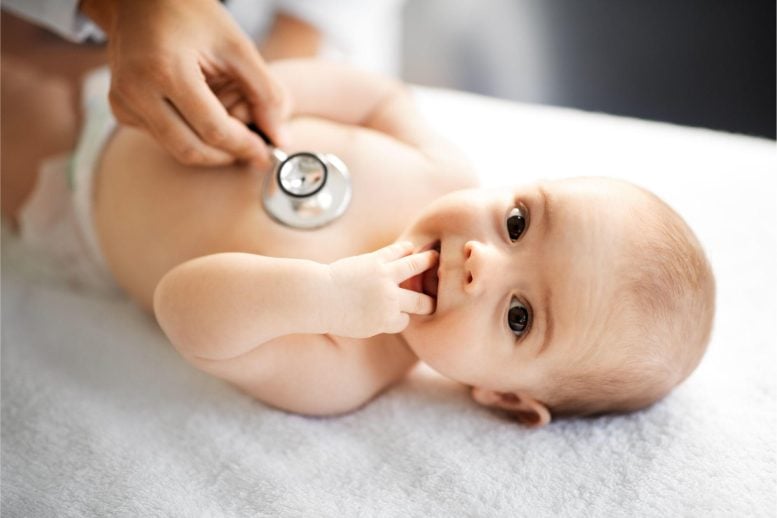
Summary of A Common Stimulant Could Hold the Key to Preventing Sudden Infant Death Syndrome:
Researchers at Rutgers Health suggest that caffeine may help prevent Sudden Unexpected Infant Death (SUID) by reducing oxygen loss in infants. This presents a new research direction after years of little progress in lowering SUID rates, including sudden infant death syndrome (SIDS).
*****
- Researchers at Rutgers Health have found an unexpected potential link between caffeine and the prevention of Sudden Infant Death Syndrome (SIDS).
- The stimulant could offer protection by reducing oxygen loss in infants, suggesting a fresh avenue for SUID research.
- Despite years of limited progress in reducing SUID rates, this surprising breakthrough reopens the conversation with new hope and possibilities.
- The exploration of caffeine’s role is reshaping the understanding of infant health and challenging previous assumptions.
- Insights into how caffeine affects infant physiology could revolutionize approaches to infant care and safety.
Imagine a world where something as common as your morning cup of coffee holds the key to a breakthrough in a realm as critical as infant survival. It sounds almost too incredible to believe, right? But that’s the story unfolding in the extraordinary research corridors of Rutgers Health.
For years, the struggle against Sudden Unexpected Infant Death (SUID)—a category that encompasses Sudden Infant Death Syndrome (SIDS)—has left researchers stumped. But now, like a plot twist worthy of the best novels, an unexpected hero emerges: caffeine.
The Unbelievable Journey of Coffee
Now, why caffeine, you might ask? Isn’t it just the potion that fuels our adult lives, helping us power through endless Zoom meetings and night-shifts? How could it possibly play a role in infant health?
Researchers have always known that caffeine is a stimulant. It’s like that best friend who’s constantly upbeat and energetic. But surprisingly, caffeine might hold a hidden talent: reducing oxygen loss in infants. And that’s where the magic starts.
Digging Deeper into the Science
Let’s dive into a bit of science without turning it into a lecture! Sudden Infant Death Syndrome has puzzled scientists and parents alike, causing untold heartache. It’s a mysterious condition that causes infants to stop breathing during sleep, and efforts to unravel its mysteries have, until recently, offered little reprieve.
It might seem improbable that caffeine could wield such power. However, the hypothesis extends beyond mere wishful thinking. Researchers have discovered a connection between caffeine’s ability to influence the respiratory system and its potential impact on preventing SIDS.
When infants are unable to maintain normal breathing rhythms, it’s like having a concert in chaos—notes playing out of sync, with no harmony. Caffeine’s effect in stabilizing these rhythms could be akin to a master conductor bringing the orchestra back in line.
The Ripple Effect of O2
One of the central issues in SIDS is something called hypoxia—basically, the body isn’t getting enough oxygen. Now think of oxygen as the VIP guest at a party. Without it, nothing thrives; it all gets a bit dull and, worse, potentially dangerous.
Caffeine, intriguingly, may help keep this VIP present and active within the infant’s delicate system, ensuring everything functions as nature intended. By potentially enhancing the infant’s ability to maintain sufficient oxygen levels, caffeine becomes a possible guardian against the unthinkable.
Science and Skepticism—A Balancing Act
Now, don’t start brewing espresso for infants just yet—this is where the critical thinking cap comes in handy! While the findings are promising, it’s paramount to approach them with a scientific caution that prevents premature conclusions.
There’s a level of skepticism necessary in scientific exploration. The researchers are fully aware of the need to systematically test and prove these theories across a variety of conditions and subjects. Only through extensive trials and data can these initial findings transform into practical guidelines.
At this pivotal stage, caffeine presents itself not as the sole solution but as a significant character in the unfolding drama of infant safety and health. It’s like discovering a clue in a thrilling detective novel—it doesn’t solve the case on its own, but it stirs questions and directs attention to promising leads.
The Inspirational Outlook
What makes this current trajectory exhilarating isn’t just the potential breakthrough itself. It’s what it represents: a new horizon in an area where progress has long felt stagnant. It sparks hope for parents worldwide, showing that determined and creative research can shine a light even in the darkest corners of medical mystery.
Moreover, it’s a reminder, an inspiring lesson in itself—never underestimate the power of questioning norms, of entertaining what appears impossible. This discovery encourages a mindset where exploration and innovation are celebrated, pushing boundaries in the pursuit of welfare and safety.
It’s about daring to approach problems with fresh perspectives. Imagine if the researchers had confined themselves to traditional paths—the shape of this narrative would be so different!
The Broader Picture
Beyond the potential to save lives, what could these new discoveries mean for the broader scientific and medical communities? There’s a ripple effect here, providing momentum that might inspire innovative solutions in related fields.
Consider the bustling ecosystem that emerges from one question: If caffeine can influence respiratory stability, what else might it affect? Could its properties benefit other age groups or medical conditions in unexpected ways? These are not just questions but invitations to imagine, explore, create, and redefine.
And this story doesn’t exist in isolation. It might start with Rutgers Health’s research, but it’s part of a larger narrative encouraging cross-collaboration globally among scientists, healthcare providers, and advocates.
The Human Element
Remember, every scientific advancement ultimately serves people. And this one is particularly close to the hearts of many families.
For parents living with the ever-present fear of SUID, the breakthrough brings a much-needed element of empowerment—the idea that solutions are not only possible, but actively pursued, offers a comfort beyond measure.
It’s about more than caffeine or science alone. It’s about stories of resilience, tenacity, and hope. It’s each researcher’s countless hours, fueled by passion. It’s parents and communities rallying for progress, for change, for hope despite adversity.
Venturing Forward with Caffeine
The caffeine and SIDS connection is a path newly carved—an adventure actively unfolding. Like any powerful narrative, its conclusion remains unwritten, seeking the combined efforts of curious minds, rigorous methodology, and unwavering determination.
As researchers continue this journey, it’s a poignant reminder of what it means to look at the world with open eyes and daring hearts, to pursue the extraordinary within the ordinary, and to quest with both knowledge and imagination.
Keep an eye on this space—it’s a storyline that promises to evolve, inspire, and perhaps, change the landscape of infant health forever. Until then, let caffeine continue to surprise us, be it in our mornings, our meetings, or our scientific endeavors, evoking a future where the mysteries yielding to human ingenuity know no bounds.
In this expedition, the true potential lies not solely in the substance but in the symphony of inquiry, understanding, and unyielding hope that accompanies it. Here’s to caffeine, curiosity, and the boundless possibilities they awaken!