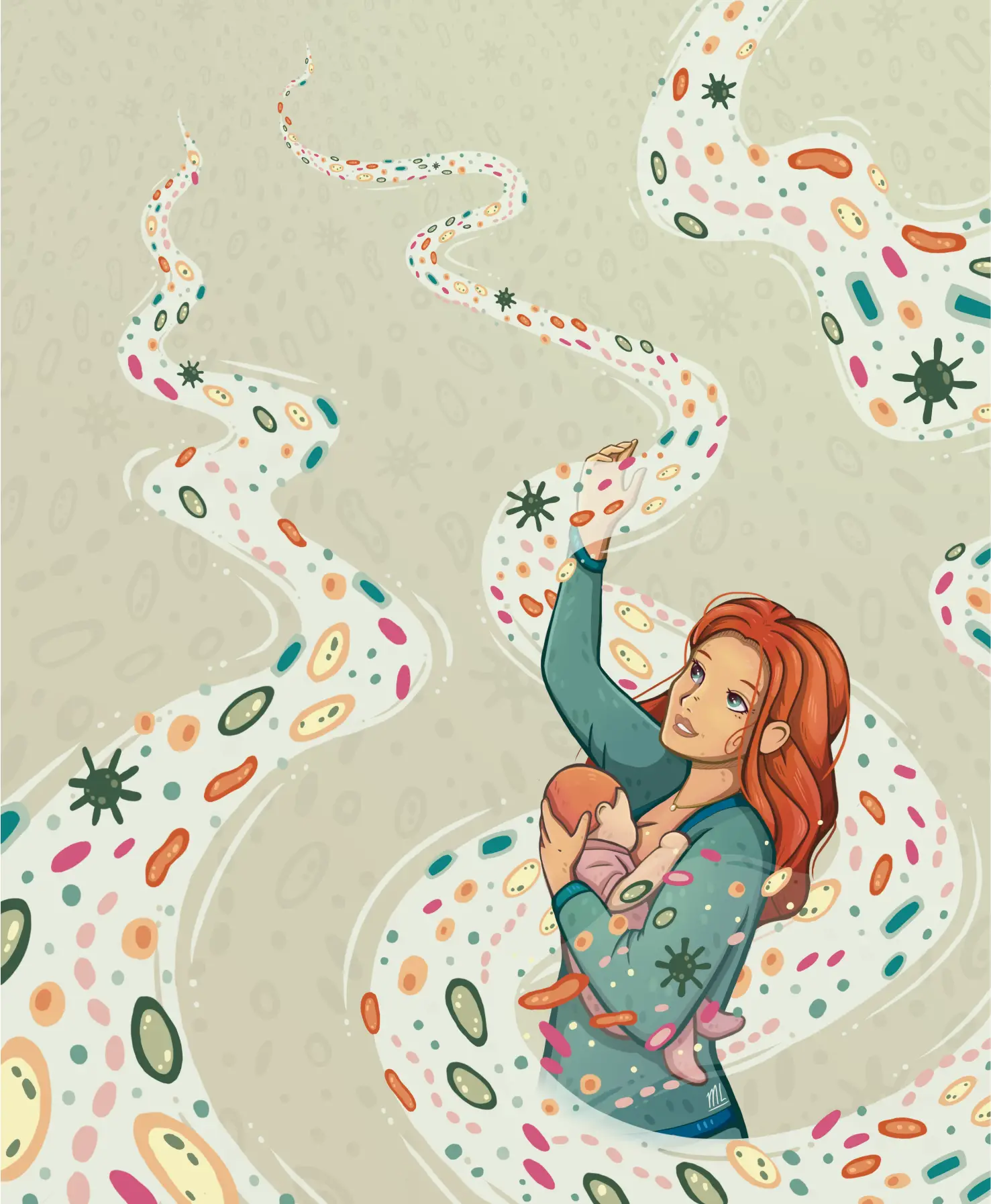
Summary of Do Cesarean-Born Babies Miss Out on Essential Microbes?:
New research suggests that babies born via cesarean section can still acquire vital microbes through compensatory methods, such as breastfeeding, rather than solely through birth. The study found that babies receive up to 60% of their microbiome from their mothers, with different microbial communities contributing to different infant microbiomes. While cesarean-born babies received fewer microbes from their mother’s vaginal and fecal microbiomes, they acquired more from breastmilk. The researchers want to investigate how non-maternal influences on infant microbiome development affect long-term health.
*****
New Study Shows How Infants Acquire Vital Microbes from Their Mothers
A healthy microbiome is essential for overall health, but recent studies have shown that cesarean-born babies may lack crucial microbes. However, a new report published in Cell Host & Microbe sheds new light on the issue: mothers can transfer microbes to their infants through other compensatory methods.
Studying Microbiomes Across Different Body Sites
To gain a better understanding of how infants develop their microbiomes, the team of researchers recruited 120 Dutch mothers and their babies. They collected six different types of microbiome samples from the mothers—including skin, breastmilk, nose, throat, fecal, and vaginal—and analyzed how each source contributed to the babies’ various microbiomes.
The team found that approximately 58.5% of a baby’s microbiome is derived from its mother. However, different maternal microbial communities contributed to different infant microbiomes. Cesarean-born babies received fewer microbes from their mother’s vaginal and fecal microbiomes but acquired more microbes from breast milk.
Breastfeeding Is Key
Despite receiving less of their mother’s gut microbiome during birth, babies born via cesarean section can compensate for this deficit by consuming their mother’s microbes through breastfeeding. Researchers point out that breastfeeding becomes even more important for children born by cesarean section who do not receive gut and vaginal microbes from their mom.
Uncovering the Unknown Fraction
While the study showed that the maternal microbiome explains almost 60% of the infant’s total microbiome, there’s still 40% that is yet unknown. The team is interested in understanding how microbiome development in infants relates to long-term health, such as allergies and asthma. They plan to explore whether this early life process, influenced by the mom, affects short-term infection risk in the first year of life and longer-term health.
The study offers new insights into how babies acquire vital microbes for their various microbiomes and may provide new avenues for preventing, diagnosing, or treating health problems.

Comments are closed