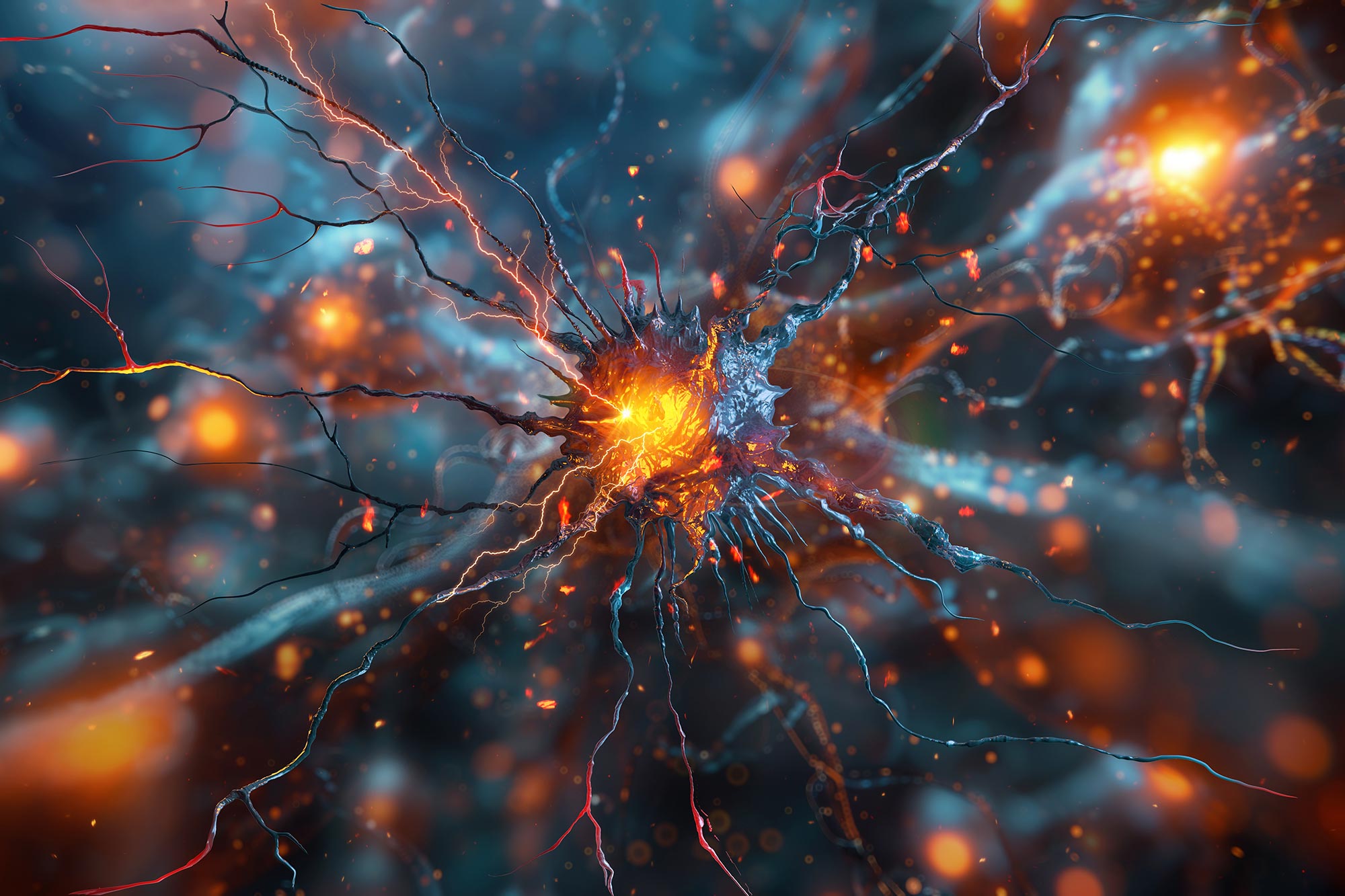
Summary of AI Reveals How Alzheimer’s Rewires the Brain at the Genetic Level:
Researchers at UC Irvine have developed the first detailed gene interaction maps for brain cells affected by Alzheimer’s disease, using a machine learning system called SIGNET. This innovative approach allows for the identification of direct cause-and-effect relationships among genes, rather than just correlations.
The study revealed significant genetic changes, especially in excitatory neurons, and highlighted several "hub genes" that may be critical in Alzheimer’s progression and potential treatment targets. Their findings, published in Alzheimer’s & Dementia, could shift research from merely identifying gene links to understanding the mechanisms driving the disease.
The research utilized data from brain tissue samples from participants in long-term aging studies, allowing for a comprehensive analysis of gene activity across various cell types. The results were validated against independent samples to confirm their biological relevance. This method could also be applicable to other complex diseases, including cancer and mental health conditions.
*****
Summary Bullet Points
- New AI-driven research has revealed how Alzheimer’s rewires brain cells at the genetic level, offering hope for future treatments.
- SIGNET, a machine learning system, identifies cause-and-effect relationships among genes, moving beyond mere correlations.
- The study focuses on excitatory neurons, showing they undergo significant genetic changes as the disease progresses.
- Several influential "hub genes" were pinpointed, which could play critical roles in therapy and early detection.
- The methodologies used in this research may apply to other complex medical conditions, broadening the implications beyond Alzheimer’s.
AI Reveals How Alzheimer’s Rewires the Brain at the Genetic Level
In a world increasingly defined by technology, breakthroughs in medical research continue to astonish us, especially with complex conditions like Alzheimer’s disease. Though often seen as a distant reality, the emergence of innovative tools can reshape the future—both for those afflicted by Alzheimer’s and for their loved ones. Recently, scientists unveiled vital insights into how Alzheimer’s reconfigures the brain by employing advanced AI techniques to fathom genetic interactions. This is not just a technical triumph; it serves a more profound purpose, echoing the human quest for understanding and ultimately for healing.
The Genesis of an Innovation
Imagine a scenario where researchers no longer rely solely on traditional methods to understand genetic networks but instead leverage machine learning systems to sift through intricate data sets. That’s precisely what the University of California, Irvine team did using a tool named SIGNET. This revolutionary approach marks a significant leap in the realm of Alzheimer’s research, driving the scientific community one step closer to unraveling the complexities of the disease.
SIGNET allows scientists to analyze not merely the presence of genes but their direct interactions and relationships through a lens of causality. Just think about it: for decades, researchers observed correlations in data, and while insightful, correlation doesn’t equate to causation. SIGNET flips that notion on its head, allowing us to dive deep into the genetic minutiae affecting Alzheimer’s progression—turning mere correlations into tangible, actionable understandings.
Understanding Gene Interactions
Alzheimer’s is a neurodegenerative disease estimated to affect around 14 million Americans by 2060. For years, essential genes like APOE and APP have been spotlighted in Alzheimer’s discourse. But how do these genes affect brain function? That’s the $64,000 question that has perplexed many scientists.
Min Zhang, one of the study’s lead researchers, noted, "Different types of brain cells play distinct roles in Alzheimer’s disease, but how they interact at the molecular level has remained unclear." By uncovering the cell type-specific maps of gene regulation in the Alzheimer’s brain, this research embarks on a journey from mere observation to genuine comprehension, transforming our understanding of how genes work in tandem—especially in regard to memory loss and cognitive decline.
The SIGNET Game-Changer
The robust design of SIGNET allows it to integrate vast data sets from single-cell RNA sequencing and whole-genome sequencing. This integration not only broadens the research scope but also creates a more detailed picture of how gene interactions function at a cellular level. The comprehensive analysis involving over 272 participants is not just a statistic; it weighs the emotional weight of families confronting the realities of Alzheimer’s. Each data point could represent a potential breakthrough for one individual or many.
What does the research say? The team constructed causal gene regulatory networks for six major brain cell types, allowing a clear linkage of which genes directed the activity of others. These connections become a roadmap for researchers, shattering assumptions linked to feedback loops and providing a solid foundation for actionable outcomes.
Exciting Findings in the Depths of the Brain
What stood out in their staggering discoveries was the significant genetic rewiring found particularly in excitatory neurons. Imagine these cells as the “cheerleaders” of the brain, pushing signals and activating others. In the face of Alzheimer’s, however, these cheerleaders seem to muffle; their capabilities warp dramatically as the disease progresses. An analysis uncovered nearly 6,000 cause-and-effect gene interactions, revealing a daunting reality—Alzheimer’s profoundly alters the genetic landscape within these neurons.
Delving deeper, researchers pinpointed influential “hub genes” that act as essential regulators impacting numerous other genes. The discovery of these hub genes reveals more than just biological nuances; it taps into the roots of possible intervention points. Targeting these influential components might provide novel avenues for therapy and diagnosis, yielding insights that could shift how we perceive Alzheimer’s altogether.
Beyond Alzheimer’s: A Broader Horizon
While the focus of this groundbreaking research is Alzheimer’s, the potential implications stretch far beyond this singular domain. The methodology pioneered with SIGNET lays the groundwork for tackling various complex conditions, such as cancer or autoimmune disorders. Each revolution in understanding stands as a beacon of hope, guiding future comprehensions and innovations.
Imagine a world where understanding the intricacies of genetic interactions leads to tailored treatments, where each patient’s experience is no longer just a statistic but a uniquely targeted approach towards healing. This is not just an academic exercise; it is a reimagining of what’s possible.
In Quest of Understanding and Care
As we absorb this riveting research, it’s imperative to remember the human stories behind the data. Each figure in the study represents a life intertwined with the experience of Alzheimer’s, a journey that perhaps begins with confusion and uncertainty but can pivot toward clarity and purpose. The scientific pursuit mirrors life’s challenges—unraveling mysteries requires courage, patience, and a willingness to explore uncharted territories.
For caregivers and loved ones, this research serves as a resounding affirmation that pathways of understanding may emerge from the darkest chapters. There is hope where there is knowledge, and each finding nurtures a vision of transforming lives that may feel unalterably altered.
The Road Ahead: Pathways to Healing
So, what lies ahead? The findings from this research open the door to countless questions and avenues for further exploration. Future studies may prioritize targeting those hub genes to evaluate potential therapies, conducting clinical trials that may change treatment paradigms. It’s a collaborative journey, one that emphasizes synergy between research and practical application.
In a world where Alzheimer’s continues to cast a long shadow, innovations like SIGNET symbolize a flicker of light at the end of the tunnel. Every hypothesis tested, every gene mapped, and every interaction elucidated draws us nearer to comprehending the myriad elements contributing to this complex disease. Our quest for knowledge and understanding embodies a commitment to uplift the human experience.
Final Thoughts: You Are Not Alone
In conclusion, breakthroughs like the ones presented signify more than just advancements in understanding Alzheimer’s. They serve as a reminder that knowledge is power—powerfully transformative for individuals and their families navigating difficult terrain. Each study fuels the collective understanding, inspiring hope for improved treatment protocols and, eventually, a cure.
While there is a long road ahead, every bit of information gained can set the stage for empowering lives through knowledge, resilience, and compassion. The combined forces of science, community, and shared stories underline that no one faces this journey alone; we are together, committed to uncovering answers and fostering hope for a brighter future.
As we continue to navigate through the complexities of our lives—individually and collectively—never forget that every challenge presents an opportunity for growth and understanding. Embrace the journey, for each step forward redefines possibilities, paving the way toward a horizon filled with hope and healing.