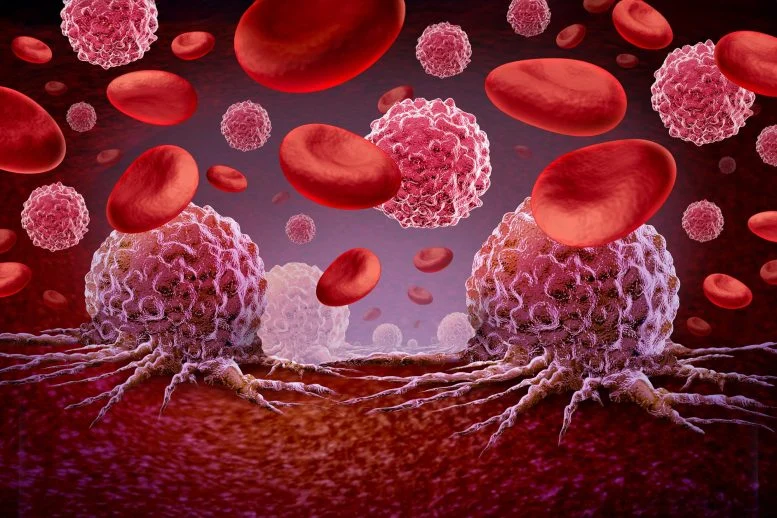
Summary of Scientists Discover a Hidden Way T Cells Attack Leukemia:
Researchers at The University of Texas MD Anderson Cancer Center discovered that T cells can kill acute myeloid leukemia (AML) cells through a previously unknown pathway involving the CD64 protein, bypassing traditional major histocompatibility complex (MHC) recognition mechanisms. This finding challenges existing assumptions about T cell functionality and offers potential insights for enhancing T cell therapies against AML and possibly other cancers. The study highlights the importance of exploring unconventional avenues in cancer research for addressing immune resistance.
*****
Summary Bullet Points
- Unconventional T Cell Mechanism: Researchers discovered that T cells can attack acute myeloid leukemia (AML) without relying on the major histocompatibility complex (MHC) recognition system.
- Role of CD64: The study identified a previously unknown pathway involving the CD64 protein, indicating a new mechanism for T cell-mediated killing of AML cells.
- Implications for Treatment: These findings could lead to enhanced T cell therapies for AML and potentially revolutionize approaches for other forms of cancer.
- Resistance of AML: The research sheds light on why AML is often resistant to immune attacks, despite advances in treatments like stem cell transplantation.
- Future Directions: Ongoing studies will explore how CD64 interacts with T cell receptor (TCR) signaling, with the aim of leveraging this mechanism for better therapeutic strategies.
Scientists Discover a Hidden Way T Cells Attack Leukemia: A Revolutionary Insight into Cancer Immunology
Imagine a battleground where the greatest warriors are not clad in armor but are tiny immune cells, tirelessly fighting to protect the body from harm. This is the world of T cells, our body’s very own defenders. In an intriguing new study, researchers have unveiled a hidden mechanism through which these T cells can attack acute myeloid leukemia (AML) in a way that challenges long-standing beliefs about cancer recognition and treatment.
The Conventional Wisdom: A Rebuttal
For years, it was widely accepted that T cells recognize and eliminate cancer cells primarily through a molecular recognition system relying on the major histocompatibility complex (MHC). You could think of MHC as a name tag that tells T cells, “Hey, I’m cancerous!” However, what happens when that name tag is missing? Most researchers assumed it would create a blind spot, allowing cancer cells to thrive undetected.
In a groundbreaking study published in the Proceedings of the National Academy of Sciences, scientists from The University of Texas MD Anderson Cancer Center observed something unexpected—T cells continued to destroy AML cells, even when MHC was absent. This revelation posed a fundamental question: How do T cells continue their assault on these elusive cancer cells?
A Journey into the Unknown
Led by Cassian Yee, M.D., along with former lab member Kapil Saxena, this team’s investigation began with a simple unexplained observation. They noticed that activated T cells exhibited remarkable efficiency in killing AML cells devoid of MHC. Could it be that the traditional understanding of T cell function was due for an upgrade?
Through rigorous experimentation, the scientists ruled out several known pathways—starting with natural killer (NK) cell mechanisms. After far-reaching investigations, they stumbled upon an intriguing candidate: the CD64 protein.
This revelation wasn’t just a notion; it was grounded in hard data from a genome-wide CRISPR screen designed to explore the genetic landscape of AML cells. Repeatedly exposing these modified cells to T cells, they could pinpoint the changes that enabled some cancer cells to survive. The culprit? CD64—a receptor often found on early myeloid cells.
The Mechanics of CD64
What makes CD64 so captivating? This receptor acts as a crucial piece of the puzzle, enabling T cells to target leukemia cells while bypassing the conventional MHC recognition pathway. When researchers removed CD64 from AML cells, those cells became resistant to T cell attacks. Conversely, adding CD64 to normally resistant cells rendered them more vulnerable to T cells.
In essence, this study reveals that T cells can engage in warfare without relying on traditional markers, leveraging CD64 along with an intact T cell receptor (TCR) to recognize and destroy AML cells swiftly and effectively. This newly identified pathway opens a window of possibilities, illuminating why AML sometimes reacts favorably to stem cell transplants—a technique where donor immune cells engage the remaining leukemia cells.
The Bigger Picture: Why It Matters
Why should these findings matter to you? Well, the implications could be enormous. AML is notorious for its aggressive nature and high rates of resistance. By redefining how T cells recognize and attack cancer cells, researchers might pave the way for innovative therapeutic strategies that could help with not only AML but also other forms of cancer that display similar immune evasion mechanics.
Imagine therapies that empower T cells to bypass heavy immunosuppressive barriers in advanced cancers. Future studies can dive deeper into the intricate relationship between CD64 and TCR signaling, exploring how this knowledge can lead to the development of enhanced T cell therapies. These potential treatments could revolutionize the landscape of cancer treatment—the goal being not just to treat but to transform the fight against cancer via the body’s immune system.
Moving Forward: An Inspiring Narrative
Every breakthrough in science tells a story—a narrative of curiosity, resilience, and innovation. This latest discovery is a call to embrace the unconventional, encouraging researchers to dare to explore the unknown. The realm of cancer treatment is ever-evolving, requiring visionaries ready to challenge established norms for the betterment of humanity.
As you reflect on this revelation, think about the barriers in your own life. Just like the T cells improvising their approach to combat AML, we too can discover alternative pathways in our everyday battles, whether they be personal or professional. Sometimes, the traditional routes seem closed off, and that’s when we need to pivot and explore the unconventional.
The Essence of Scientific Exploration
This research illustrates why curiosity and a willingness to challenge conventional thought are vital for progress in any field—be it science, art, or even personal growth. In the words of Dr. Yee, “The freedom to explore things that aren’t conventional is what drives innovation.”
It’s an invitation to cultivate that curiosity in ourselves—recognizing that sometimes, life’s greatest lessons lie in the uncharted territories. Whether you’re grappling with career challenges, relationships, or personal ambitions, consider the power of untested ideas.
Sustaining Momentum
The road ahead is exciting, filled with possibilities. The researchers at MD Anderson are not resting on their laurels; they are tirelessly working to decipher the intricate dynamics between CD64 and TCR signaling. Further exploration of this pathway could bridge the gap between innovative cancer therapies and the tangible benefits they can offer countless lives.
As you ponder this perspective, consider your own journey. Reflect on your hidden potentials—untapped skills or interests you’ve yet to explore. Just as science thrives on exploration, our personal growth relies on embracing the unknown. Take that leap.
The researchers’ findings represent a beacon of hope for AML patients and their families, fueling the belief that understanding and innovation can bring about monumental change. Let’s carry that motivation forward in our lives. After all, each of us has the potential to forge our own unique pathway—whether in science, personal endeavors, or any area that engages our passion.
Conclusion: The Challenge and Reward
In today’s world, characterized by challenges and uncertainties, this unexpected breakthrough serves as a reminder: resilience and adaptability are pivotal in any battle, including those against seemingly insurmountable odds, such as cancer.
The message is clear: Be curious, be brave, and don’t shy away from unconventional methods. Whether you’re a scientist striving to solve the mysteries of the universe, or an individual championing personal growth, the essence of progress lies in your willingness to explore the roads less traveled.
As we marvel at the revolutionary discoveries in cancer research, let’s also take the inspiration into our daily lives—daring to challenge assumptions, embracing new pathways, and discovering the hidden strengths within ourselves. Each step you take towards self-improvement and exploration may also add to the larger narrative of human progress.