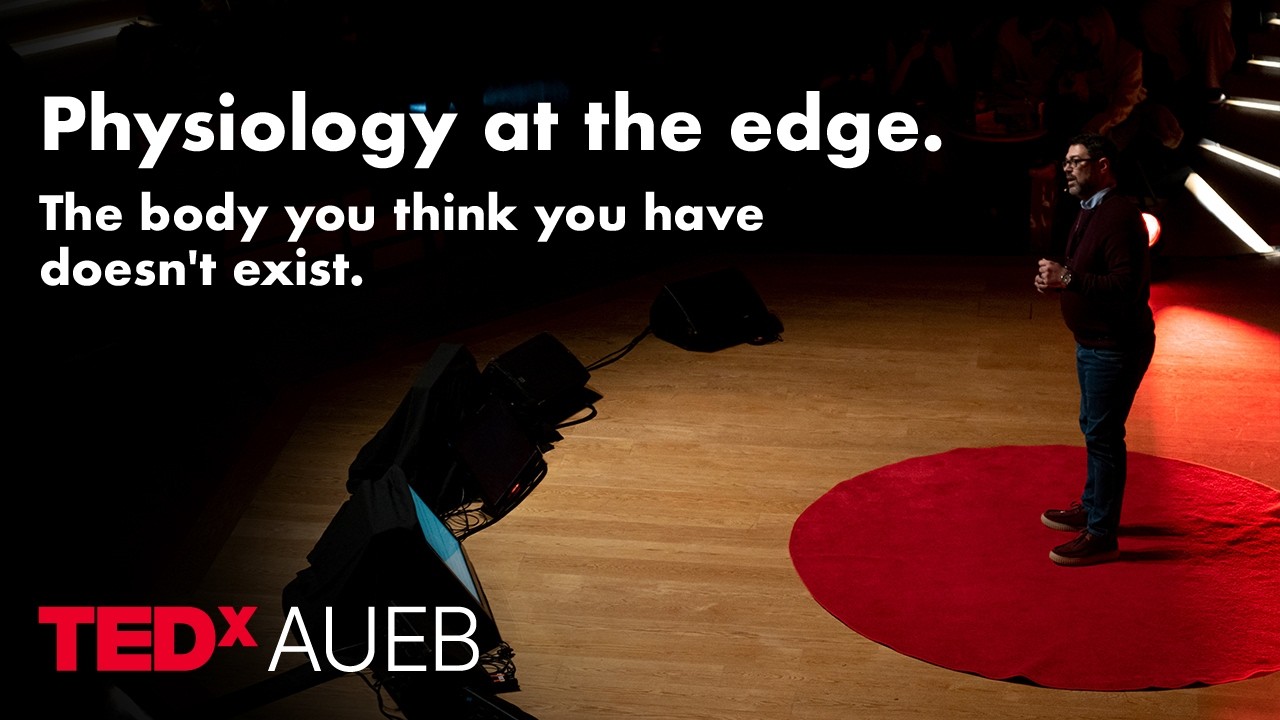
- The disconnect between perceived body image and physiological reality
- Insights into insulin sensitivity and metabolic processes
- The role of diet and nutrition in shaping health outcomes
- Challenges posed by modern lifestyle on metabolic health
- The implications for future health and disease management
The discussion led by Sotirios Zarogiannis in "Physiology at the edge: The body you think you have doesn’t exist" presents a poignant examination of the gap between how individuals perceive their bodies and the underlying biological mechanisms at play. This discrepancy is not merely a psychological or aesthetic issue but extends deep into the physiological aspects of health and wellness.
One of the most striking points made during the talk is the understanding that the body we think we have does not always align with the physiological reality within. Our perceptions of weight, metabolism, and overall health can often be skewed by societal standards, cultural narratives, and even personal biases. Scientific research shows that misconceptions about body image can directly impact behaviors surrounding diet and exercise. This phenomenon is critical to address, as believing one has a certain body type or metabolic status can lead to misguided dietary choices.
At the core of this discussion is insulin sensitivity, a pivotal factor in metabolic health. Insulin, a hormone produced by the pancreas, plays a crucial role in glucose metabolism. It facilitates the uptake of glucose by cells for energy production or storage as fat. When cells become resistant to insulin, the body requires more of this hormone to achieve the same effect. This condition, often termed insulin resistance, is a significant risk factor for various metabolic diseases, including type 2 diabetes. Understanding the mechanisms behind insulin sensitivity is essential for formulating effective dietary strategies.
Diet and nutrition come into sharp focus as vital influences on metabolic health. The macronutrients we consume—carbohydrates, proteins, and fats—interact with our physiology in complex ways. For instance, diets high in refined sugars and unhealthy fats can exacerbate insulin resistance, while whole foods rich in fiber and healthy fats have the opposite effect. This nuanced understanding of how nutrition affects insulin sensitivity emphasizes the importance of making informed dietary choices.
Modern lifestyle factors also present challenges to maintaining metabolic health. Sedentary behavior, coupled with an abundance of processed foods, creates an environment ripe for weight gain and metabolic dysfunction. Many individuals find themselves in a cycle of unhealthy eating that perpetuates insulin resistance. Social and environmental conditions can further complicate this landscape, often making it difficult to access healthier food options.
In light of these challenges, the implications for future health and disease management are profound. Recognizing the true physiological state of one’s body is vital for implementing effective interventions. Public health initiatives focused on education about nutritional science and metabolic health may help bridge the gap between perception and reality. Individuals armed with accurate knowledge about their bodies and dietary impacts can make more effective health choices.
The interplay between our understanding of our bodies and actual physiological conditions has far-reaching implications. Emphasizing education and research on metabolic health can empower individuals to take charge of their wellness journeys. As trends in obesity and metabolic syndromes continue to rise, the need to understand and address these issues becomes increasingly urgent.
Ultimately, discussions like those presented by Zarogiannis serve as important reminders that the body we perceive is deeply intertwined with complex physiological realities. Transformative change is possible when society embraces science-backed insights and applies them to everyday life. Enabling individuals to understand their bodies on a deeper level can facilitate healthier lifestyles, mitigate disease risk, and foster a culture of wellness.
Through greater awareness of insulin sensitivity and nutrition’s impact on health, individuals can make more informed decisions. Addressing the misconceptions surrounding body image should not merely be a fringe concern but a public health priority. By equipping ourselves with knowledge and a better understanding of metabolic health, we can inspire a healthier future devoid of the dissonance often felt between perception and reality.
In essence, the journey toward wellness demands a comprehensive approach. Education on nutritional science, understanding the physiological aspects of metabolism, and addressing the lifestyle choices we make are critical components of this journey. It is never too late to begin making informed, health-conscious decisions that can lead to lasting change. Each individual can gather insights, frameworks, and behaviors necessary to navigate the complexities of modern health challenges. By prioritizing this knowledge, society can make strides towards a healthier, more informed populace ready to embrace the realities of their bodies.
*****
Source Description
What if the body you think you have doesn’t actually exist, not in the way you’ve always imagined it? In this thought-provoking talk, Professor Sotirios Zarogiannis explores how modern physiology is transforming our understanding of what it means to be alive. Moving beyond the traditional concept of homeostasis, he introduces groundbreaking ideas such as allostasis, network physiology, and the holobiont, revealing the human body as a dynamic, interconnected ecosystem rather than an isolated machine.
Drawing on fascinating scientific discoveries, from organisms that survive frozen for thousands of years to the influence of our microbiome and even research conducted in space, he challenges long-held assumptions about health, identity, and adaptation. At the threshold between biology, technology, and emerging scientific frontiers, this talk invites us to rethink not only how our bodies function, but what it truly means to be human.
#Physiology #Science #Humans #TEDTalk #TEDx #TEDxAUEB #TEDxAUEB2026 #Metaixmio Sotirios Zarogiannis is Professor of Physiology and Director of the Laboratory of Physiology at the School of Medicine, University of Thessaly. He holds a degree in Medical Biochemistry and earned his PhD in Physiology from the University of Thessaly. He also holds postgraduate degrees in Public Health (University of Manchester), Innovation Management and Entrepreneurship (Hellenic Open University), and Science, Technology and Society (Department of History and Philosophy of Science, National and Kapodistrian University of Athens).
He has worked as a postdoctoral researcher at the University of California, San Francisco (UCSF) and the University of Alabama, and has served as a Visiting Professor at both the University of Alabama and Heidelberg University.
His research has been supported by prestigious organizations, including the Alexander von Humboldt Foundation, the European Respiratory Society, the International Society of Peritoneal Dialysis, and the Hellenic Thoracic Society. He currently serves as Secretary of the Hellenic Physiological Society (2025–2027) and Chair of the Pleural and Mediastinal Malignancies Group of the European Respiratory Society (2024–2027). In 2025, he was elected a member of the Academy of Physiology of the International Union of Physiological Sciences.
Professor Zarogiannis’ research focuses on the physiology of mesothelial membranes and the effects of environmental pollutants on the lungs and kidneys. His work integrates in vitro cell culture studies, ex vivo tissue electrophysiology, in vivo animal models, and in silico bioinformatics approaches.
His recent academic interests center on the relationship between Experimental Physiology, One Health, and Human Functioning, as well as the co-evolution of Science, Technology, and Society (STS). This talk was given at a TEDx event using the TED conference format but independently organized by a local community. Learn more at https://www.ted.com/tedx