Summary of New Study Reveals Unexpected Way To Destroy Pancreatic Cancer Cells:
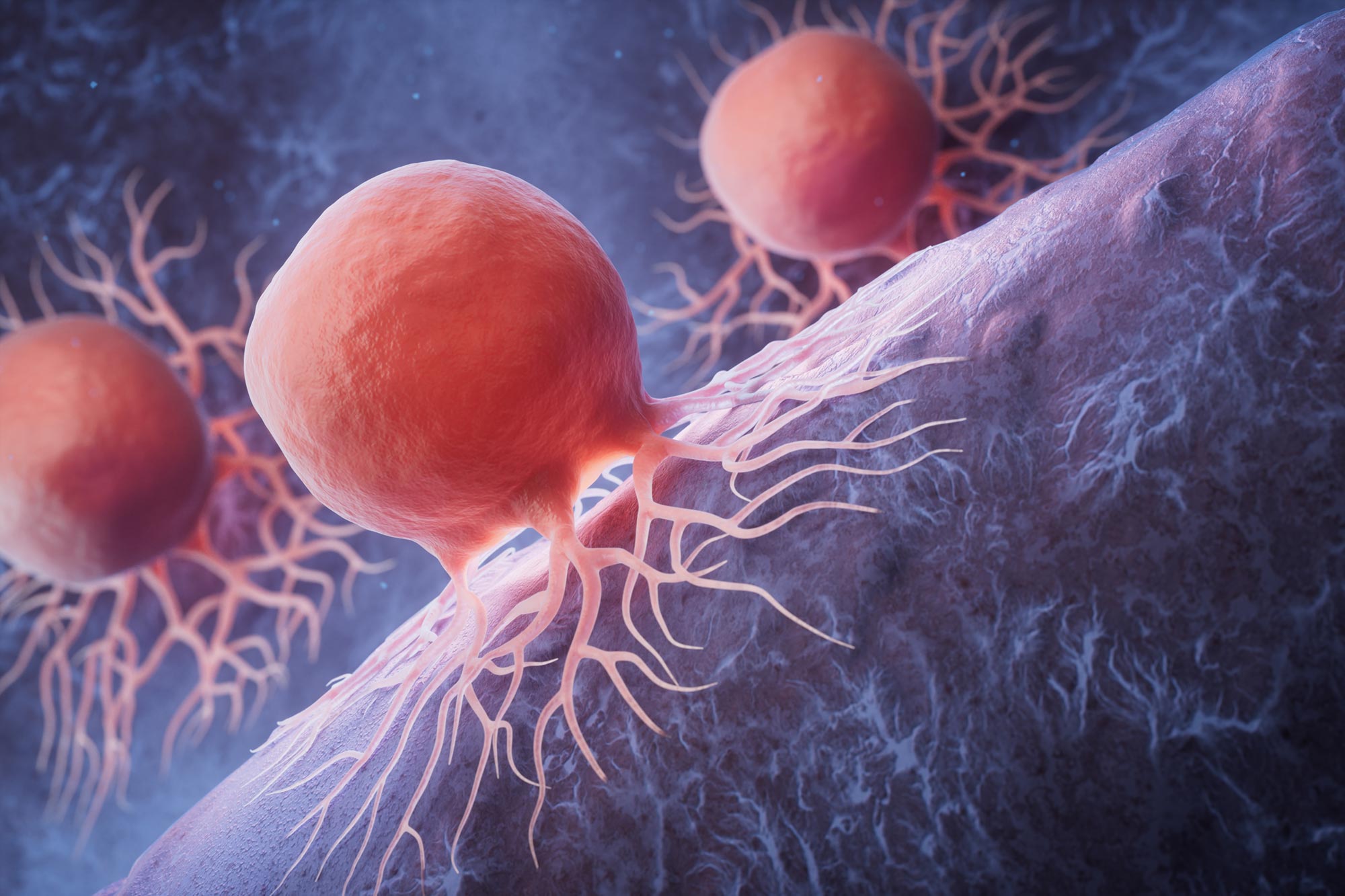
Researchers have discovered a novel approach to target pancreatic cancer, particularly against tumors with KRAS mutations, by overstimulating growth pathways instead of inhibiting them. This strategy involves using experimental compounds known as PCAIs, which have shown effectiveness in reducing cancer cell survival and migration in laboratory settings. Notably, one compound, NSL-YHJ-2-27, caused significant cancer cell death and reduced their ability to spread, potentially turning the cancer’s growth signals into a liability.
The study highlights that PCAIs affect various KRAS mutations, making them possibly effective against multiple KRAS-driven cancers. While promising, these findings are preliminary and require further investigation in animal models before clinical application. The research emphasizes the need for new treatments for pancreatic cancer, which currently has limited options.
*****
Summary Bullet Points
- New research reveals a novel approach to target pancreatic cancer cells by overstimulating growth pathways instead of inhibiting them.
- The study focuses on pancreatic ductal adenocarcinoma, driven primarily by KRAS mutations, a challenging form of cancer to treat.
- Experimental compounds known as PCAIs showed promising results in reducing cancer cell survivability and mobility in lab settings.
- The findings indicate a potential for PCAIs to address multiple KRAS mutations, broadening the scope of treatment options.
- Further research is required to validate the efficacy of PCAIs in live systems, paving the way for new therapies for pancreatic cancer.
Unraveling the Mystery of Pancreatic Cancer: A New Hope?
In a world filled with medical advancements, few topics stir as much curiosity and concern as cancer. Among the various types, pancreatic cancer stands out for its notorious aggressiveness and grim prognosis. A recent study illuminates a fascinating avenue of research that boldly rethinks traditional approaches to treating this formidable foe. Instead of merely trying to cut off its nourishment, researchers are looking at new ways to manipulate the growth signals of cancer cells, turning a major weakness into a potential strength.
This blog will dive deep into how scientists are challenging preconceptions surrounding pancreatic cancer treatment, focusing on the specific research published in the journal Aging that examines the possibility of using overstimulation as a means of combating cancer. Explore with me the intricacies of pancreatic ductal adenocarcinoma (PDAC), learn about the groundbreaking findings from the Florida A&M University study led by Kweku Ofosu-Asante and Nazarius S. Lamango, and let’s look to the future with cautious optimism.
The Aggressiveness of Pancreatic Cancer
Pancreatic cancer, particularly PDAC, has long been a grave concern in oncology. The reason for its deadliness can be linked to a specific gene—KRAS. When KRAS mutates, it essentially floors the accelerator, propelling cells into an uncontrollable cycle of growth and division. This unhinged proliferation explains not just the cancer’s aggressive nature but also its remarkable ability to evade traditional treatments.
Until recently, the prospect of targeting KRAS mutations was considered nearly impossible, but recent breakthroughs—such as drugs like sotorasib and adagrasib—have begun to change that narrative. Yet, these treatments primarily focus on a narrow spectrum of KRAS mutations, leaving an expansive gap in effective treatments for many pancreatic cancers, which frequently express different KRAS variants.
Enter PCAIs: A New Class of Compounds
The recent research sheds light on PCAIs, or "pancreatic cancer-associated inhibitors," designed to disrupt the aberrant activities of KRAS. This is not just another medication targeting a single mutation; PCAIs aim to intervene in various KRAS-related interactions. Imagine a sophisticated chess game where each piece plays multiple roles. That’s the level of versatility PCAIs aspire to achieve.
In trailing down this path, researchers tested 15 PCAI compounds on pancreatic cancer cells. Among these, two, NSL-YHJ-2-45 and NSL-YHJ-2-27, emerged as heavy hitters, reducing cancer cell survival remarkably at low doses. But the spotlight on NSL-YHJ-2-27 revealed something particularly striking: it not only curtailed the cancer’s ability to grow but also greatly impeded its ability to migrate—one of the major reasons for the cancer’s lethality.
A Twist on Traditional Thinking
Here’s where things get really intriguing. Contrary to the traditional mindset that seeks to suppress growth signals, NSL-YHJ-2-27 overcharged key signaling pathways in cancer cells. This unexpected strategy appears to heighten internal stress within the cancer cells, ultimately pushing them towards self-destruction. This approach spins the conventional wisdom on its head: instead of suppressing the ‘gas pedal,’ you’re essentially pushing it to the floor.
The results speak volumes. NSL-YHJ-2-27 prompted an increase in reactive oxygen species—a buildup that often leads to cellular damage. Coupled with signs of apoptosis (an orderly form of cell death), the findings create a compelling case for the new treatment paradigm.
Spheroids & Real-World Application
It’s easy to marvel at results obtained from flat cultures of cancer cells, but how do these compounds perform in more than just isolated settings? The study took a bold leap, testing the PCAIs on three-dimensional tumor spheroids, designed to simulate the real environment of tumors more accurately than traditional flat cultures. And here too, the results were astounding: PCAI treatment shattered these tumor-like clusters, curtailed their invasiveness, and upped cancer cell mortality.
At just 10 μM concentrations, NSL-YHJ-2-27 inhibited invasion by an eye-popping 84% in PANC-1 spheroids and 96% in MIA PaCa-2 spheroids. These numbers reassure us of the great potential that PCAIs represent in real-world scenarios, potentially transforming how pancreatic cancer could eventually be treated.
Beyond Pancreatic Cancer: A Broader Implication
What’s particularly uplifting about this study is its suggestion that PCAIs might offer therapeutic flexibility beyond just pancreatic cancer. The research demonstrated efficacy across different cell lines driven by various KRAS mutations. This broad-spectrum approach could signal a paradigm shift in our understanding of how to tackle cancers driven by similar mechanisms.
While researchers are careful to point out that these findings are preliminary—confined to lab settings and tumor spheroids—this discovery paves the way for future explorations into animal models and clinical trials. The prospect of targeting multiple KRAS-driven cancers offers hope in a field that has desperately needed fresh insight.
The Road Ahead: What It Means for Patients
The implications for patients could be profound yet should be met with a dose of patience. The journey from laboratory experimentation to available treatment can often take years, laden with challenges and exhaustive testing to ensure safety and efficacy. However, the very fact that researchers are willing to look at cancer treatment through a new lens tells us that we are not stuck in tradition.
The larger narrative here isn’t just about overcoming pancreatic cancer; it is a testament to human resilience and ingenuity. Every challenge presents an opportunity to rethink, innovate, and adapt. Just as PCAIs are turning the tables on tumor growth pathways, individuals facing challenges in life can learn from this approach.
It’s all about leveraging setbacks into strengths, understanding that sometimes what seems a disadvantage may hold the key to the next big breakthrough. Every struggle can serve as fertile ground for growth. This study encourages us not only to seek conventional wisdom but to also remain open to unconventional methods.
In Conclusion: A Beacon of Hope
As we unravel the complexities of pancreatic cancer treatment, the horizon looks a bit brighter. Research like this serves as a reminder that science continuously evolves. Though there is still much work to be done, the progress made with PCAIs offers renewed hope for patients and families grappling with the realities of a cancer diagnosis.
Scientific discoveries can often mirror our personal journeys. If every setback can become a stepping stone, then every challenge faced in life can position us closer to our goals. Embrace change, stay curious, and remain committed to venturing into uncharted territories—whether in science or life itself.
In this exciting world of research, who knows what the next breakthrough will be? Stay tuned, keep pushing boundaries, and remember that every new dawn could herald your personal revolution.