Summary of Scientists Unveil New Treatment Strategy That Could Outsmart Cancer:
A recent mathematical study led by Dr. Robert Noble from St George’s, University of London, explores a new strategy for combating treatment-resistant cancers. The research suggests that changing therapies before resistance develops could improve cure rates. Traditional methods often wait for tumor regrowth before switching treatments, allowing cancer cells to evolve resistance. The new approach, inspired by evolutionary theory, proposes that doctors switch to a second treatment while the initial therapy is still effective. Early findings indicate that this “two-strike therapy” may outperform traditional methods, and clinical trials are currently in progress for various cancer types. The hope is that adapting this strategy to involve more treatments could effectively target larger tumors.
*****
Summary Bullet Points
- New research suggests a fresh approach to cancer treatment based on evolutionary principles.
- The strategy involves switching therapies before cancer can develop resistance.
- Early trials are ongoing for various cancer types, aiming to improve outcomes.
- This innovative treatment may target larger tumors with a sequence of multiple therapies.
- The implications could revolutionize the way oncologists tackle persistent and resistant cancers.
Scientists Unveil New Treatment Strategy That Could Outsmart Cancer
In the realm of medical science, cancer treatment has been one of the most challenging and evolving fields. Despite technological advancements and groundbreaking research, the omnipresent challenge of treatment resistance continues to loom large over oncologists. A recent study introduces a novel strategy that draws from evolutionary principles, aiming not only to tackle this problem but potentially to transform how doctors approach cancer therapy altogether.
Imagine for a moment a world where the threat of cancer doesn’t dominate lives, where the strategies employed to combat this relentless disease are not only effective but also adaptive. This new study, led by Dr. Robert Noble and his team from the Department of Mathematics at St. George’s University, is a step toward making that vision a reality.
The Crux of the Issue: Treatment Resistance
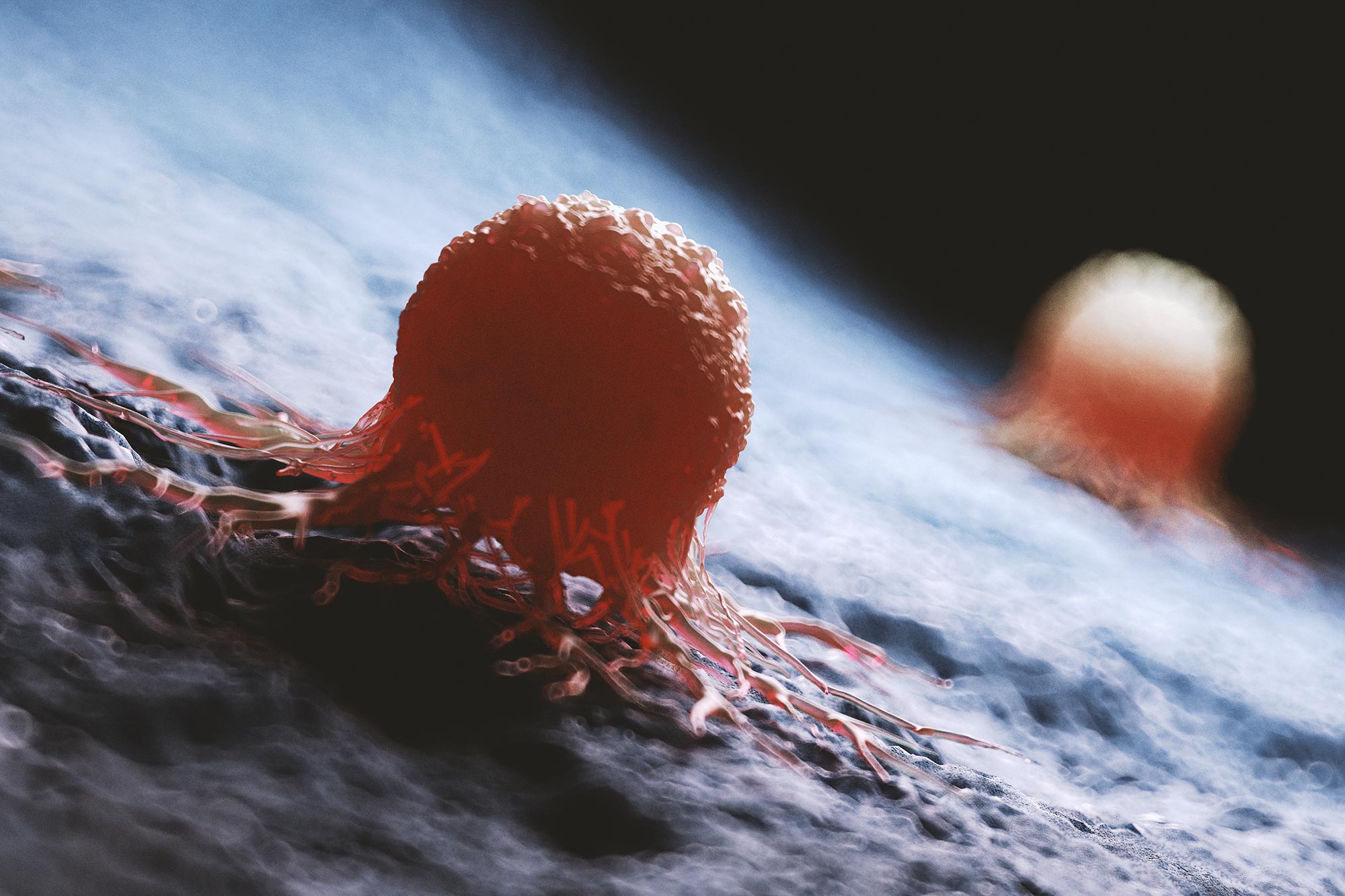
The heart of the issue lies in the nature of cancer itself. Tumors might initially respond well to treatment, shrinking under the onslaught of chemotherapy or radiation. However, the resilience of cancer cells is a formidable opponent. Over time, these cells may acquire mutations that render them impervious to the very therapies designed to obliterate them. This is not just a technical hiccup in treatment but rather a Darwinian struggle, where only the fittest—mutated cancer cells—survive.
Dr. Noble’s insights resonate deeply with the current challenges in oncology. In traditional cancer treatment, oncologists often wait for a relapse to make further decisions about the patient’s care. By that time, the cells might already have evolved, making them resistant to subsequent therapies. It’s a game where the cancer seems to always be one step ahead.
A Paradigm Shift: “Kick it While It’s Down”
Now, here’s where the new study shines. What if we didn’t wait for that relapse? What if oncologists could switch treatment strategies while the tumor was still vulnerable? This “kick it while it’s down” approach takes a page from evolutionary theory that has found success in various fields, from combating antibiotic resistance to predicting effective vaccines during flu season.
In essence, the idea is simple yet profound. Instead of a linear treatment strategy, the approach encourages a more dynamic, flexible response to cancer. The implications are vast, suggesting that rapid switching between therapies could help preempt the mutations that lead to resistance.
Picture this: you’re participating in a thrilling game of chess against an opponent who’s skilled but predictable. If you were to anticipate their moves not just based on their current position but rather on potential future threats, you would effectively keep them on their toes. This is the strategic mindset adopted in Dr. Noble’s study.
The Evolutionary Models: Testing a New Frontier
To support this transformative idea, Dr. Noble and his colleagues adapted mathematical techniques typically utilized in the study of evolution. By analyzing how environmental changes—like climate shifts—impact species survival, they tested their hypothesis concerning cancer treatments.
The core takeaway? Their findings suggest that this innovative two-strike treatment strategy is worth investigating further. Clinical trials are already in progress, focusing on various types of cancers: soft tissue, prostate, and breast cancers. It’s a thrilling frontier, with potential outcomes that could redefine the standard of care.
Imagine the possibilities if this strategy yields positive results. Lives could be saved, and medical practitioners could experience a newfound confidence in their approaches. In the face of a relentless disease, hope could materialize not just as a fleeting emotion but as a tangible reality.
The Game Plan: More Treatments for Larger Tumors
One of the exciting elements of this research is its implications for larger tumors. While the models suggest two distinct therapies may only effectively target smaller tumors, the potential exists for a more comprehensive approach involving three or more treatment options. This multi-faceted strategy may offer a viable path toward eradicating not just the small and manageable tumors but also those that seem insurmountably large.
Just think about it—what if treating cancer was akin to painting? The canvas is cancer itself, and the brush represents our treatment strategies. Rather than sticking to a single color or technique, what if we harnessed a comprehensive palette, layering different approaches and colorizing our fight against cancer? This analogy might be simplistic, yet it captures the essence of how a richer, more varied treatment strategy could evolve.
Looking Ahead: A Community of Hope
As we navigate this potential paradigm shift, it’s imperative that we foster a community of understanding, support, and hope. The challenges presented by cancer extend beyond biology; they touch the emotional and psychological lives of those affected. Engaging patients and communities in the conversation around these new findings is crucial. Empowering patients with knowledge and clarity can give them a sense of agency in their health decisions, making them active participants in their care.
Moreover, as these trials progress, the scientific community must maintain transparency and foster open dialogues. Sharing results and insights—both positive and challenging—can forge a path toward collective learning and collaboration.
A Final Reflection: The Power of Adaptation
The world of cancer treatment is a moving landscape, continually molded by research and patient needs. The concept of applying evolutionary principles to cancer therapy exemplifies our ever-adaptive spirit in the face of adversity. Life itself is an evolutionary journey, underscoring the need for adaptability in tackling both biological diseases and our personal challenges.
Think about your own life. Just as cancer cells can evolve and resist treatments, we all face moments when we confront obstacles. Life’s challenges, too, require us to adapt, rethink strategies, and harness our resilience. The spirit of innovation demonstrated in this research serves as a reminder: whether it’s a cancer treatment or a personal endeavor, setbacks can lead us to explore uncharted territories and discover new pathways to success.
Embarking upon this research journey introduces a ripple of hope in the fight against cancer. It serves as a powerful metaphor for our lives; we can, and should, embrace change, be courageous in facing challenges, and remain optimistic about the paths ahead. Through this lens, the next chapter in cancer therapy is not merely about the science but also about the richness of human spirit and resilience—the very essence of navigating life’s complexities.
As further studies and trials unfold, the scientific community stands poised on the threshold of revolutionary breakthroughs, potentially augmenting cancer therapies worldwide. The quest to outsmart cancer is not just an endeavor for medical professionals but a collective journey toward a brighter, healthier future for all. The narrative continues, and we are but pieces of an evolving puzzle that could one day lead to a world where cancer is more manageable, if not entirely conquerable. The future is bright, and with every iteration of treatments, we move closer to winning the game against this formidable foe.