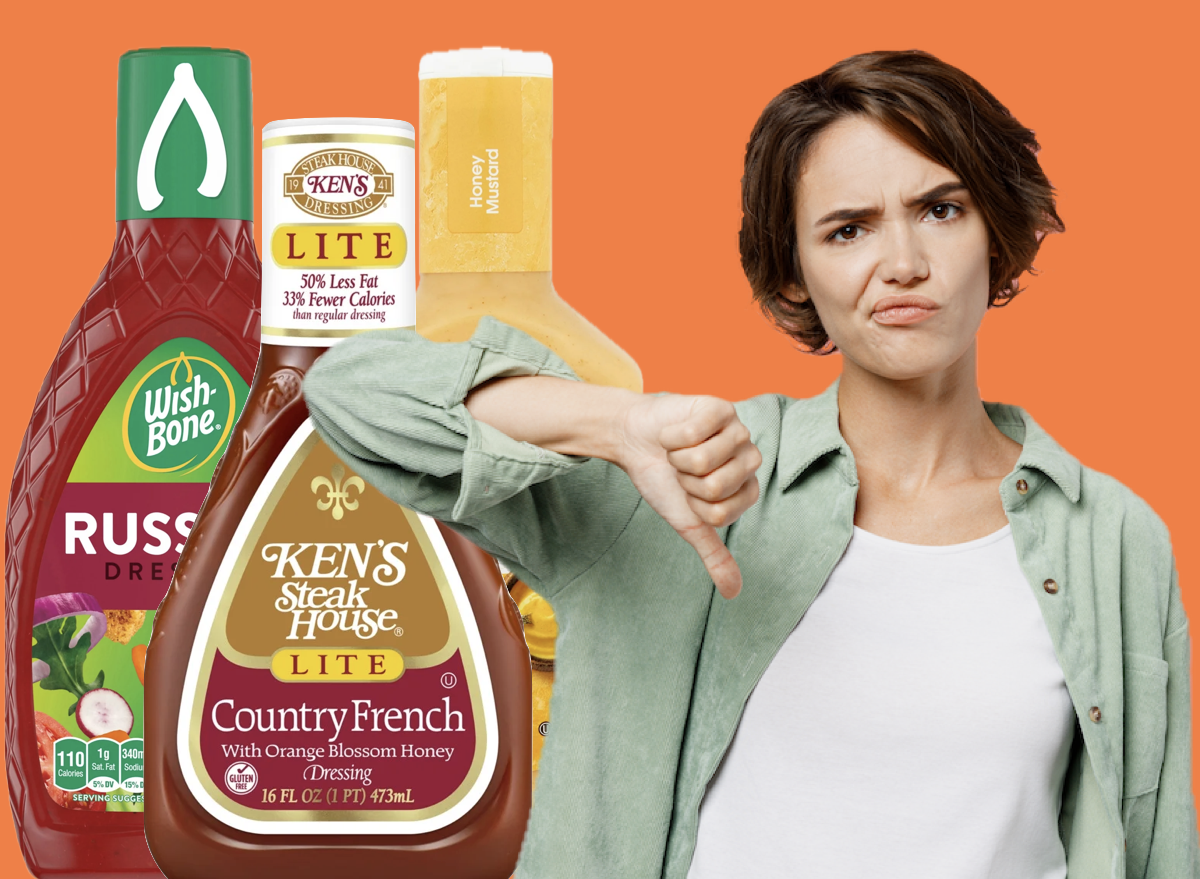
Summary of 7 Unhealthiest Salad Dressings—Ranked by Sugar Content:
The article discusses the sugar content in various salad dressings, highlighting how some can turn healthy meals into sugary treats. It ranks seven of the unhealthiest dressings based on sugar content per two-tablespoon serving.
- Wish-Bone Russian Salad Dressing: 6g sugar.
- Great Value Honey Mustard Dressing & Dip: 6g sugar.
- Good & Gather Organic Raspberry Vinaigrette: 8g sugar.
- Maple Grove Farms Fat-Free Honey Dijon: 9g sugar.
- Ken’s Steak House Country French (Lite): 10g sugar.
- Ken’s Steak House Fat Free Sun-Dried Tomato Dressing: 12g sugar (tied with another).
- Wish-Bone Western Original: 12g sugar (tied with Ken’s dressing).
The article stresses caution when using these dressings due to their high sugar levels and ultraprocessed ingredients.
*****
Summary Bullet Points
- Salad dressings can significantly increase sugar content in meals.
- Many popular dressings are surprisingly high in added sugars, often disguised as healthy options.
- The article highlights the seven unhealthiest salad dressings ranked by sugar content.
- Understanding sugar content in dressings can lead to healthier choices.
- Mindful consumption and label reading are key for maintaining a balanced diet.
The Hidden Dangers of Salad Dressings: Ranking the 7 Unhealthiest by Sugar Content
When you think about a salad, images of crisp lettuce, vibrant veggies, and perhaps a sprinkling of nuts or cheese come to mind. It’s a dish synonymous with health and freshness. Yet, lurking within that wholesome bowl of greens may be a deceptively unhealthy component: salad dressing. Often overlooked, these seemingly innocent sauces can dramatically alter the healthfulness of a meal, transforming a nutritious feast into a sugary indulgence.
In a world that is increasingly health-conscious, one might think that salad dressings would follow suit. Unfortunately, many bottled varieties still contain hidden sugars that can rival desserts. With that said, let’s embark on a journey through the sugar-laden landscape of salad dressings and unveil the seven unhealthiest dressings, ranked by their sugar content. Prepare yourself for some eye-opening revelations.
1. Wish-Bone Russian Salad Dressing
Starting at the top of our list is the Wish-Bone Russian Salad Dressing. This dressing crams a shocking 6 grams of added sugar into just two tablespoons. The combination of soybean oil and corn syrup indicates that it’s not just a light drizzle of sweetness; it’s a significant dose of added sugar in a usually healthy meal. It’s essential to use this condiment judiciously. Measure if you must, or you might find yourself unwittingly loading your salad with far more sugar than intended.
2. Great Value Honey Mustard Dressing & Dip
Next up is Great Value Honey Mustard Dressing & Dip, which contains the same 6 grams of sugar per serving. While this dressing purports to add a zesty flavor to salads, its high fructose corn syrup is a red flag. It’s one of those sauces that seems innocent enough, often found gracing every backyard barbecue. However, it is a stark reminder that sweetness hides in many familiar places. Be mindful of the portions and consider alternatives that satisfy without the sugar spike.
3. Good & Gather Organic Raspberry Vinaigrette
Don’t let the name fool you; Good & Gather Organic Raspberry Vinaigrette may sound healthy, but it packs 8 grams of sugar per serving. Organic doesn’t always mean guilt-free. While the fruity flavor may entice you, be aware that the sugar content could lead to an unintended sugar crash later on. The allure of vibrant fruit flavors can overshadow the reality that some dressings prioritize taste over health.
4. Maple Grove Farms Fat-Free Honey Dijon
Next, we find Maple Grove Farms Fat-Free Honey Dijon boasting 9 grams of sugar per serving. This product presents itself as a low-fat option, but beware! Often, when fat is removed, sugar is added to compensate for flavor, making it a double-edged sword. The idea of a fat-free dressing might seem appealing, yet it’s a perfect example of how marketing can mislead consumers into thinking they are making a wholesome choice. Always read labels to uncover the true nature of such products.
5. Ken’s Steak House Country French (Lite)
Moving down the list, we encounter Ken’s Steak House Country French (Lite). This dressing contains a staggering 10 grams of sugar per serving. Despite its ‘lite’ label, the sugar content suggests that consumers are often misled. It’s crucial to scrutinize not just calories but sugar content. The perception of healthy options can often mask alternatives that aren’t genuinely beneficial.
6. Ken’s Steak House Fat Free Sun-Dried Tomato Dressing
Ranking high on the sugar scale is the Ken’s Steak House Fat Free Sun-Dried Tomato Dressing, which, like its predecessor, contains a whopping 12 grams of sugar per two tablespoons. The first ingredient listed is high fructose corn syrup, placing this dressing firmly in the unhealthy category. This goes to show that fat-free can equate to sugar-laden, raising an important lesson about dietary choices—always, and I mean always, read the ingredients.
7. Wish-Bone Western Original
Rounding out our list, we have the infamous Wish-Bone Western Original, tied for the same sugar content as Ken’s dressing at 12 grams. This dressing is perhaps the poster child for sugary salad dressings, with high fructose corn syrup also listed as the first ingredient. Like sweetened ketchup, it can easily morph a salad into a dessert-like experience.
The Implications of Sugar Consumption
Understanding the sugar content in salad dressings not only illuminates the hidden sugars in our meals but also stands as a reminder of the importance of making informed dietary choices. With an increasing focus on health in our society, it is important to scrutinize the labels of products masquerading as healthy options.
Mindful Eating: A Vital Approach
So, what can you do about it? The answer lies in mindfulness. This involves not just being aware of what you eat, but understanding why you make those choices. Paying attention to nutrition labels can dramatically alter your perspective on what’s healthy. Not all dressings are created equal; some offer flavorful alternatives with much lower sugar contents, such as vinaigrettes made with olive oil and vinegar or fresh herbs blended into homemade dressings.
The Power of Homemade Dressings
Flashback to our culinary roots! Making your own dressing is not only a healthier option but also a fantastic creative outlet. Mixing up a simple vinaigrette with olive oil, balsamic vinegar, mustard, or even honey gives you control over what you consume. Opt for fresh herbs or spices to enhance flavor without the added sugar.
Final Thoughts: A Path to Healthier Choices
The journey through the world of salad dressings underscores a pivotal message: awareness leads to empowerment. By knowing what you’re putting on your salad—or into your body—you can make decisions that align with your health goals. The seven dressings outlined above serve as cautionary tales in the realm of seemingly healthy eating.
Recognize that eating healthy doesn’t have to mean compromising taste or enjoyment. Now, armed with knowledge, you can navigate the aisles of your grocery store with confidence and make choices that support a balanced, nourishing lifestyle. Remember, every little decision you make counts. Keep your eye on the label, your taste buds engaged, and your health a top priority.
By integrating mindfulness and creativity into your approach to food, you not only nourish your body but your spirit, as well. Reach for dressings that honor both taste and health and allow your salads to shine in their full glory. Make your meals exciting, full of flavor, and, above all, reflective of the vibrant health you deserve.