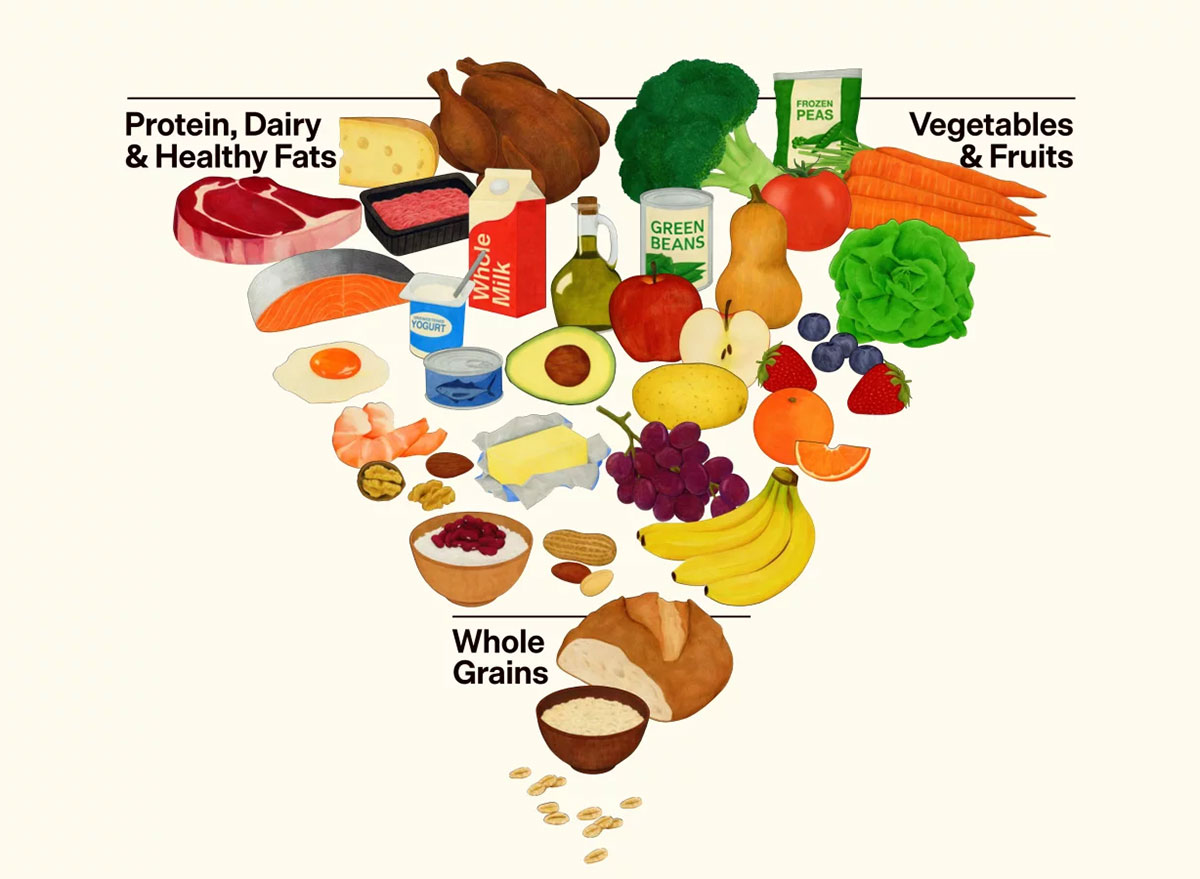
Summary of 7 High-Protein Foods Highlighted in the New U.S. Dietary Guidelines:
The recent update from the U.S. Dietary Guidelines features a new food pyramid that emphasizes the importance of protein-rich foods, whole foods, and nutrient-dense options. This redesign replaces the previous MyPlate guidelines, with a focus on real foods like proteins, dairy, healthy fats, vegetables, fruits, and whole grains.
Key components highlighted include:
-
Beef: Valued for its complete protein and nutrients like iron and zinc, stressing a healthier perspective on dietary protein.
-
Poultry: Lean meats like chicken and turkey are recommended for their low saturated fat and heart health benefits.
-
Fish: Fatty fish such as salmon are encouraged due to their omega-3 fatty acids, known for heart protection.
-
Shellfish: Promoted for being low in fat and rich in nutrients like iron and zinc.
-
Full-Fat Yogurt: Greek yogurt is highlighted for its high protein content and ability to promote fullness.
-
Walnuts: A nutritious source of protein and healthy fats, offering significant daily iron and magnesium.
- Ground Beef: Reinforces support for American farmers while promoting protein-rich diets.
The guidelines advocate reducing highly processed foods and returning to nutritious, whole food-based eating habits.
*****
Summary Bullet Points
- The U.S. Dietary Guidelines have shifted focus from processed foods to nutrient-dense sources, emphasizing protein at every meal.
- Seven high-protein foods have been highlighted, including beef, poultry, fish, shellfish, full-fat yogurt, walnuts, and ground beef.
- These foods offer not only protein but also essential vitamins, minerals, and healthy fats, fostering overall health and wellness.
- Incorporating these protein-rich foods can support a balanced diet, promote satiety, and contribute to muscle maintenance.
- The guidelines urge households to prioritize whole, real foods while reducing reliance on highly processed options.
Exploring the Seven High-Protein Foods in the New U.S. Dietary Guidelines
The recent update of the U.S. Dietary Guidelines signifies not merely a shift in government policy but a cultural recalibration around how we perceive food and nutrition. Gone are the days of vilifying protein in favor of carbohydrates; instead, we see a robust endorsement of rich, whole foods. The guidelines elevate the status of varied protein sources, illustrating their importance for overall health. Let’s delve into the unique, robust world of seven high-protein foods now spotlighted in these guidelines.
1. Beef: The Nutrient Powerhouse
Beef occupies a prominent position in the new food pyramid, and for good reason. This rich source of complete protein isn’t just any run-of-the-mill meat; it’s packed with a medley of essential nutrients such as iron, zinc, and B vitamins. Each serving contributes not only to muscle repair and growth but also plays a critical role in energy metabolism and immune system support.
In recent years, science has illuminated many benefits associated with moderate beef consumption, debunking myths that once painted it solely as a dietary villain. “While previous Dietary Guidelines have demonized protein in favor of carbohydrates, these guidelines reflect gold standard science,” notes the new approach. By recognizing the value of nutrient-dense foods like beef, households are encouraged to make informed choices that lead to healthier lifestyles.
2. Poultry: Lean and Versatile
Moving on to poultry, this may be the unsung hero of protein sources. Chicken and turkey are not just staples in many dining rooms; they are critical allies in a healthy eating regimen. Rich in protein yet low in saturated fat, poultry offers a variety of benefits. With heart-healthy suggestions from sources like the Mayo Clinic, incorporating these lean meats can help maintain healthy cholesterol levels, marking poultry as a crucial part of the nutrition equation.
Picture a tender grilled chicken breast, serving as a protein base for a plethora of culinary adventures—from hearty salads to pasta dishes. This adaptability isn’t just a culinary advantage; it’s a gateway to a balanced diet that favors protein without breaking the bank.
3. Fish: Omega-3 Rich Delight
Imagine living in a coastal town where fresh fish is part of everyday life. This image reflects the bounty that our oceans provide, particularly when it comes to protein-rich fish such as salmon and tuna. These aquatic delights do more than just fill your stomach; they are teeming with omega-3 fatty acids essential for heart health.
By lowering triglycerides and reducing inflammation, fatty fish contribute significantly to cardiovascular wellness. Incorporating fish into your meals a couple of times a week isn’t merely a recommendation; it’s a lifestyle choice that supports longevity and vitality. So why not give a delicious salmon fillet a place of honor on your dinner plate?
4. Shellfish: A Treasure Trove of Nutrition
While often overlooked, shellfish deserves its moment in the spotlight. Whether it’s succulent shrimp, tender scallops, or enchanting oysters, shellfish offers an abundance of protein and a fascinating collection of nutrients like iron, zinc, and vitamin B-12. These local ocean wonders are also low in fat, heightening their appeal as a nutritious option.
The cultural significance of shellfish extends beyond mere nutrition; cultural traditions around the world celebrate their flavors. Think clam chowder in New England, paella in Spain, and sushi in Japan. By embracing shellfish, individuals can enjoy a rich culinary heritage while leaning into their health journey.
5. Full-Fat Yogurt: Creamy and Satisfying
In the realm of dairy, full-fat yogurt is a shining star. A typical serving packs a protein punch of 15 to 20 grams—comparable to what you’d find in a couple of ounces of lean meat. Yet full-fat yogurt offers something food science can’t duplicate: texture, flavor, and satisfaction.
Greek yogurt, for instance, can be enjoyed straight from the cup, blended in smoothies, or transformed into delicious sauces. It serves as a fantastic snack, helping to curb hunger while providing a steady stream of protein. Many people find that incorporating full-fat yogurt adds a satisfying creaminess to their meals, making healthy eating a pleasure rather than a chore.
6. Walnuts: The Mighty Nut
Nuts have long been celebrated for their health benefits, but walnuts are particularly noteworthy. With four grams of protein per ounce, they are nutrient-dense powerhouses that blend seamlessly into meals or can stand alone as snacks. Offering about 10% of the daily recommended iron and magnesium, these little nuggets deliver a valiant effort in maintaining your mineral levels.
Consider the simple act of tossing a handful of walnuts into your salad or eating them as mid-morning fuel. By doing so, you are not only enriching your meals but also promoting heart and brain health with omega-3 fatty acids.
7. Ground Beef: The Everyday Classic
Rounding out the list is ground beef—an everyday classic that has found renewed relevance in the evolving diet landscape. Less processed, leaner options are now being embraced, making ground beef a cornerstone of American kitchens once again. When sourced from responsible farmers and ranchers, it transforms into more than just a meal; it symbolizes community connection and supports local economies.
Picture a cozy family gathering where the aroma of spaghetti and meatballs wafts through the air. Ground beef isn’t merely about filling hungry bellies; it’s about sharing stories, making memories, and nurturing bonds that strengthen our communities.
Final Thoughts: Toward a Healthier Future
As we reflect on the new U.S. Dietary Guidelines, it becomes clear that the emphasis on high-protein foods isn’t a fad; it is rooted in a deep understanding of nutrition. By showcasing foods like beef, poultry, fish, shellfish, full-fat yogurt, walnuts, and ground beef, the guidelines offer a smarter framework for healthy living.
Empowering families to prioritize real, nutrient-dense foods over heavily processed options engages them in their health journey—inviting creativity, inviting exploration, and nurturing a vibrant lifestyle. Choosing these high-protein foods can be not just a means to an end, but a celebration of nourishment that enriches our lives. After all, a healthy diet is less about restriction and more about meaningful choices that lead to joy and satisfaction.
So what are you waiting for? Let’s start this culinary adventure today and embrace the flavorful, diverse, and nutritious world of high-protein foods!